Description
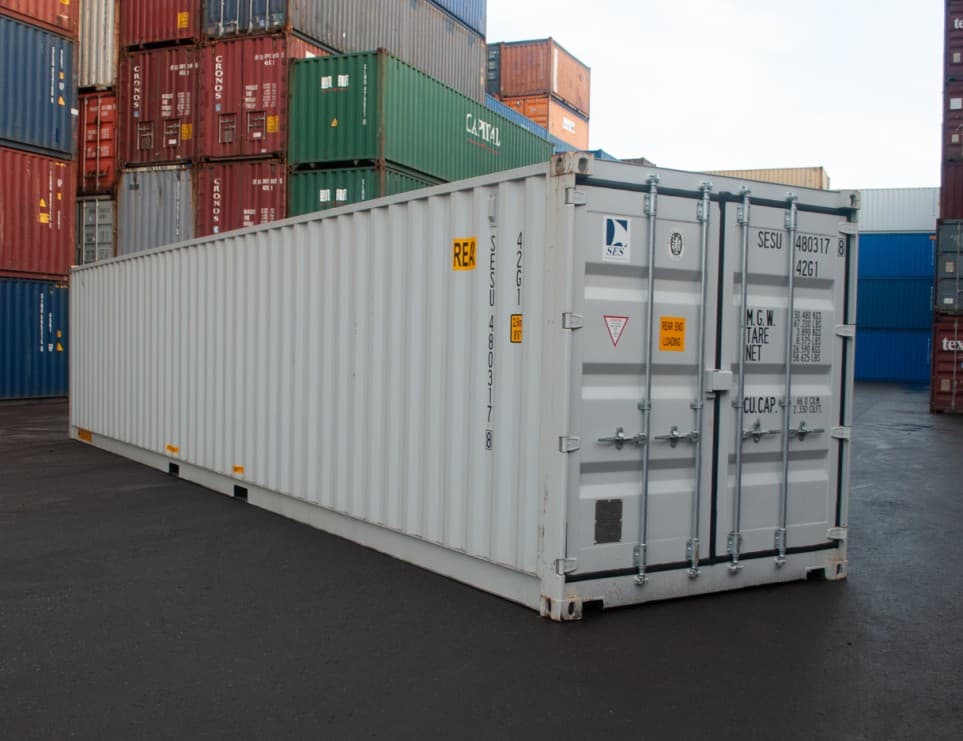
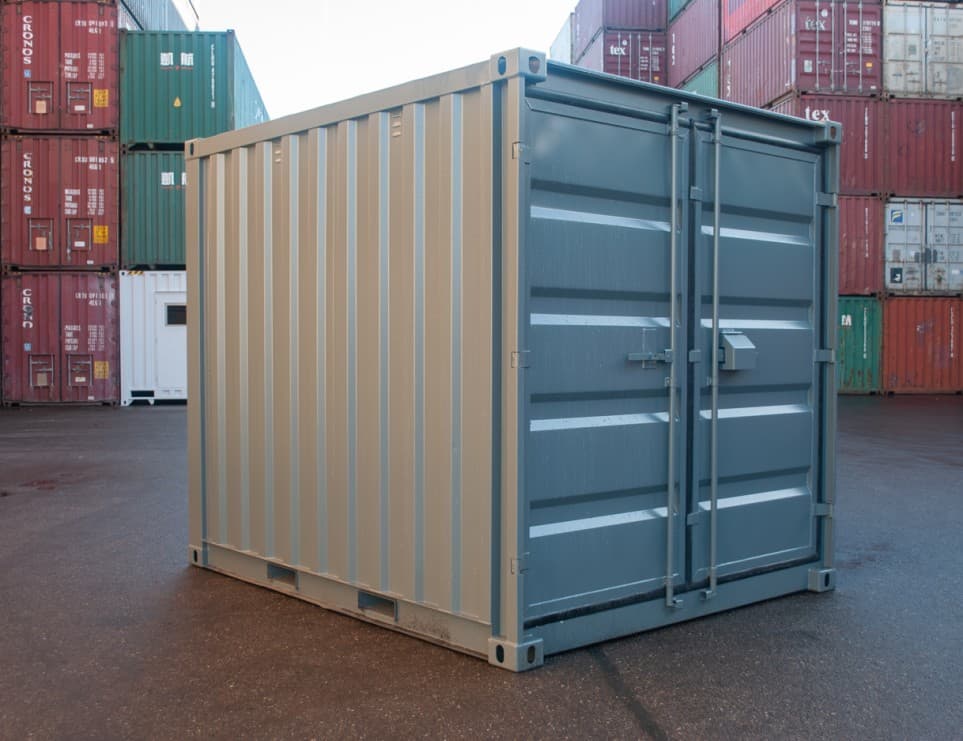
The new 40ft shipping container we offer is a standard dry model, designed to meet international transport requirements and secure storage needs. Its recent manufacturing ensures airtight and watertight sealing as well as optimal structural strength. This container is available for sale and rent from our Marseille depot.
From a technical standpoint, this container complies with ISO 668 and ISO 1496-1 standards, which define the dimensions and performance of series 1 containers. Its external dimensions are approximately 12.192 m long, 2.438 m wide, and 2.591 m high. The internal dimensions provide a usable volume of approximately 67 m³, with an internal length of approximately 12.032 m, a width of approximately 2.352 m, and a height of approximately 2.393 m. The floor area is approximately 28.3 m². The tare weight is approximately 3,750 kg and the maximum payload is approximately 26,680 kg, for a maximum gross weight (MGW) of 30,480 kg. These values may vary slightly depending on the manufacturer, but they remain within standard tolerances.
The structure is made of Corten steel, a weathering steel that resists atmospheric corrosion through the formation of a protective surface layer. This material is used for most modern shipping containers. The frame consists of welded steel sections, with vertical posts, top and bottom rails, and corner castings at the eight corners. These corner pieces are standardized and allow stacking, securing, and handling by spreader or forklift. The side and front walls are made of corrugated sheet, which provides significant rigidity while remaining relatively lightweight. The roof is also made of corrugated or reinforced flat sheet. The floor is made of 28 mm thick marine plywood, treated to resist moisture and rolling loads. It is fixed to steel cross members. The rear doors are double-leaf, equipped with container locking bars and rubber seals. They open to approximately 270 degrees, which facilitates loading and unloading.
This new container is delivered with ISO certification, which attests to its compliance with international standards. It is also fitted with a valid CSC (Convention for Safe Containers) plate, mandatory for sea and land transport. The CSC plate indicates the manufacturing date, maximum weight, payload, and maintenance dates. In France, for road transport, a container must comply with the weight and dimension limits of the highway code. Transporting a 40ft container requires a suitable vehicle, generally a container truck with a special chassis. The total length of the convoy can exceed 16 meters, which requires compliance with heavy goods vehicle regulations and possible travel permits.
This new 40ft container is particularly suitable for storing various goods, whether equipment, furniture, manufactured products, or non-perishable foodstuffs. Thanks to its watertightness, it effectively protects against rain, dust, and rodents, provided the doors are properly closed and the seals are in good condition. It can be placed on stabilized ground, concrete blocks, or crossbeams to avoid direct contact with the ground and limit corrosion. For intensive use, ventilation is recommended to prevent condensation, especially if the container is exposed to large temperature variations. Vents can be installed on the walls.
In addition to storage, this container can be converted into a site office, technical room, workshop, or sales space. Its internal volume allows for partitions, insulation, electrical supply, and air conditioning. Many construction professionals use 40ft containers as living quarters for site teams. The conversion may include additional openings (doors, windows) which must be made in compliance with the structure and with appropriate reinforcements. It is advisable to use a professional for any structural modification, as the container is subject to significant mechanical stresses.
For residential use, the shipping container is increasingly popular for building container homes. A 40ft offers a living area of approximately 28 m², which can be combined with other containers to create larger volumes. Insulation is then essential, as steel conducts heat and cold. Insulation from the outside or inside with suitable materials (rock wool, polyurethane) allows for good thermal comfort. French regulations require compliance with construction standards for housing, particularly regarding fire safety, accessibility, and energy performance. It is therefore necessary to contact the urban planning department to obtain the necessary permits.
Maintaining a new container is simple but regular. It is advisable to check the condition of the door seals, grease the locking mechanisms, clean the surfaces, and touch up any scratches with suitable paint to prevent corrosion. High-pressure washing can be done once or twice a year. If the container is stored outdoors, it is advisable to check the roof and corners for any accumulation of water or leaves. The corner castings must remain clear to allow handling.
When buying a new container, several points of vigilance should be considered. Check the presence and validity of the CSC plate. Make sure the container is indeed a dry type (and not high cube, reefer, open top, or flat rack) if you need a standard height. Check the condition of the welds, seals, and floor. A new container should not show rust, dents, or repairs. Ask for the ISO conformity certificate and the manufacturer's technical data sheet. If you buy remotely, ask for recent photos and, if possible, an on-site visit. The price of a new 40ft container can vary depending on the manufacturer, availability, and transport costs. Our offer at EUR 3,450 is available from Marseille, excluding delivery. We can arrange delivery throughout France and Europe, on quotation.
Renting a 40ft container is an interesting alternative for temporary needs. It provides storage space or premises without significant investment. Rental periods are flexible, ranging from a few weeks to several months. The container is delivered to your site, and you are responsible for its proper use. At the end of the rental, it is collected. This solution is commonly used by construction companies, event organizers, retailers, or individuals in transition. We offer rental plans with or without a purchase option.
Regarding transport, a 40ft container can be transported by truck, train, or ship. For road transport in France, weight and size limitations must be respected. A standard 40ft container is 12.192 m long, which exceeds the maximum authorized length for a single vehicle (16.5 m for an articulated combination). Transport is therefore done on a container chassis pulled by a road tractor. The total weight of the convoy must not exceed 44 tonnes for exceptional transport, but in general, a loaded 40ft container complies with highway code limits. It is advisable to check local restrictions, especially in cities.
For storing hazardous materials, the container must be suitable and meet specific standards. A standard dry container is not suitable for flammable or toxic products without special conversion. Similarly, for transporting perishable goods, a reefer container is required. This new 40ft dry container is therefore intended for general uses.
In conclusion, this new 40ft shipping container is a reliable and durable solution for many projects. Whether for storage, transport, conversion, or construction, it offers a solid and standardized base. Its Corten steel and ISO certification guarantee its robustness and compliance. Available for sale and rent from Marseille, it can be delivered quickly according to your needs. Do not hesitate to contact us for a personalized quote and advice on using your container.
To go further, let's examine the specific maintenance precautions for a new container. Even if a new container is protected by factory paint, it can be altered during transport or handling. It is therefore prudent to inspect the surfaces upon receipt and touch up any scratches with a quality anti-rust paint. Recommended products are epoxy or polyurethane paints, suitable for steel substrates. Before application, clean the area and degrease it. For hard-to-reach areas, such as corners or welds, use a brush. Once a year, check the condition of the door seals: they should be flexible and without cuts. A worn seal lets in water and air, which can damage stored goods. Replacing a seal is a simple and inexpensive operation. Also remember to grease the locking rods and hinges with lithium grease or marine grease. This prevents jamming and extends the life of the mechanisms. If the container is exposed to a marine environment, rinsing with fresh water after periods of high salinity helps limit corrosion. Finally, regularly check the floor: a 28 mm marine plywood is resistant, but it can be subject to moisture. If you notice sagging or delamination, it may be necessary to replace a board. These few simple actions help keep a container in good condition for many years.
Let's now address transport regulations in more detail. In France, road transport of containers is governed by the highway code and European regulations. A 40ft container is 12.192 m long. For transport, it is loaded onto a container chassis, which is a trailed vehicle specially designed to receive containers. The road combination (tractor + chassis + container) can reach a total length of 16.5 m, which is authorized for heavy goods vehicles. However, the container width (2.438 m) is slightly greater than the standard vehicle width (2.55 m), but it remains within tolerances. The total height of the convoy can reach 4 m, which is the authorized limit in France for vehicles. If the container is loaded, the total weight must not exceed 44 tonnes for a road combination, but the maximum authorized weight for a 40ft container is 30,480 kg, so the weight of the chassis and tractor is added. It is essential to respect axle weight limits. For exceptional transports, prior authorization is required. In cities, traffic restrictions may apply, particularly regarding delivery times and low-emission zones. It is therefore recommended to plan delivery according to local regulations. For sea transport, the container must be stackable and secured according to IMO rules. The CSC plate must be valid. For rail transport, the container is loaded onto flatcars, and the same weight and dimension rules apply. In summary, transporting a 40ft container requires suitable logistics and compliance with current standards.
Let's now look at sector-specific use cases. In the construction sector, the 40ft container is often used as living quarters, changing room, canteen, or site office. It can be equipped with sanitary facilities, heating, and air conditioning. Construction companies appreciate its robustness and ease of movement. In the agricultural sector, it is used for storing grain, animal feed, or equipment. It can be ventilated to prevent condensation. In retail, it can be converted into a pop-up shop, storage room, or workshop. In events, it is used as a control room, dressing room, or catering space. In industry, it can serve as a technical room, spare parts storage, or control station. In the transport and logistics sector, it is used for sea and land freight. Finally, for individuals, it can become a garage, workshop, garden shed, or home extension. Each use requires specific conversions, but the 40ft container offers a versatile base.
Let's now compare the 40ft container with other sizes and types. The 20ft container is the most common for sea transport. It measures approximately 6.058 m long, 2.438 m wide, and 2.591 m high, with an internal volume of approximately 33 m³. It is easier to maneuver and transport, but offers less volume. The 40ft container offers approximately double the volume, which is advantageous for storing large quantities. The 40ft high cube (HC) container has an external height of 2.896 m, about 30 cm more than the standard. This increases the internal volume to approximately 76 m³. It is useful for transporting bulky but light goods. The reefer container is a refrigerated container, equipped with a cooling unit. It is used for transporting perishable goods. It is heavier and more expensive, and requires a power supply. The open top container has a removable roof, allowing goods to be loaded from above. The flat rack container has foldable side walls, allowing oversized goods to be loaded. The tank container is used for transporting liquids. Finally, the 45ft container is another size, less common, with a length of 13.716 m. The choice depends on use, budget, and transport constraints. For versatile use, the standard 40ft dry is a good compromise.
Finally, let's not forget the importance of site preparation. Before delivering the container, ensure the ground is stable and level. A 40ft container weighs approximately 3.75 tonnes empty, and up to 30 tonnes when loaded. It is therefore essential to provide a suitable foundation, such as concrete blocks or crossbeams. If the container is to be placed on sloping ground, it must be properly shimmed to avoid deformation. Provide sufficient space to open the doors and maneuver the delivery truck. If you plan to convert it, consider electrical and water connections. Finally, check local urban planning rules, as installing a container may require a permit. A new container is a durable investment, and good preparation ensures its proper use.