Description
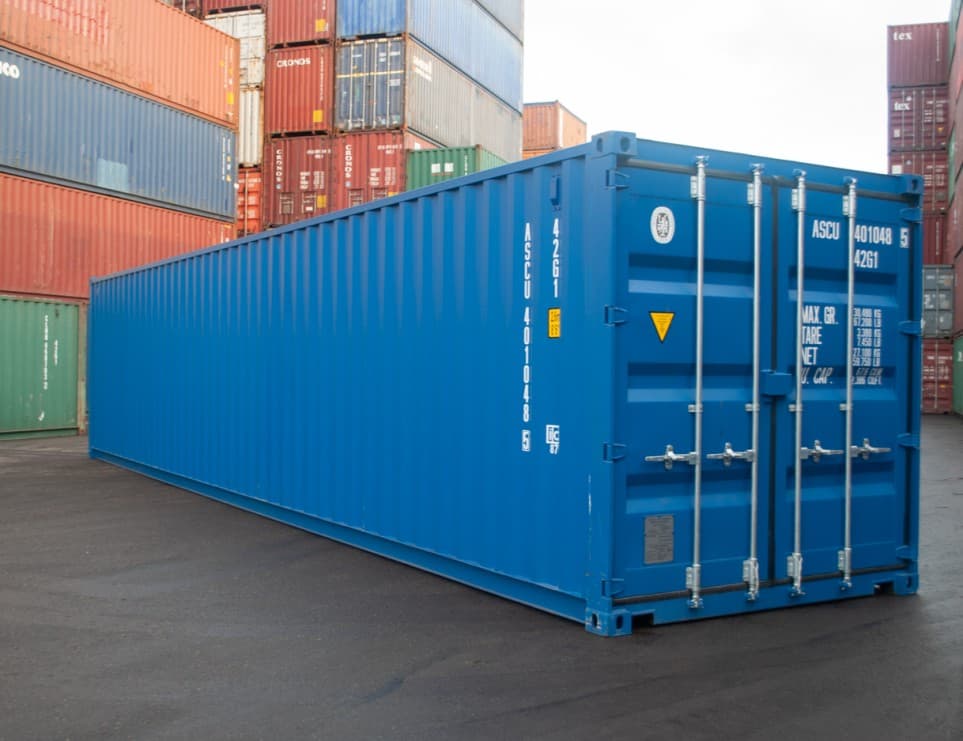
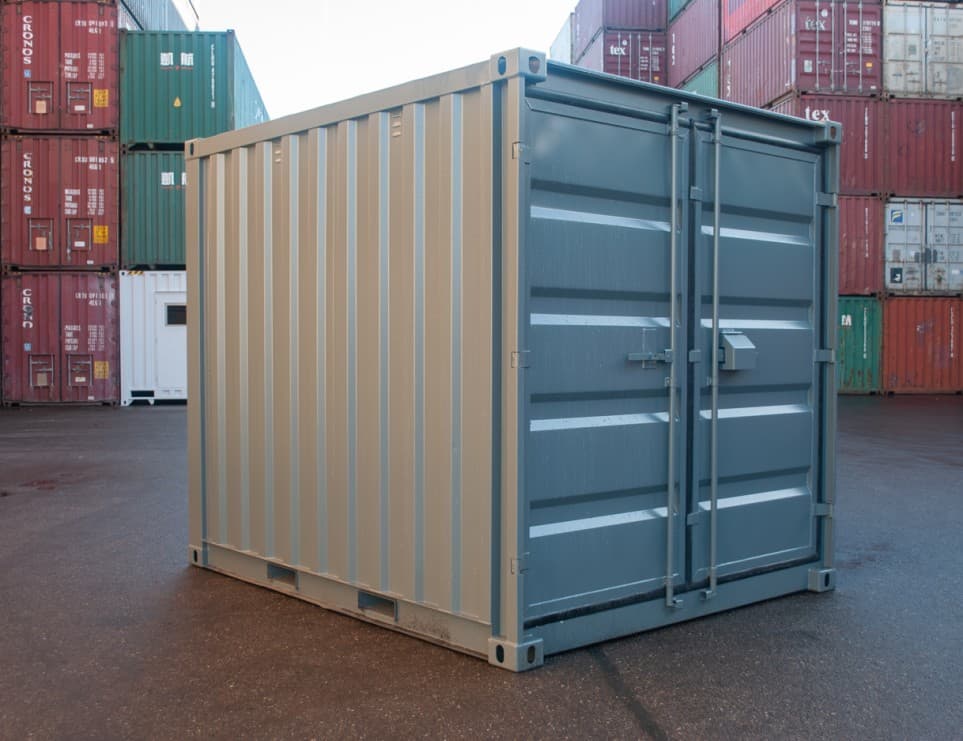
The new 40ft shipping container we offer at D.S. Globe Conteneur is a storage and transport unit designed to the most common international standards. It is a dry container, meaning it has no refrigeration or active ventilation system, intended for transporting dry goods and storing equipment. Its structure is based on a Corten steel frame, a low-alloy steel that resists atmospheric corrosion through the formation of a protective oxide layer on the surface. This feature allows it to withstand bad weather over long periods, whether the container is installed on a construction site, in an industrial yard or on private land. The walls, roof and floor are assembled by welding and riveting to the tolerances set by ISO 668 and ISO 1496-1, which define the dimensions, loads and watertightness tests applicable to series 1 containers. The floor is made of 28 mm marine plywood, a cross-laminated panel bonded with phenolic resin, resistant to moisture and rolling loads. This floor supports handling trolleys, pallets and distributed heavy loads without deformation, making it a reliable base for storing materials, tools or furniture. At the rear, the container is fitted with two steel double doors, held by standard container locks, also known as locking bars. These locks allow effective locking and accept padlocks or tamper-evident seals, depending on the level of security required. EPDM rubber seals, fitted around the door edges, ensure watertightness and limit air and dust infiltration. The container is advertised as new and refurbished, meaning it has not yet been used for sea transport and has been checked before being made available. This claim should however be verified at the time of purchase: a new container has walls with no perforating rust, supple seals, doors that open without force and a floor with no splintering or delamination. A standard 40ft dry container measures approximately 12.19 metres in external length, 2.44 metres in width and 2.59 metres in height. Its usual internal dimensions are approximately 12.03 metres long, 2.35 metres wide and 2.39 metres high, giving a usable volume of around 67 cubic metres. The tare weight of such a container is generally around 3.7 to 3.9 tonnes, and its maximum payload is around 28 tonnes depending on the model and certifications. These values are standard orders of magnitude: they may vary slightly depending on the manufacturer and year of production, and it is advisable to refer to the CSC plate fixed to the door to know the exact data of the container delivered. The CSC plate, for Convention for Safe Containers, certifies that the container has been inspected and deemed fit for handling and transport. It indicates in particular the maximum gross mass, tare mass, payload and date of the next periodic examination. For transport use, this plate is essential. For static storage use, it remains a useful indicator of the equipment's compliance. The 40ft container is often chosen for storing large volumes: construction materials, furniture, archives, site equipment, palletised goods. Its length allows the space to be organised into zones, for example a central circulation area and two rows of pallets on either side, or a full-depth layout with metal shelving. The marine plywood floor accepts high concentrated loads, but it is advisable to distribute heavy loads on bearers or load-spreading plates to avoid local punching. Access is from the rear only on a standard dry container, which means allowing sufficient manoeuvring space in front of the doors. For use as a site office, workshop or modular housing, the 40ft container offers a floor area of around 28 square metres, enough to fit out several workstations, a meeting area or compact accommodation. The fit-out generally requires adding thermal insulation, interior cladding, compliant electrical installation and ventilation, because a bare steel container is an excellent thermal conductor: it heats up quickly in the sun and cools down at night. The interior walls can be lined with insulating panels and wood or plasterboard facing, and the floor can receive a floor covering suited to the use. For an office or dwelling, it is also common to cut openings for windows and an additional door, which must be done by a professional to preserve the rigidity of the structure. The 40ft container can also be used as a technical room, site changing room, secure storage room or temporary sales space. In all cases, it is important to check the nature of the ground on which it will be placed. A loaded container can exert significant pressure at the four handling corners, called corner castings. These cast steel parts, located at the eight corners of the container, are used both for spreader handling, for securing on ships and for sling lifting. For ground installation, it is recommended to place the container on concrete blocks, wooden crossbeams or suitable foundations, to distribute the load, prevent subsidence and limit direct contact with ground moisture. A slight excavation or slope helps avoid water stagnation under the container. Maintenance of a Corten steel container remains limited. The condition of the door seals should be checked regularly, gutters and corners cleaned, and any scratches touched up with a suitable anti-rust paint. Surface rust marks, often brown-orange in colour, are normal on Corten steel and do not mean the structure is perforated. However, deep rust, a soft floor, holes in the walls or deformed corner posts should raise alarm. When buying a new container, it is advisable to request recent photos, check for the presence of the CSC plate, check the alignment of the doors and the condition of the locks, and ensure that the container has not been exposed to dangerous goods or chemicals. A container that has transported toxic products may retain residues and may not be suitable for food or housing use without thorough cleaning. Transporting a 40ft container in France and Europe is subject to size and weight rules. An empty 40ft container weighs around 3.8 tonnes and can be transported on a suitable container truck, generally a flatbed semi-trailer or a container chassis. The convoy may require a traffic permit depending on the total weight, height and route taken. Delivery on site must be prepared: truck access, unloading space, on-site lifting equipment or mobile crane. Unloading a 40ft container requires lifting equipment capable of lifting several tonnes and manoeuvring on a stable surface. For an individual or a small business, it is often simpler to entrust delivery and installation to a specialist carrier, who has the appropriate truck and crane. At D.S. Globe Conteneur, based in Marseille, we offer this new 40ft container in Corten steel with 28 mm marine plywood floor, double rear doors with locks and ISO compliance. It is suitable for secure storage, transport of dry goods, fitting out site offices, workshops or modular spaces. To find out about availability, delivery options and the exact specifications of the model offered, we invite you to contact us directly. We can check with you the dimensions, weight, condition and available accessories, and guide you towards the solution best suited to your project.
To go further, it is useful to place the 40ft container within the family of shipping containers and compare its formats with the other sizes and types available on the market. The standard 40ft shares the same width and external height as the 20ft, but doubles its usable length. The 20ft, whose internal volume is around 33 cubic metres and floor area around 14 square metres, remains the most widespread format for sea transport and the most manageable on a cramped site. The 40ft is better suited to large volumes or fit-outs requiring a comfortable habitable length. There is also the 40ft High Cube, recognisable by its external height of around 2.89 metres instead of 2.59 metres, which adds around 30 centimetres of internal height. This extra height is appreciated for modular housing, mezzanines, high shelving and transporting bulky but light goods. The 40ft High Cube is often preferred for interior fit-outs, as it allows ceiling insulation to be fitted without excessively reducing the ceiling height. Conversely, the standard 40ft, the subject of this sheet, offers an internal height closer to that of a 20ft container and remains perfectly suited to storing and transporting standard pallets. Other types of containers exist for specific uses: the reefer container, fitted with a refrigeration unit, maintains a controlled temperature for perishable goods or pharmaceutical products; the open top container, whose roof is removable or opening, facilitates loading oversized goods from above; the flat rack container, without side walls or roof, allows heavy or bulky loads such as machinery, tubes or machines to be transported; the tank container, finally, is used for transporting liquids. The 40ft dry container we present here has no refrigeration unit, no opening roof and no removable walls: it is a closed, robust and versatile box that covers the majority of dry goods storage and transport needs. Compared to a used container, a new container has the advantage of a structure without repairs, an unstained floor and seals in good condition, which limits the risk of leaks and short-term maintenance costs. A used container may be more economical to buy, but its condition varies greatly and requires careful examination. The choice between new and used therefore depends on the intended use, the desired storage duration and the available budget.
As for routine maintenance, a few simple actions extend the container's lifespan. It is recommended to inspect the entire structure once or twice a year, paying particular attention to the corners, welds, lower walls and door surrounds, which are the areas most exposed to moisture. Cleaning can be done with clear water and a broom, with a mild detergent if necessary; pressure washers should be used with caution, as too powerful a jet can damage the seals and paint. After cleaning, air-drying prevents water stagnation in the floor grooves. The EPDM rubber door seals can be cleaned with a damp cloth and protected with a silicone-based product to keep them supple. A hardened or cracked seal lets water in and must be replaced. The locks and hinges can be lubricated with a suitable grease to facilitate closing and prevent seizing. In the event of a deep scratch reaching the metal, touching up with anti-rust paint is advisable to limit the progression of corrosion. If the container is used for long-term storage, it is useful to provide ventilation, either by leaving the doors slightly ajar or by installing ventilation grilles, to limit condensation and odours. Adding a dehumidifier or absorbent sachets may be relevant in humid regions. Finally, it is not advisable to store aggressive chemicals without protection, as their vapours can attack the paint and seals.
From a regulatory point of view, transporting a 40ft container on the road in France must comply with the highway code and the rules relating to vehicle weights and dimensions. A road train carrying a 40ft container may exceed standard dimensions depending on the chassis height and load, which may require a traffic permit from the competent authorities. The specialist carrier generally handles these formalities. For storage or housing use, it is advisable to check with the town hall on the applicable planning rules: in some municipalities, installing a container on the ground may be considered a construction and require prior declaration, especially if it is fitted out as living or working premises. The rules vary depending on the area, the duration of installation and the nature of the land. It is therefore prudent to check local regulations before any installation. In terms of safety, a container intended to receive the public or workers must comply with general health and safety rules, particularly regarding ventilation, lighting, evacuation and electrical installations. For professional use, it is recommended to call on qualified companies for fit-out and compliance.
Finally, sector-specific use cases are numerous. In construction and public works, the 40ft container serves as a site welfare unit, changing room, canteen or storage room for tools and materials. In industry and logistics, it constitutes a rapid and secure extension of storage space, particularly for spare parts, packaging or finished products. In agriculture, it can house equipment, seeds or harvests, provided suitable ventilation is arranged. In retail and events, it transforms into a pop-up shop, stand, ticket office or technical room. In the cultural and non-profit sector, it can become a workshop, rehearsal room or storage room. For individuals, it offers an additional storage solution for furniture, garden tools, light vehicles or leisure equipment. In all these cases, the new 40ft Corten steel container has the advantage of being immediately operational, robust and modular. It can be fitted with accessories such as shelves, hooks, lighting, a reinforced lock or an awning above the doors to improve comfort of use. These fit-outs must however respect the structure and not compromise the watertightness or rigidity of the container. In summary, the new 40ft shipping container is a versatile, durable piece of equipment compliant with international standards, suitable for storage as well as transport and fit-out. It is a reliable base for many projects, provided its condition is checked on delivery, its installation is properly prepared and its sealing and closing elements are regularly maintained.