Description
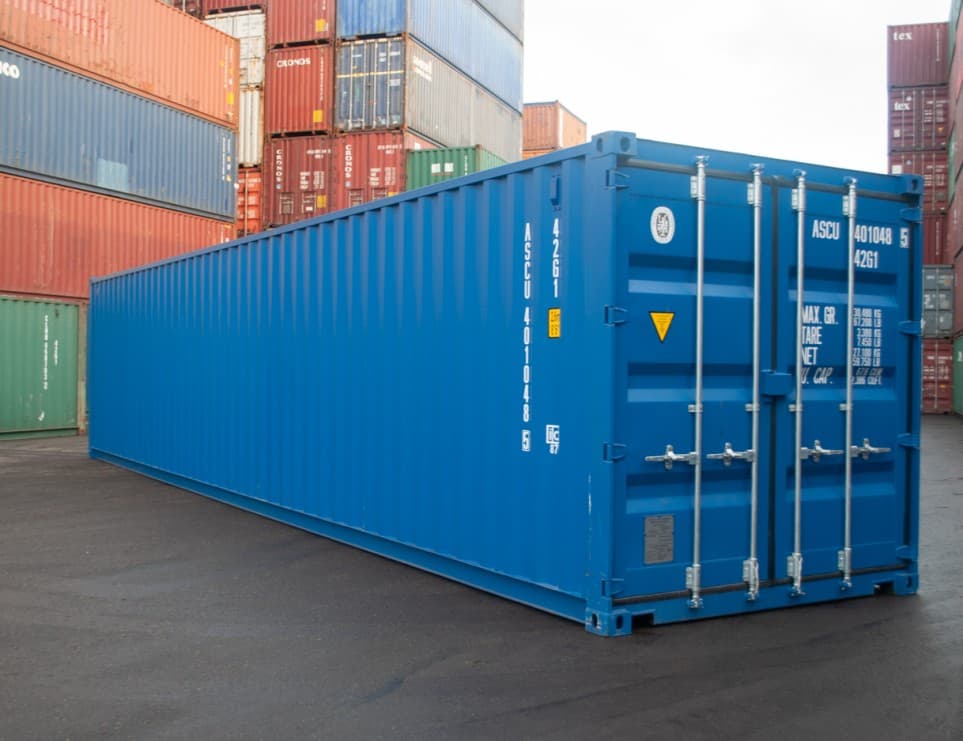
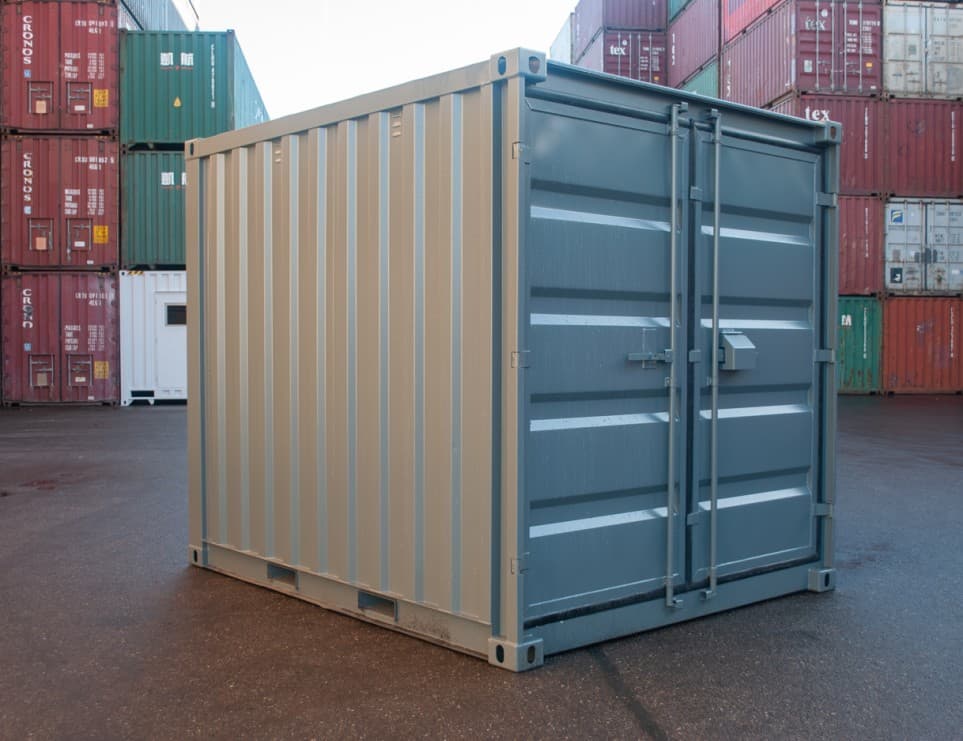
The used 40ft Dry shipping container we offer is a proven storage and transport equipment, designed to meet the requirements of professionals and individuals alike. With a nominal length of 12 metres, it offers an internal volume of around 67 m³, making it one of the most common models for bulk storage, workshop fit-out, agricultural sheds or construction site bases. Its Corten steel structure and 28 mm marine plywood floor give it robustness suited to intensive use, including forklift traffic. This container is of the Dry type, i.e. non-refrigerated, intended for the transport and storage of dry goods. It is fitted with two rear doors with container locks, ensuring secure closure and airtightness and watertightness. Its ISO certification attests to its compliance with current international standards. By choosing a used container, you benefit from an advantageous quality-price ratio while participating in the reuse of durable industrial equipment. We detail below its technical characteristics, its common uses, the points to watch when buying, as well as the regulatory aspects related to its transport and installation in France.
Technical characteristics and standardised dimensions. A 40ft shipping container complies with ISO 668 and ISO 1496-1 standards, which define its external and internal dimensions, as well as its structural performance. The standard external dimensions are as follows: length 12.192 m (40 ft), width 2.438 m (8 ft), height 2.591 m (8 ft 6 in) for a standard container, or 2.896 m (9 ft 6 in) for a High Cube. The model offered here is a standard Dry, therefore with an external height of 2.591 m. Typical internal dimensions are approximately 12.032 m long, 2.352 m wide and 2.393 m high, giving an internal volume of around 67.7 m³. The usable floor area is approximately 28.3 m². The tare weight of a 40ft Dry container in Corten steel is generally between 3,600 kg and 4,200 kg depending on the manufacturer and year of construction. The maximum payload is approximately 26,000 kg to 28,000 kg, and the maximum gross weight is 30,480 kg, in accordance with ISO standards. These values may vary slightly depending on the exact model, but they are the common references for this type of container. The container is built with a Corten steel frame, a low-alloy steel that resists atmospheric corrosion thanks to the formation of a protective layer of oxides on the surface. The side and front walls are made of corrugated steel sheets, welded to vertical posts. The roof is also made of corrugated steel sheet, reinforced by cross members. The floor is made of 28 mm thick marine plywood, treated to resist humidity and heavy loads. It is fixed on steel cross members. The rear doors are fitted with four locks per leaf (eight in total), with vertical locking bars and handles. Rubber seals ensure airtightness and watertightness. The container can be stacked up to nine units high in maritime configuration, but for ground use, it is generally placed on blocks or beams to avoid direct contact with the ground and allow ventilation. It is also possible to stack it on two or three levels for vertical storage, provided the load-bearing capacity of the ground is checked and twist-locks are used to secure the containers together.
Common uses and practical applications. The used 40ft Dry container is versatile. In storage, it allows the storage of palletised goods, building materials, furniture, industrial equipment, agricultural products (grain, fodder, fertiliser), light vehicles or spare parts. Its great length allows the entry of a forklift, which facilitates loading and unloading operations. On construction sites, it serves as a tool store, technical room, changing room or site office after basic fit-out. In agriculture, it is used as a storage shed for hay, seeds, equipment, or as shelter for livestock after modification. For individuals, it can become a storage space for the garden, a DIY workshop, or even a base for a modular housing or tiny house project, subject to insulation, ventilation and interior fit-out work. The container can also be transformed into a commercial premises, a fixed food truck, a gym, a recording studio, etc. Its modularity and robustness make it an economical solution for many projects. It is important to note that use as housing or premises receiving the public requires compliance with local construction and planning rules (building permit, fire safety standards, accessibility, thermal and acoustic insulation). The raw container is not designed to be habitable as is: insulation, heating, ventilation and possibly interior cladding must be provided. Similarly, for food or pharmaceutical use, specific hygiene standards apply.
Condition and quality of used containers. Used containers are generally classified into several categories according to their condition: "one-trip" (almost new), "cargo worthy" (suitable for sea transport), "wind and watertight" (airtight and watertight), and "as is" (as is, may have defects). The container offered is of cement quality, which corresponds to a robust container, often used in the construction sector, and airtight and watertight. This means that it does not leak water at the roof, walls or doors, and that the seals are in good condition. Traces of surface rust, scratches, dents or repair marks may be present, without compromising structural integrity. The 28 mm marine plywood floor is checked to ensure it does not have rotten or sagging areas. The doors must open and close correctly, with functional locks. It is advisable to inspect the container before purchase, or to request recent photos and a precise description of its condition. A used container may have been used for the transport of various goods; thorough cleaning is recommended before using it for sensitive storage (food, textiles, etc.). If the container has transported chemicals or dangerous goods, it must be decontaminated according to appropriate procedures. We do not provide a detailed history of previous cargoes, but we can direct you to professional cleaning solutions.
Maintenance and upkeep. To extend the life of a used shipping container, regular maintenance is necessary. The roof, walls and floor should be inspected annually for any corrosion, perforation or infiltration. Small areas of rust can be treated with a wire brush and anti-rust paint suitable for Corten steels. The door seals must be cleaned and possibly replaced if cracked or hardened. Locks and hinges must be lubricated to prevent seizing. The wooden floor can be cleaned with a mild detergent and treated with a water-repellent product to prevent moisture absorption. If the container is used to store moisture-sensitive products, it is recommended to install a dehumidifier or moisture absorbers, as condensation can form inside due to temperature variations. Adequate ventilation is also important to prevent mould. For outdoor use, it is advisable to raise the container on blocks to avoid direct contact with the ground, which limits corrosion from below and allows air circulation. If the container is exposed to sea spray, periodic rinsing with fresh water can help reduce corrosion. Finally, if modifications are made (drilling, welding), care must be taken to protect the exposed areas with suitable paint.
Points to watch when buying. Before buying a used container, several points must be checked. First, the structural condition: check that the corner posts, top and bottom rails, and corner castings are not cracked or deformed. These elements are essential for stability and lifting. Next, watertightness: inspect the roof and walls for holes, perforating rust or traces of infiltration. Test the doors: they must open and close without forcing, and the seals must be supple and properly in place. Check the floor: it must not be soft, rotten or have missing boards. If the container has been modified (openings, partitions), ensure that this has not compromised its structure. Ask if the container has been treated against pests (termites, rodents) and if it has been cleaned. Check for the CSC plate (Convention for Safe Containers), which certifies the container's compliance with safety standards and indicates its date of manufacture and maximum weights. This plate must be legible and up to date. If you are buying for maritime use, the container must be certified "cargo worthy"; for land use, a "wind and watertight" container may suffice. Finally, compare prices: a used 40ft container can vary depending on its condition, age and availability. A price that is too low may hide major defects. Do not hesitate to ask for detailed photos and, if possible, to visit the container before purchase.
Regulations and transport in France. The transport of a 40ft container in France is subject to heavy goods vehicle regulations. A 40ft container has a length of 12.192 m, which exceeds the maximum authorised length for a standard articulated vehicle (16.5 m for a tractor + semi-trailer combination). Transporting a 40ft container therefore requires a suitable vehicle (container semi-trailer) and may be subject to traffic restrictions (hours, routes, dimensions). The authorised gross train weight must not exceed 40 tonnes for a standard road train, and the weight of the container (tare + load) must be taken into account. For lifting, a full 40ft container can weigh up to 30 tonnes; therefore appropriate lifting equipment is required (mobile crane, high-capacity forklift). Transport must be carried out by a qualified professional, with the necessary authorisations (abnormal load convoy if dimensions are exceeded). For installation on private land, local planning rules should be checked: in some municipalities, the installation of a container may be considered a construction and require a building permit or prior declaration. It is recommended to enquire with the town hall's planning department. In addition, if the container is intended for habitation, it must comply with construction standards (insulation, fire safety, accessibility). Finally, if the container is imported from a country outside the European Union, customs duties and taxes may apply, as well as health and plant health checks.
Sector-specific use cases. In the logistics and distribution sector, the 40ft Dry container is often used as a temporary or permanent storage space extension. Euro pallets (1.20 m x 0.80 m) can be arranged in two rows facing each other, with a central aisle, or in three rows if the container is used only for storage without circulation. It is thus possible to store around 20 to 25 pallets on the floor, and up to 40 by stacking on two levels, subject to available height and floor strength. For construction professionals, the 40ft container serves as a site base: it can be fitted out as a canteen, changing room, office, meeting room, or tool and material storage. Its length allows partitions to be installed to separate several spaces. In the events sector, it is used as a technical room, control room, or storage space for equipment. In the agricultural sector, it protects crops and equipment from bad weather and pests. Winegrowers can store bottles or equipment there. Breeders store livestock feed there. In the maritime and port sector, this type of container is used for the transport of various goods, but also as a workshop or store on the quays. Finally, for individuals, the 40ft container can be transformed into a garage for a car or motorbike, a workshop, a wine cellar, a games room, or a storage space for garden equipment. Its size allows a passenger vehicle to be parked inside, provided suitable access is arranged (ramp, additional door).
Comparison with other container sizes and types. The 40ft Dry container differs from the 20ft by its capacity approximately twice as large (67 m³ versus 33 m³). The 20ft is more manoeuvrable, lighter, and can be transported more easily, but it offers less space. The 40ft is more suited to storing large volumes and fitting out living or working spaces. The 40ft High Cube (HC) container offers an additional internal height of around 30 cm (2.695 m instead of 2.393 m), which can be an advantage for storing tall goods or for fitting out an insulated ceiling. The standard 40ft Dry container is more common and generally cheaper than the High Cube. The 40ft Open Top container has an opening roof (tarpaulin) to load out-of-gauge goods from above, but it is less watertight and more expensive. The Flat Rack container has no side walls or roof; it is used for heavy or bulky loads. The Reefer container is refrigerated and allows the transport of perishable goods, but it is more expensive and requires a power supply. Finally, the 45ft container is an extension of the 40ft, with an internal length of around 13.556 m, but it is less common and more difficult to transport. The choice between these different types depends on the intended use, budget and transport and installation constraints.
Conclusion. The used 40ft Dry shipping container is a robust, economical and modular storage and fit-out solution. With its 67 m³ volume, it meets many professional and private needs. By choosing a quality used container, you benefit from durable, reusable equipment that complies with international standards. We support you in your project and advise you on choosing the container suited to your use. Do not hesitate to contact us for more information on availability, condition and delivery options.