Description
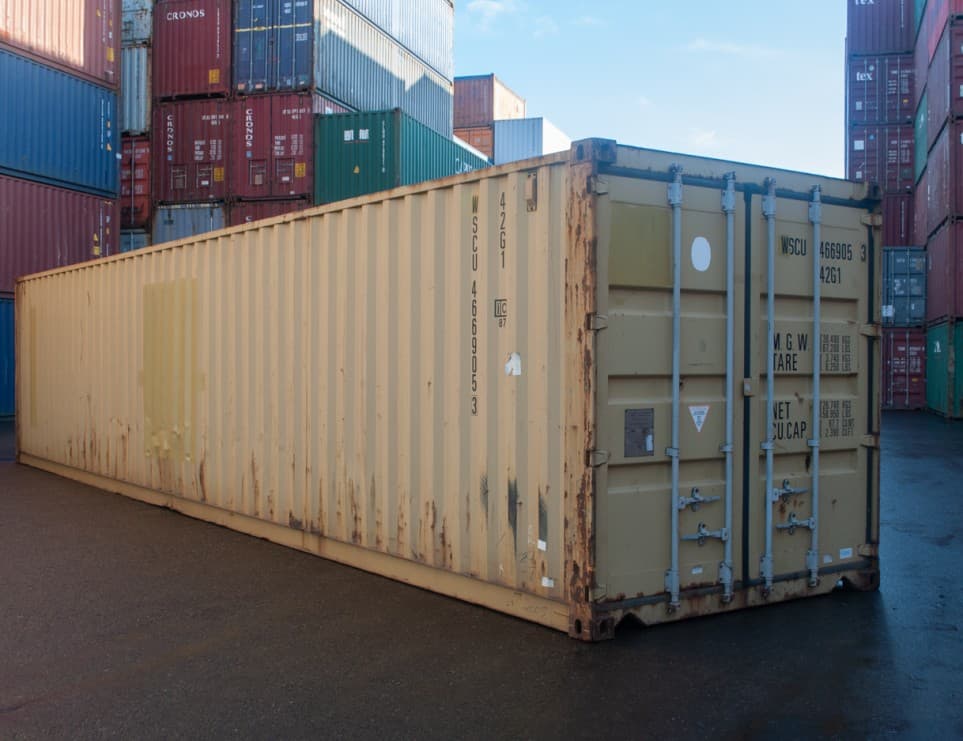
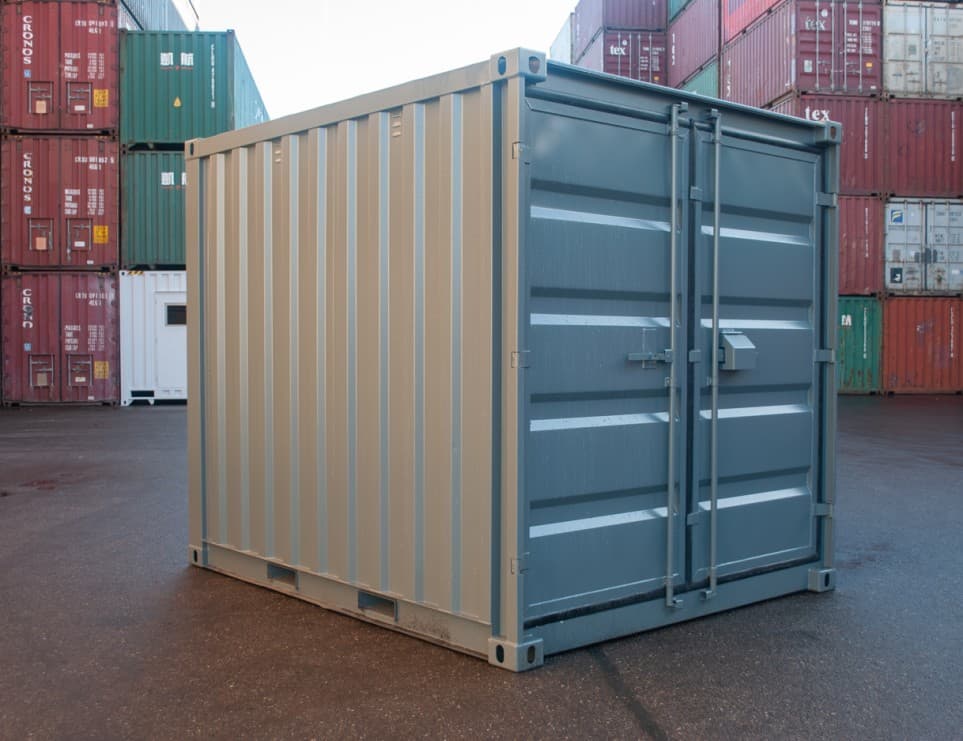
The used 40ft Dry shipping container is a standardised metal box originally designed for intermodal transport of goods by ship, train and truck. Today it is very widely reused as fixed storage space or as a base for conversion, thanks to its robustness, watertightness and cost per cubic metre. This model measures around 12.19 metres long, 2.44 metres wide and 2.59 metres high, giving an internal volume of around 67 cubic metres. It is a used unit, meaning a container that has already served in sea transport: it therefore shows signs of wear (scratches, minor dents, surface rust) without this compromising its primary function, which remains protecting goods from bad weather and intrusion. The structure is based on a Corten steel frame, a low-alloy steel that resists atmospheric corrosion better than ordinary steel thanks to the formation of a protective oxide layer on the surface. The walls, roof and doors are made of corrugated sheet, which increases rigidity without making the whole unit excessively heavy. The floor is 28 mm marine plywood, a moisture-resistant bonded wood panel laid on metal cross members. This floor supports the passage of a forklift and allows pallets, machinery or heavy goods to be placed on it, provided the maximum permitted load is respected. Access is via double rear doors fitted with container locks, the vertical bars and handles that lock both leaves at several points. These doors have rubber seals which, when the locks are correctly tightened, provide protection against rain, wind and dust. The container complies with the ISO standard, guaranteeing dimensions and fixing points compatible with standard lifting and transport equipment (spreader, twist-locks, carrier trucks).
To fully understand the value of this format, it should be placed within the family of shipping containers. The 40ft Dry, or 40' DC (Dry Container), is the largest common standard format, along with the 20ft. The 20ft offers around 33 m³, the 40ft around 67 m³: double the volume for double the length, but identical width and height. The 40ft high cube (HC) adds around 30 cm of internal height, bringing the volume to around 76 m³; the model offered here is a standard Dry, so lower than a high cube. There are also reefer (refrigerated), open top (removable roof), flat rack (no side walls) and tank containers, but the Dry remains the most widespread and versatile for storage. The 40ft Dry is particularly suitable when large volumes need to be stored without frequently handling each item: furniture, building materials, archives, tools, crops, site equipment. Its length allows long objects (tubes, profiles, planks) to be loaded, and its free height of around 2.39 metres allows pallets to be stacked on several levels, provided suitable lifting equipment is available.
There are many practical uses. In agriculture, a 40ft Dry serves as a storage shed for grain, hay, fertiliser or equipment, provided sufficient ventilation is arranged to prevent condensation. On a building site, it becomes a tool store or a storage room for sensitive materials, and can be moved from one site to another by lorry-mounted crane. For a tradesperson or business, it provides storage at lower cost than a masonry unit. For an individual, it can hold a vehicle, garden furniture, firewood or leisure equipment. Beyond pure storage, the shipping container is increasingly used as a base for conversion: site office, technical room, changing room, workshop, break room, or even modular housing or extension. These projects do, however, require specific work: thermal insulation, ventilation, electrics, plumbing, additional windows and doors, structural reinforcement if walls are cut. A bare container is neither insulated nor ventilated: without conversion, it can be very hot in summer and cold in winter, and prone to condensation. For simple storage use, these constraints are acceptable; for habitable or prolonged work use, suitable insulation and ventilation must be provided.
Buying a used container deserves some checks. The first concerns the general condition of the structure: look for major dents, perforations, areas of deep rust (particularly on the roof, lower walls and floor). Surface rust is normal and can be treated; perforating rust indicates structural weakness. Then check watertightness: with doors closed and locks tightened, no light should pass between the seals and the frame. The floor must be sound, with no soft or rotten areas; a damaged floor can be repaired or replaced, but this represents a cost. Check the door locks: they must operate without forcing and keep the leaves pressed shut. Also examine the lifting corners and fixing rails, used for lifting and lashing: they must be intact. Finally, ask whether the container is "cargo worthy" (fit for sea transport) or simply "wind and watertight". A cargo worthy container has passed an inspection and can go back to sea; a wind and watertight container is watertight but no longer necessarily certified for transport. For storage use, a wind and watertight unit is generally sufficient, and its price is lower. The model offered is described as being of cement-grade quality, i.e. a used container that has served, with an air/water tightness level and a robust floor suitable for a forklift.
Maintaining a shipping container is relatively simple but should be regular. The roof and gutters must be cleaned to avoid the accumulation of leaves and stagnant water, which accelerates corrosion. Rusted areas should be brushed and then treated with anti-rust paint suitable for steel. Door seals must be checked and possibly lubricated or replaced if cracked. Locks and hinges should be greased once or twice a year. The wooden floor can be treated against moisture and insects, especially if exposed outdoors. If the container is placed on the ground, it is advisable to raise it slightly on blocks or beams to avoid direct contact with ground moisture and to allow air circulation under the floor. Natural ventilation (low and high vents) reduces condensation, particularly when storing moisture-sensitive materials. Finally, a container placed on a plot must comply with local planning rules: depending on the municipality, it may be considered a structure and require authorisation, especially if fixed to the ground or intended for prolonged use. It is prudent to check with the planning department before installation.
Transporting a 40ft container in France and Europe follows precise rules. A 40ft weighs around 3.7 to 4 tonnes empty depending on the model, and can carry a payload of around 26 to 28 tonnes in sea transport, but road limits are different. In France, a standard semi-trailer lorry is limited to 44 tonnes gross combined weight (PTRA) under combined transport, and 40 tonnes for ordinary road transport, unless exemptions apply. The 40ft container is carried on a suitable container chassis, with twist-locks at the four corners. On-site delivery often requires a lorry-mounted crane or mobile crane to unload, as a loaded container cannot be handled without lifting equipment. The length of the 40ft (around 12.19 m) means access must be checked: street width, overhead cables, slope, gate, manoeuvring yard. A 20ft is sometimes preferred for sites with difficult access, but the 40ft offers a better volume-to-price ratio per cubic metre. The price of a used 40ft varies with condition, availability and location; it is generally higher than a 20ft, but lower than a new or recent high cube.
In summary, the used 40ft Dry shipping container is a robust, standardised and cost-effective storage tool. Its Corten steel structure, 28 mm marine plywood floor, lockable double doors and ISO compliance make it a reliable solution for protecting bulky goods. It is suitable for bulk storage, agricultural sheds, large building sites, company reserves and conversion projects. Before buying, it is essential to check the condition of the structure, watertightness, floor and doors, and to verify delivery and installation conditions on site. With simple maintenance and careful implementation, a used container can provide service for many years.
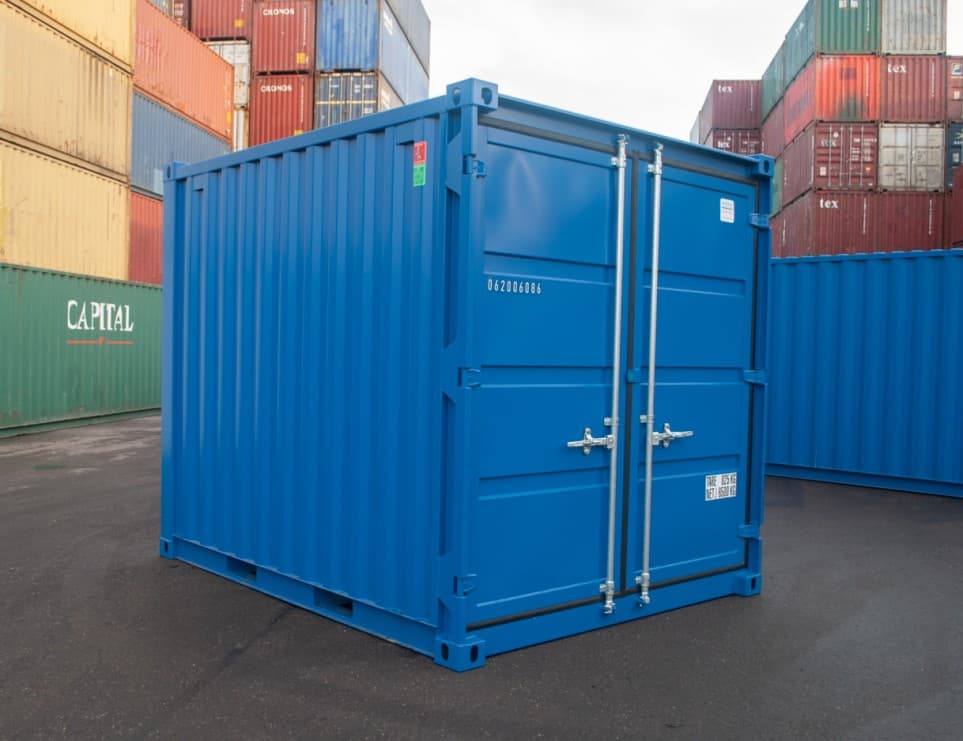
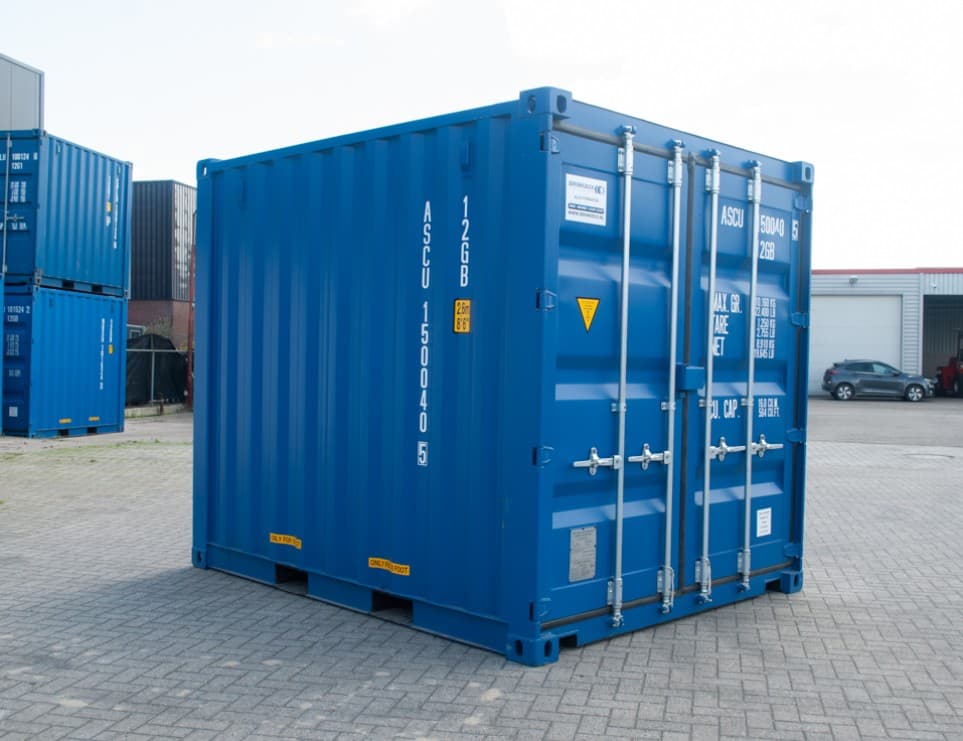
To explore the comparison between formats further, it is useful to detail the pros and cons of each size. The 10ft, rarer, measures around 3 metres long and offers a volume of around 16 m³: it is practical for small urban spaces or gardens, but its price per cubic metre is often higher and its availability used more limited. The 20ft, at 6.06 metres long and around 33 m³, remains the most manageable format: it can be carried on a standard lorry without excessive overhang, moves easily by crane and suits sites where space is short. The 40ft, the subject of this sheet, doubles the volume for a larger footprint but an often more attractive cost per cubic metre. The 40ft high cube adds height (around 2.69 m internal height) and suits bulky but light loads, such as cartons, textiles or packaging. The 45ft, less common, is mainly used on certain corridors and remains rare used on the French market. Finally, specialised containers (reefer, open top, flat rack, tank) meet specific needs: reefer for temperature-controlled transport, open top for loading out-of-gauge objects from above, flat rack for heavy and wide loads without walls, tank for liquids. For standard storage use, the 40ft standard Dry represents the best compromise between capacity, price and simplicity.
From a sector perspective, each activity benefits differently from this format. In construction and public works, the 40ft Dry serves as a site base or site store: power tools, consumables, PPE and spare parts are kept there, and an office or break room can be installed after conversion. In agriculture and livestock farming, it stores animal feed, seeds, plant protection products (with ventilation and safety precautions), small equipment and crops. In industry and logistics, it acts as a storage buffer for pallets, spare parts or customer returns, and can be fitted with metal shelving to optimise height. In retail, it becomes a seasonal storage reserve or a picking room. In events, it can serve as a technical room, control room or temporary changing room. Finally, for individuals, it is a better alternative to a garden shed or garage, with a much longer lifespan and greater security against theft. In all these cases, the load-bearing capacity of the ground must be checked: a loaded 40ft container can weigh more than 30 tonnes in total, requiring stable ground, ideally a concrete slab or compacted soil, and correct load distribution on the longitudinal beams.
The applicable regulations also deserve clarification. In planning terms, a container placed on the ground without foundations and used temporarily may, depending on the municipality, be exempt from formalities; but as soon as it is fixed, connected to utilities or used long-term as housing or a workplace, it may be treated as a structure and subject to prior declaration or a building permit. It is therefore essential to consult the municipality's local urban plan (PLU) and, where applicable, contact the relevant planning department. In transport terms, the container must be secured in accordance with the highway code and safety recommendations, with twist-locks checked before departure. The total weight of the vehicle, chassis and loaded container must remain within permitted limits, failing which fines and immobilisation may apply. For exceptional transport, prior authorisation may be required. On customs matters, a container used for international transport must have a valid CSC (Convention for Safe Containers) plate, certifying its safety compliance; this plate is affixed to the door or side wall and must be legible. For purely private storage use, this requirement does not apply, but it remains a good indicator of the container's quality and history.
Finally, a few practical tips to get the most out of this container. Before loading, plan the layout: heavy items on the floor and in the centre, light items high up, fragile items protected from moisture. Use pallets or beams to isolate goods from the floor and make handling easier. If possible, install interior lighting and a socket, even a basic one, to work comfortably. If the container stays exposed to the sun, a light-coloured roof paint reduces the internal temperature. Finally, keep a copy of the technical specifications and the CSC plate if present, useful in case of resale or inspection. With these precautions, the used 40ft Dry container is a durable and adaptable investment, suited to many professional and personal projects.