Description
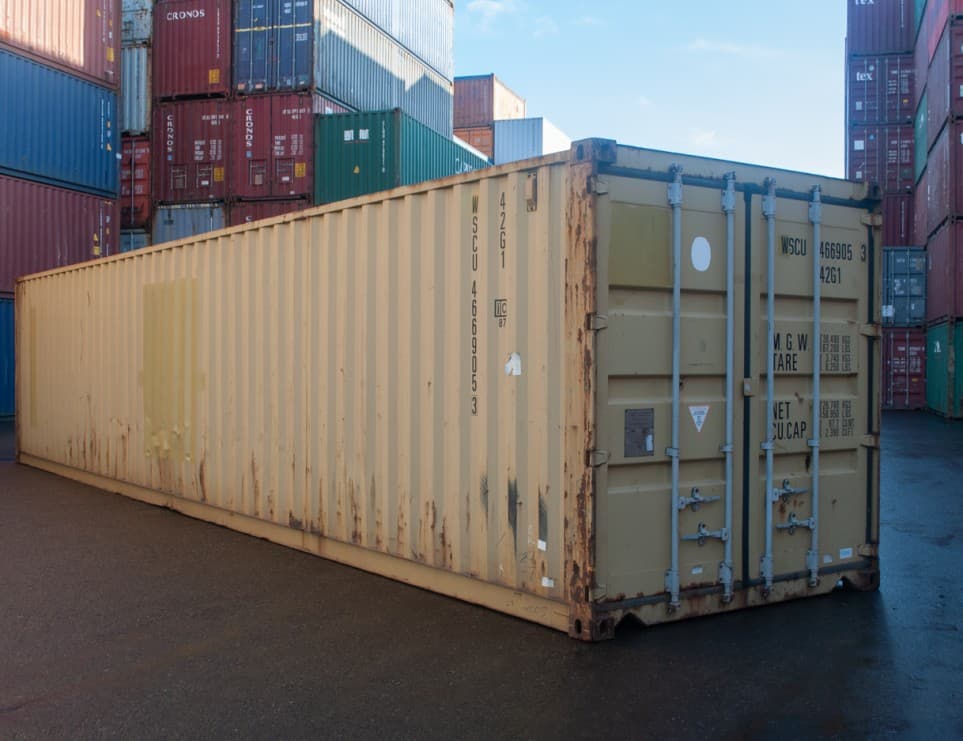
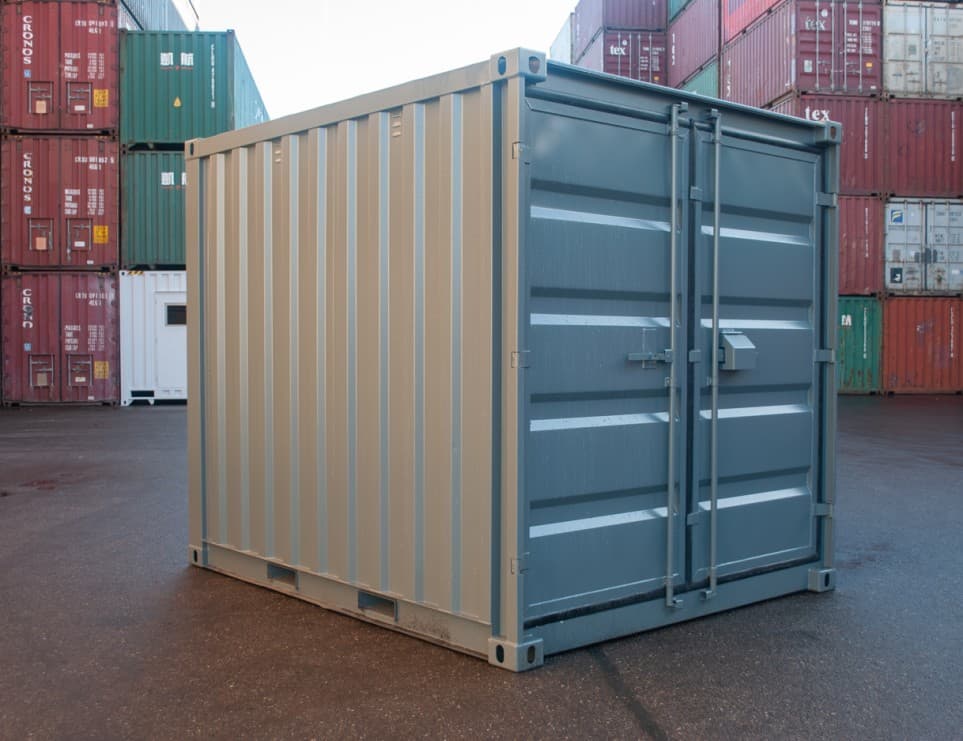
The used 40ft Dry shipping container is a steel storage module, originally designed for intermodal transport and now widely reused as fixed storage space or as a base for conversion. Its length of around 12 metres and internal volume of around 67 m³ make it a high-capacity container, able to hold bulky goods, pallets, equipment or large items. This format is commonly chosen when floor space matters more than available height, for example to store long materials, light machinery or multiple rows of pallets.
Technically, this container is a Dry type, meaning no refrigeration unit or reinforced insulation: it protects against rain, wind and dust, but does not regulate temperature. It is made with a frame and walls in Corten steel, a low-alloy steel whose chemical composition slows surface corrosion and which is standard in shipping container construction. The side walls are corrugated, which contributes to the rigidity of the assembly, and the ends are closed by double rear doors fitted with container locks and sealing gaskets. The floor is 28 mm marine plywood, a thick, dense panel that supports forklift traffic when loads are properly distributed and handling rules are followed. These elements match the usual characteristics of 40ft ISO containers, whose standard external dimensions are approximately 12.19 m long, 2.44 m wide and 2.59 m high, with a tare weight of around 3.7 to 4 tonnes depending on manufacturer and equipment.
Inside, usable dimensions are generally around 12.03 m long, 2.35 m wide and 2.39 m high, giving a volume of around 67 m³. These values may vary slightly between models, particularly depending on wall thickness, floor type and reinforcements. The 40ft Dry container is therefore a large storage volume, but bear in mind that the maximum authorized load in transport is governed by the CSC plate and traffic regulations. In fixed use, placed on the ground, the container can take heavier loads, provided the support is suitable and the load is evenly distributed.
The most common use of this type of container remains bulk storage: building materials, tools, spare parts, packaged goods, archives, furniture, seasonal equipment. On a construction site, it often serves as a site store or storage room for tools and consumables. In agriculture, it is used as a storage shed for packaged crops, seeds, fertilisers or small equipment, provided safety and ventilation rules for the stored products are respected. In logistics, it can serve as a buffer zone for pallets awaiting shipment, or as off-site reserve storage on a fenced plot.
The 40ft Dry container also lends itself to conversion uses: technical room, site office, changing room, light workshop, temporary point of sale or additional storage space. However, these conversions must comply with construction and safety rules: opening bays, reinforcing frames, insulation, ventilation, electricity, drainage. A shipping container is not originally designed to be habitable: thermal insulation and condensation management are required, as steel conducts heat and cold, and indoor air can become humid with temperature changes. Correct ventilation, or even mechanical ventilation, is often necessary to prevent mould and internal corrosion.
When buying a used container, several points deserve particular attention. First, the general condition of the structure: check the longitudinal beams, cross members, corner castings and corner posts, which are the areas where stresses concentrate. Significant deformation, cracked welds or heavily corroded corners may indicate a container that has suffered an impact or storage in a harsh environment. Next, watertightness: doors must close properly, gaskets must be flexible and not cracked, and locks must operate without forcing. A simple test is to look inside in daylight, with doors closed, to spot any light entry that would indicate sealing defects.
The floor should be checked carefully: 28 mm marine plywood is sturdy, but it can be weakened by prolonged moisture, oil stains, chemicals or localized overloads. Soft spots, splinters or delamination must be identified, as they may require repair or partial replacement. Surface rust is normal on a used container; however, perforating corrosion on walls or roof is a more worrying sign. Finally, it is useful to check the CSC plate, which certifies the container's compliance with safety rules for maritime transport and contains information on maximum gross mass, payload and date of last examination.
The so-called "cargo worthy" quality designates a container deemed fit for transporting goods by sea, with air and water tightness and a sound structure. A used container may show signs of wear, scratches, traces of surface rust or repairs, without this affecting its use for storage. For fixed use, a "one trip" container or one in better cosmetic condition may be preferred, but the standard used container remains an economical and functional option. It is recommended to request recent photos, specify the intended use and check whether the container is supplied with a valid CSC certificate if subsequent sea transport is envisaged.
Transport and handling of a 40ft container require suitable means. An empty 40ft container weighs around 3.7 to 4 tonnes, and its 12-metre length requires a container carrier vehicle or a truck with suitable trailer. Handling is generally done by heavy forklift, crane or reach stacker, using the four standard corner castings. In France, road transport of a container is subject to vehicle weight and dimension rules: total length, width, height and authorized gross vehicle weight must be respected, and special permits may be required depending on size and route. It is therefore important to prepare site accessibility, ground conditions and any necessary permits before delivery.
Ground installation must be designed to avoid moisture and stability problems. A container placed directly on soft ground can sink or deform; it is better to place it on concrete blocks, sleepers or a stabilised slab, ensuring all four corners bear correctly. A slight slope or clearance under the floor helps water drainage and limits condensation. It is also advisable to clear vegetation around the container and not to store materials against the walls, to limit corrosion and facilitate inspections.
Maintenance of a used container is relatively simple. Regular cleaning, removal of debris and leaves accumulated on the roof, and visual inspection of walls and gaskets help extend its lifespan. Scratches and areas of surface rust can be treated with a brush and suitable anti-rust paint. Door gaskets can be cleaned and, if necessary, replaced. It is not advisable to use harsh chemicals on the floor or walls without checking their compatibility with steel and wood. Ventilation suited to the use (storage of moisture-sensitive products, for example) can be added as grilles or vents, taking care not to compromise overall watertightness.
Regarding regulations, a container used as a storage unit on private land generally falls under local planning rules, which may require prior declaration or a permit depending on surface area, height and land type. Installing a container in a protected area, by the sea or in a sector subject to special rules may require specific authorizations. It is therefore prudent to check with the town hall or relevant planning department before installation. Furthermore, if the container is intended to receive the public or be used as a workplace, additional safety, accessibility and ventilation rules may apply.
The used 40ft Dry container is therefore a versatile, robust and economical solution for storage and conversion. Its capacity of around 67 m³, its Corten steel structure and its 28 mm marine plywood floor make it a container suitable for many professional and private uses. As with any used product, quality depends on the actual condition of the container: careful examination, detailed photos and precise questions to the seller help choose a model suited to the intended use. This container can be delivered and installed according to agreed terms, and it can also serve as a base for more extensive conversion projects, subject to compliance with applicable construction and safety rules.
To choose a used 40ft container well, it is useful to compare this format with other dimensions and types available on the market. The 20ft container, for example, offers a volume of around 33 m³ for a length of around 6.06 m and the same width of 2.44 m. It is easier to transport, simpler to manoeuvre on a cramped site and often cheaper to buy or rent. However, two units are needed to match the capacity of a 40ft, which multiplies roof areas, doors and handling points. The 40ft is therefore more interesting when a large continuous volume is needed, for example to store long materials or to create a single open interior space.
The 40ft High Cube (HC) container is another alternative. It keeps the same length and width as the standard Dry, but gains around 30 cm of internal height, bringing its usable volume to around 76 m³. This extra height is appreciated for storing bulky but light loads, for interior conversion (mezzanine, false ceiling, insulation) or for transporting tall goods. On the other hand, a High Cube is slightly taller on the road, which can complicate passage under certain structures or in some urban areas, and it is often a little more expensive to buy than a standard Dry. For classic storage use, the 40ft Dry remains the most widespread and most economical format.
Other container types exist and meet specific needs. The Open Top container has an opening or removable roof, which facilitates loading oversized goods from above using a crane. The Flat Rack container, without side walls or roof, is designed for heavy or very wide loads, such as machinery or tubes. The Reefer container, equipped with a refrigeration unit, maintains a controlled temperature for perishable or sensitive products. Finally, the tank container is intended for liquids and gases. For dry storage, site office or workshop use, the standard Dry remains the most suitable and most available on the used market.
The choice between buying and renting depends on duration of use and frequency of needs. Buying a used container is relevant when the need is long-term, the container stays on a fixed site and recurring rental costs are to be avoided. Renting, conversely, suits occasional needs: a few months' construction site, seasonal event, temporary storage during a move or works. It avoids tying up capital and managing resale, but may include transport and refurbishment costs. In both cases, check delivery, collection and return conditions, as well as the container's condition at handover.
By sector, the used 40ft Dry container has varied applications. In construction, it serves as a tool store, a storage room for moisture-sensitive materials (bagged cement, boards, insulation) or as additional site accommodation. In agriculture and livestock farming, it houses animal feed, seeds, small equipment or plant protection products, subject to storage rules specific to these products. In retail and crafts, it can serve as stock reserve, mobile workshop or preparation room. In the events sector, it is used as a technical room, equipment storage or temporary changing room. Finally, for individuals, it offers a storage solution for furniture, garden tools, light vehicles or leisure equipment, provided a suitable plot and necessary permits are available.
Preparing a container for a specific use often requires some simple adjustments. For storing moisture-sensitive products, adding dehumidifiers or low and high vents improves air circulation. For workshop use, installing lighting, power sockets and ventilation is necessary, with sealed cable passages. For a site office, light insulation, floor covering and supplementary heating may suffice. For a sales unit, a glazed opening and signage are needed, respecting local planning and safety rules. Each conversion must preserve the original structure and watertightness, and it is recommended to use professionals for work involving cutting, reinforcement or electricity.
Storage inside a container should follow some common-sense principles. Heavy loads go on the floor, spread over the surface, not on walls or doors. Pallets are stacked ensuring stability and height, without exceeding the floor's capacity. Chemicals, flammable or corrosive products must be stored in accordance with safety rules, with suitable ventilation and, if necessary, retention trays. Foodstuffs and sensitive products must be protected from moisture and pests. Finally, it is advisable to leave free space in front of the doors to facilitate handling and not to obstruct closing devices.
Safety when using a container deserves particular attention. Doors are heavy and can cause injury if poorly handled: open and close them carefully, using the handles and staying clear of the swing area. Locks must be properly engaged to prevent accidental opening. Roof access must be done with suitable equipment, as the surface can be slippery. Finally, it is not advisable to enter a closed container without prior ventilation, especially in hot weather, due to accumulated heat and possible lack of oxygen.
The used 40ft Dry container therefore represents a storage and conversion solution that is simple, robust and scalable. Its volume of around 67 m³, its Corten steel construction and its 28 mm marine plywood floor allow it to meet many professional and private needs. Compared to the 20ft, it offers significantly greater capacity for a larger ground footprint; compared to the High Cube, it remains lower and often cheaper; compared to specialised containers (Open Top, Flat Rack, Reefer), it is more versatile for dry storage. Before purchase, check structural condition, watertightness, floor and CSC plate, and ensure the installation site is suitable. With regular maintenance and proper use, this container can serve durably as storage space, workshop, office or conversion base.