Description
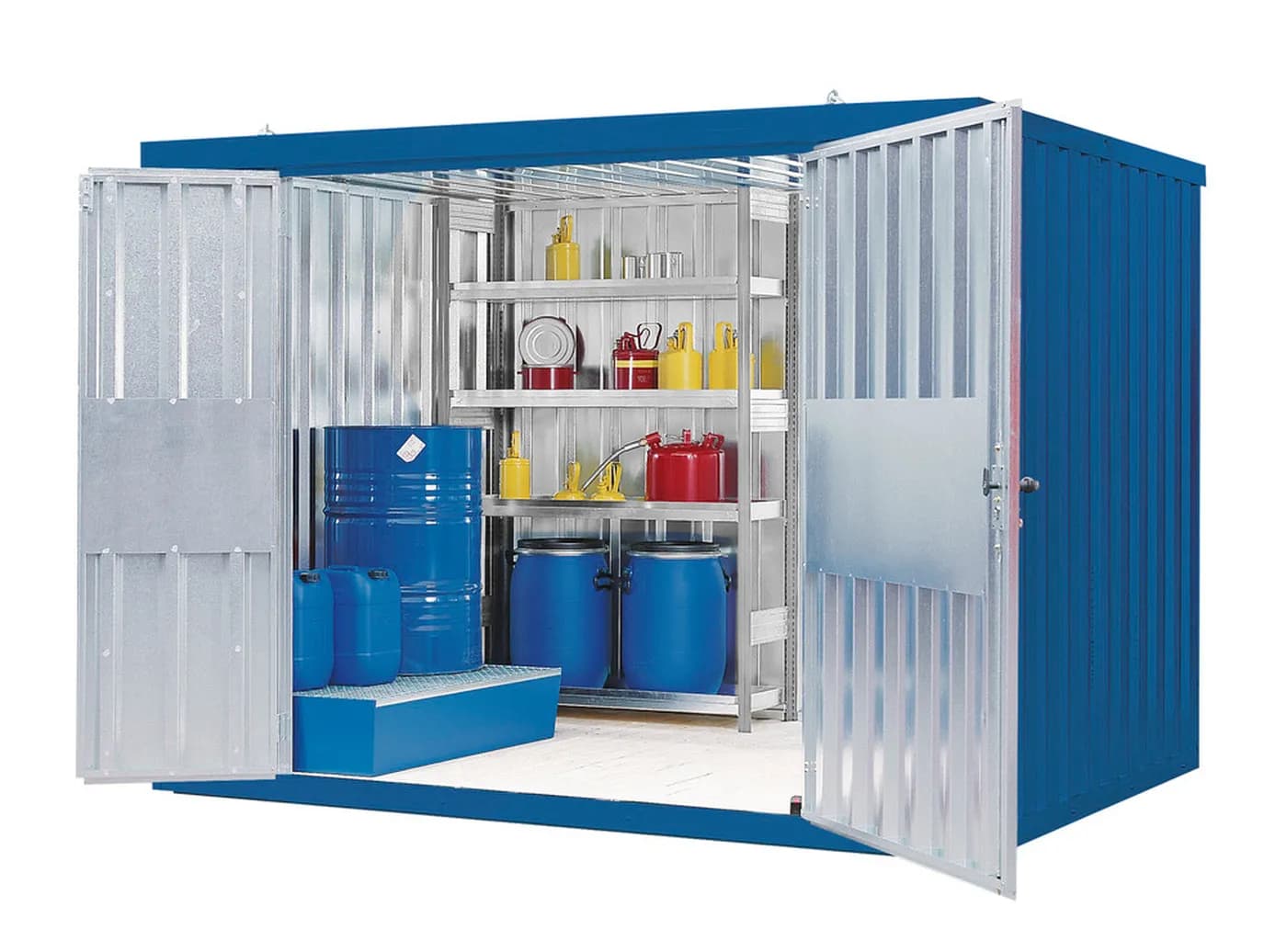
The MC 320-T2 equipment container is an insulated storage solution designed to protect your sensitive equipment, goods and materials against humidity, heat and temperature variations. Unlike standard non-insulated shipping containers, this model includes insulation that limits thermal fluctuations and condensation, making it suitable for storing electronic equipment, precision tools, non-volatile chemicals, medical supplies or non-perishable foodstuffs. Its galvanized then painted steel structure provides superior corrosion resistance compared to a simply painted container, particularly in humid or saline environments. Delivered assembled, it requires no on-site assembly, which reduces commissioning time and labor costs. This container differs from classic shipping containers in its dimensions and design: it is a storage container intended to remain in place, often used as a technical room, site shelter or secure storage. It does not comply with ISO 668 and 1496 standards applicable to shipping containers, as it is not designed to be stacked or handled with port spreaders. However, it is equipped with forklift pockets or lifting points for occasional movement by forklift or crane. Its external dimensions (width 2,985 mm, depth 2,350 mm, height 2,196 mm) and internal dimensions (width 2,900 mm, depth 2,152 mm, height 2,051 mm) offer a storage area of approximately 6 m² and a usable volume of approximately 12.8 m³. The maximum payload of 3,120 kg allows storage of heavy loads, provided the weight is evenly distributed over the floor. The floor is generally made of marine plywood or steel, but this information is not provided; this should be verified with the supplier. The double door, positioned on the long side, opens from both sides, making loading and unloading easier, even in tight spaces. This configuration is particularly appreciated on sites where access is limited. The galvanized then painted finish in RAL 5010 blue offers double protection: the galvanization protects the steel against corrosion by barrier and sacrificial effect, while the paint provides additional resistance to chemical attack and UV. This finish is recommended for outdoor installation, including seaside, where salt air accelerates rusting of unprotected steels. The container weighs 410 kg, making it movable by a forklift of suitable capacity (generally 2.5 to 3 tonnes) or by a mobile crane. It is important to check the load-bearing capacity of the ground before installation: a loaded container can exert significant pressure on the ground (up to several tonnes per square meter). A bed of compacted gravel or concrete blocks are often necessary to prevent sinking and ensure stability. The insulation of this container is not detailed in the provided specifications. It can be assumed to be made with sandwich panels (mineral wool or rigid foam) or interior lining, but it is essential to inquire about the thickness and type of insulation, as well as the possible presence of a vapor barrier. Without this information, it is difficult to guarantee precise thermal performance. However, even moderate insulation provides comfort in use: it reduces condensation, protects equipment from thermal shocks and limits overheating in summer. For use in very humid areas, it is advisable to add a dehumidifier or suitable ventilation. Maintenance of the MC 320-T2 container is simple: regular visual inspection of paint and door seals, cleaning with clear water or mild detergent, and touching up scratches with suitable anti-rust paint. Hinges and lock should be lubricated periodically. Door seals, generally made of EPDM rubber, should be checked and replaced if cracked or crushed, as they ensure air and water tightness. A door that closes poorly can lead to infiltration and promote corrosion or water damage. In France, installing a storage container is subject to urban planning regulations. Depending on its surface area and height, it may be considered a construction and require a prior declaration of works, or even a building permit. It is recommended to inquire with the town hall before any installation, especially if the container is visible from the public road or if it is installed for more than three months. For professional use, it may be subject to local signage tax and other tax obligations. Transporting the assembled container requires a flatbed truck or crane truck. Delivery assembled means the container arrives ready to use, but unloading must be prepared: access must be clear and the ground must be able to support the weight of the whole (container + load). The indicated price (€3,990) is a sale price excluding or including VAT? This information is not specified. It is advisable to check delivery conditions (transport costs, unloading) and any options (ramp, lighting, ventilation, heating). This container can be used as a storage room for a craftsman, a business, an association or an individual. It can also serve as a site office, changing room, or technical room for sensitive equipment. Its 6 m² area and 3,120 kg payload make it a versatile space. Compared to a 10-foot shipping container (about 3 m long), this model is wider and shorter, which may better suit certain site configurations. It should not be confused with a refrigerated container (reefer) which is designed for transporting perishable goods and temperature-controlled. Here, insulation is passive, without a refrigeration unit. For storing moisture-sensitive products, it is recommended to add desiccant bags or a ventilation system. In summary, the MC 320-T2 equipment container is an insulated, robust and ready-to-use storage container, suitable for protecting sensitive equipment. Its strengths are its galvanized and painted finish, its double doors, its high payload and its assembled delivery. Its limitations concern the absence of ISO standards for sea transport, the lack of details on insulation and the need to check local regulations. Before purchase, it is advisable to request the full technical data sheet (type of insulation, thickness, floor material, fire resistance, etc.) and compare with other models. For intensive outdoor use, regular maintenance will extend its lifespan. Finally, it is important to note that this container is not designed to be stacked: do not stack multiple units without a suitable support structure. Failure to follow this instruction can lead to deformation and safety risks. To go further in the use of this container, let's examine several concrete sector-specific use cases. In the building and public works sector, this container can serve as a storage room for power tools, consumables (screws, plugs, adhesives, paints), personal protective equipment (helmets, vests, safety shoes) and spare parts. Its double doors allow quick access from outside, and its insulation protects products sensitive to frost or humidity, such as bags of cement, render or tile adhesives. On a construction site, it can be moved as work progresses using a forklift, provided the ground is stabilized. In the agricultural sector, it can store seeds, fertilizers, plant protection products (in compliance with local regulations on chemical storage), small irrigation equipment or tractor spare parts. Insulation limits temperature variations that could degrade certain inputs. In the medical or paramedical field, it can serve as a reserve for medical devices, single-use consumables, hygiene products or non-heat-sensitive medications. In retail, it can be used as a storage reserve for seasonal items, archives, or as an order preparation room. For sports or cultural associations, it can house camping equipment, musical instruments, sets, costumes, etc. Finally, for individuals, it can serve as a garden shed, workshop, extra garage for motorcycles, bicycles, gardening tools, or storage for furniture and personal effects during a move or renovation. Let's now compare this MC 320-T2 container with other storage solutions commonly available on the market. First, compared to a standard 10-foot shipping container (about 3.05 m long, 2.44 m wide, 2.59 m high), the MC 320-T2 is wider (2.985 m) but less deep (2.35 m) and less high (2.196 m). Its floor area is about 6 m², compared to about 7.4 m² for a standard 10-foot. However, the MC 320-T2 is insulated, galvanized and painted, while a standard shipping container is generally made of painted Corten steel, without insulation. The shipping container can be stacked and transported by sea, which is not the case for the MC 320-T2. The price of a used 10-foot shipping container may be lower, but insulation and corrosion protection work will be needed to achieve equivalent performance. Compared to a 20-foot shipping container (about 6.06 m long, 2.44 m wide, 2.59 m high), the MC 320-T2 is much smaller (area of about 6 m² versus 14.8 m² for a 20-foot). The 20-foot offers a much larger volume, but it is bulkier, heavier (about 2.2 tonnes empty) and requires a more powerful truck with crane. It is generally not insulated. The MC 320-T2 is therefore more suitable for small spaces and moderate loads. Compared to a refrigerated container (reefer), the MC 320-T2 has no refrigeration unit and cannot maintain a controlled temperature. A reefer is designed for transporting perishable goods and can maintain temperatures from -25 °C to +25 °C, but it is much more expensive, heavier and requires electrical power. The MC 320-T2 will be suitable for storage at ambient temperature, with protection against heat and cold peaks. Compared to an open top or flat rack container, the MC 320-T2 is closed and insulated, making it more suitable for storing weather-sensitive equipment. Open top and flat rack are designed for transporting oversized loads, but they do not offer protection from the elements. Compared to a high cube container, the MC 320-T2 has an internal height of 2,051 mm, which is less than a high cube (about 2.69 m). This may limit the storage of tall objects or standing work inside. Therefore, check the height of equipment to be stored. Finally, compared to a wooden or metal garden shed, the MC 320-T2 offers much better security (steel walls, lockable door) and superior resistance to weather and intrusion. It is also more durable and less prone to pests (termites, rodents) than a wooden shed. However, it is heavier and more expensive to purchase. For transport and handling, it is essential to follow certain safety rules. The MC 320-T2 container weighs 410 kg empty. When loaded, its total weight can reach 3,530 kg (410 kg + 3,120 kg). Movement must be carried out by a professional equipped with a forklift whose lifting capacity is sufficient, taking into account the overhang. Forklift pockets must be used correctly, and it is forbidden to lift the container by the roof or walls. For road transport, the container must be strapped to the trailer or flatbed. In France, the transport of goods is subject to regulations on vehicle weights and dimensions. A container 2.985 m wide exceeds the maximum width allowed for a standard vehicle (2.55 m), which may require a special transport permit for an exceptional convoy. It is therefore important to check with the carrier the necessary permits. In addition, the container must not be modified without professional advice, as this could compromise its structure and safety. For installation, it is recommended to provide a flat, stabilized surface, such as a concrete slab, concrete blocks or a bed of compacted gravel. The container should be slightly raised to avoid direct contact with the ground and allow air circulation, which limits corrosion from below. A clearance of at least 1 meter around the door is necessary to maneuver the doors. If the container is installed in a windy area, it is advisable to anchor it to the ground using fixing brackets or straps, especially if lightly loaded. Regarding preventive maintenance, it is useful to keep an inspection log: check every six months the condition of paint, seals, hinges, lock and floor. Clean leaves and debris accumulated on the roof to prevent water retention and corrosion. Check for rust on welds and lifting points. In case of deep scratches, apply anti-rust paint then a finishing paint in RAL 5010 shade. For highly corrosive environments (seaside, industrial area), more frequent maintenance is advisable. Finally, to improve comfort in use, accessories can be added: LED lighting powered by a solar panel or electrical extension, mechanical ventilation, shelves, racks, or a dehumidification system. These additions must be made in compliance with electrical safety rules. In conclusion, the MC 320-T2 equipment container is a versatile, robust and ready-to-use product that meets the needs of secure and insulated storage. It stands out for its galvanized and painted finish, its double doors, its high payload and its assembled delivery. It is important to carefully check its technical characteristics (insulation, floor, fire resistance) and comply with installation and transport rules. For any specific project, it is recommended to consult a storage professional and check local permits.