Description
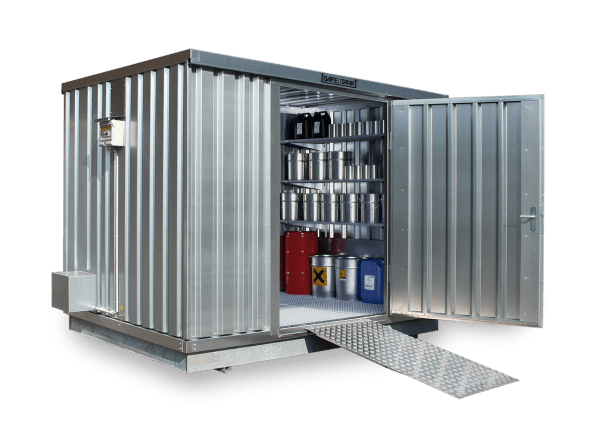
The PROTECTO retention container is designed for storing hazardous or polluting materials, whether liquid or solid. It meets environmental safety requirements with a high-capacity sump that contains accidental leaks or spills. It is ideal for industrial sites, production areas, logistics warehouses and worksites where handling chemical or petroleum products requires enhanced protection. Its design combines the robustness of a shipping container with integrated retention, making it a hybrid solution for areas at risk of pollution.
The container structure is made of steel, a material commonly used in shipping container manufacturing for its mechanical strength and durability. Corten steel, when used, offers better corrosion resistance thanks to its chemical composition, which promotes a protective surface layer. The PROTECTO container has a galvanised steel grating floor, ensuring good drainage of liquids into the sump while supporting heavy loads. Galvanisation protects the steel against rust, essential in environments where corrosive products may be present. The floor is designed to withstand mechanical and chemical stress and can be removable or fixed depending on the model, making cleaning and inspection of the sump easier.
External dimensions are 3,050 mm long, 2,170 mm wide and 2,350 mm high. These are close to a 10-foot shipping container but slightly wider. Internal dimensions provide storage space of 2,920 mm long, 2,000 mm wide and 2,000 mm high, giving a storage area of 5.80 m². The container weighs 750 kg, making it manoeuvrable with suitable lifting equipment (forklift, crane) while remaining heavy enough for good stability once in place. These dimensions comply with ISO 668 for series 1 containers, although the PROTECTO container is specifically designed for retention, not standard sea transport.
Access is via a single-leaf door on the 2-metre side. The door measures 1,320 mm wide and 1,930 mm high, with a clear opening of 1,270 mm by 1,890 mm. This allows loading and unloading of drums, cans, buckets or other containers, as well as access for maintenance and monitoring. The door is fitted with a lock or secure closing system, though specific details are not provided. Check for seals to prevent water ingress or vapour leaks. The side door position facilitates manoeuvring in tight spaces and allows full opening without hindering loading operations.
The 1,030-litre retention volume is a key feature. It can contain the full contents of one or more containers in the event of rupture or leakage. Under current regulations, particularly in France, hazardous product storage must have suitable retention capacity. For petroleum products, retention must be at least 50% of the total stored volume, and for chemicals it can reach 100% of the largest container. The 1,030-litre volume provides a valuable safety margin for many applications. Check the chemical compatibility of the sump materials with the products stored, as galvanised steel can be attacked by certain strong acids or concentrated bases.
Installation must be on a flat, stable surface capable of supporting the total weight when loaded. Allow clear space around the door for full opening and manoeuvring. If the container is to remain outdoors, check its weather resistance and ensure vents or ventilation systems are correctly sized to prevent dangerous vapour accumulation. Some models have opening roofs or forced ventilation, but these options are not mentioned in the specifications provided. It is therefore important to check this with the manufacturer or provide additional installation if volatile products are stored.
Transport of this type of container in France is subject to dangerous goods transport regulations (ADR). If used to transport dangerous goods, it must comply with ADR requirements, particularly regarding packaging, labelling and documentation. For stationary use, rules fall under installations classified for environmental protection (ICPE) and local regulations. It is essential to consult the competent authorities for obligations specific to your activity. The container itself, when moved empty or used as packaging, may be subject to specific requirements depending on its classification.
When purchasing a retention container, several points require attention. Verify that the retention volume complies with the products stored and maximum authorised quantities. Ensure the sump material is compatible with the chemicals concerned (galvanised steel, stainless steel, high-density polyethylene, etc.). Check weld quality and absence of leaks. Examine the door closing system and any safety devices (leak detection, alarm). Finally, consider dimensions and weight for installation and transport. A visual check before each use is recommended to detect cracks, deformation or corrosion.
This container can also be used to store hazardous waste, batteries, paints, solvents, used oils or plant protection products. In waste management, it can be integrated into a sorting or grouping area before collection by an approved contractor. Its design prevents soil and water pollution in the event of accidental spillage. Staff should be trained in correct container use, drum filling, product handling and emergency spill procedures. A prevention plan and instructions displayed near the container are good practice.
Routine maintenance and periodic checks are essential to ensure safety and durability. A visual check before each use ensures the sump has no cracks, holes or deformation. The grating should be removed regularly to clean the sump bottom and remove product residues that may accumulate. Clean with products compatible with galvanised steel, avoiding strong acids or concentrated bases that could attack the coating. After cleaning, rinse thoroughly with clean water and dry completely before replacing the grating. Door hinges and the closing mechanism should be lubricated periodically for smooth operation and to avoid jamming. If installed outdoors, check seals and any ventilation grilles, replacing as necessary. An annual inspection by a competent body may be required under local regulations or insurance. Keeping a log of inspections and maintenance work is also advisable, facilitating audits and checks.
French regulations applicable to hazardous material storage should be clarified. Installations classified for environmental protection (ICPE) are governed by the Environmental Code, notably Articles L. 511-1 et seq. Depending on the nature and quantity of products stored, the operator may be subject to declaration, registration or authorisation. Ministerial orders of general requirements applicable to certain ICPE categories (e.g. covered warehouses, petroleum product storage, waste treatment facilities) impose retention and containment measures. As a general rule, retention capacity must be at least 50% of the total volume stored, and at least 100% of the largest container. For toxic or highly hazardous products, stricter requirements may apply. The PROTECTO container with its 1,030 litres of retention can meet these obligations for a stored volume up to approximately 2,060 litres under the 50% rule, or up to 1,030 litres under the 100% of largest container rule. It is the user's responsibility to verify compliance with current regulations and, if necessary, consult a specialist engineering firm.
Regarding transport, the container itself is not subject to ADR when moved empty or used as packaging for dangerous goods. In the latter case, it must meet ADR requirements for large bulk containers (IBCs) or packaging, depending on its classification. ADR classifies dangerous goods into nine classes (explosives, gases, flammable liquids, flammable solids, oxidisers, toxic, radioactive, corrosive, miscellaneous). The PROTECTO retention container is primarily intended for stationary storage, but can be transported on a suitable vehicle with proper securing. Transporting such a container requires a vehicle with sufficient payload (tare weight 750 kg plus the weight of stored products) and appropriate lifting equipment (forklift, mobile crane). Check dimensions and total weight before any movement, and ensure doors are properly locked. For road transport, signage and documentation rules apply if the container holds dangerous goods.
Sector use cases are numerous. In the chemical and petrochemical industry, this container can store drums of solvents, resins, lubricants or additives temporarily. In the automotive sector, it is useful for storing engine oils, brake fluids, antifreeze or used batteries. Garages and vehicle inspection centres find it a solution for meeting sorting and retention obligations. In construction and public works, it stores bituminous products, paints, adhesives or fuel for machinery. Farms can place plant protection products, liquid fertilisers or tractor oils, provided they respect distances from water points. Local authorities and professional waste centres can use it to group hazardous household waste (paints, solvents, batteries) before collection. Finally, laboratories and research establishments see it as a way to store small quantities of chemicals with increased safety.
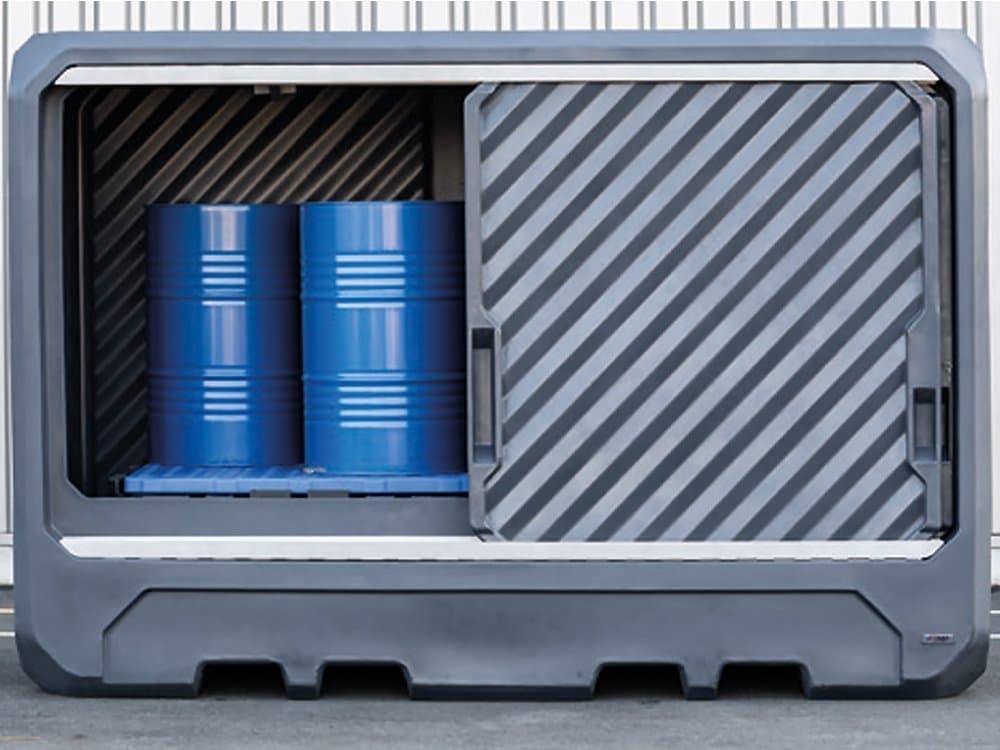
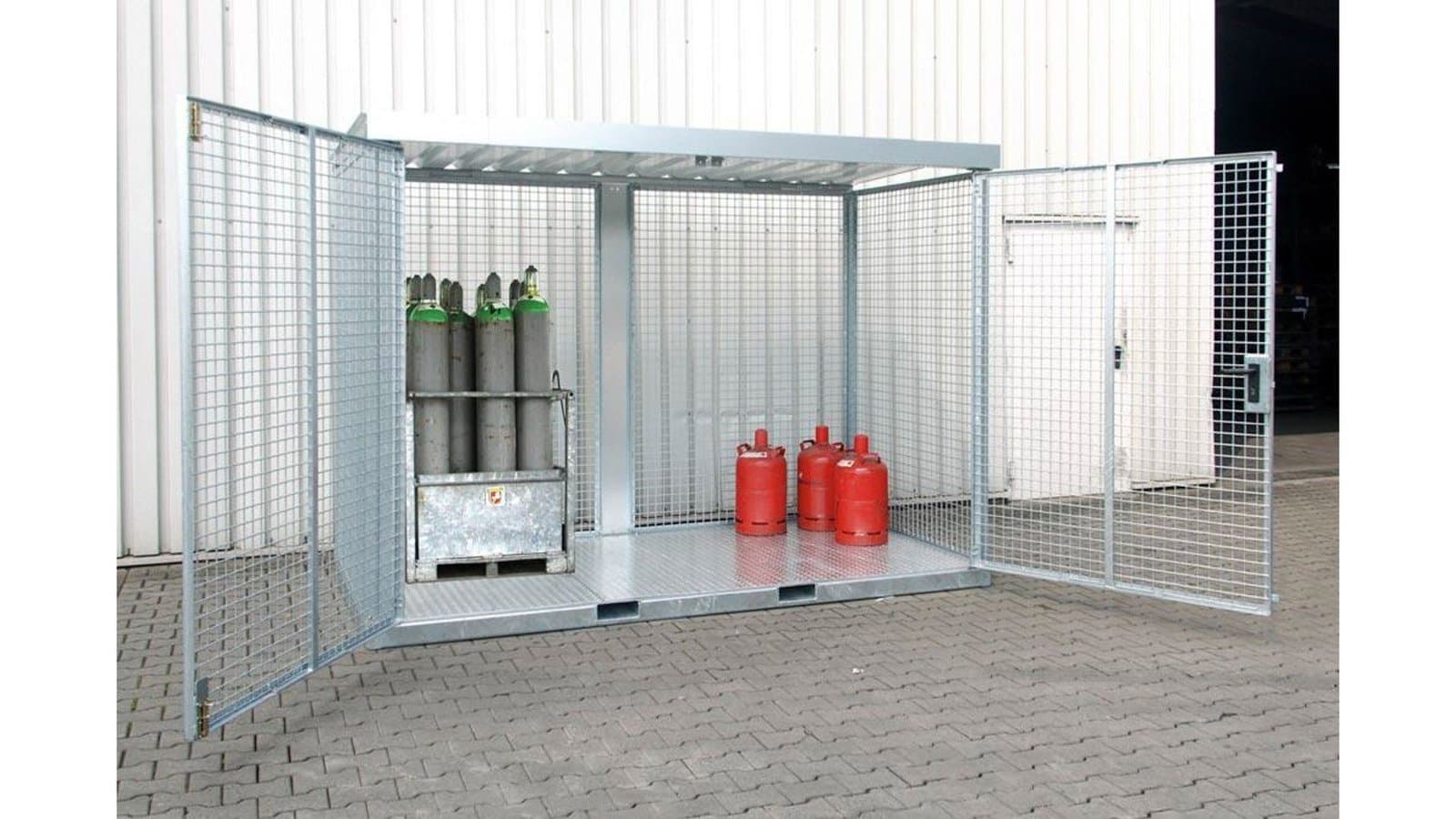
Compared to other retention solutions, this container offers several advantages. Simple retention trays, in plastic or steel, offer less capacity and do not protect products from weather or prying eyes. Chemical safety cabinets are often smaller and cannot store large drums. Standard shipping containers without a sump are unsuitable for hazardous liquid storage as leaks would seep into the ground. The PROTECTO container thus combines the robustness and modularity of a shipping container with retention, making it an attractive hybrid solution. Compared to a 20-foot container, it is more compact (3.05 m long vs 6.06 m), making it easier to site in limited spaces. It can be moved more easily and requires less floor space. In return, its storage capacity is reduced, suiting moderate volumes. For larger needs, 20-foot or 40-foot retention containers exist, with retention volumes up to several thousand litres. The choice depends on the volume of products to store, rotation frequency and available space.
Another point to consider is chemical compatibility of materials. Galvanised steel resists many products well but can be attacked by strong acids, concentrated bases or saline solutions. In that case, a specific internal coating (epoxy, anti-corrosion paint) or stainless steel construction may be necessary. Galvanised grating offers good mechanical and some chemical resistance but can become slippery with certain liquids. Non-slip footwear is therefore advisable during handling. Container ventilation is also important: if volatile products are stored, natural or forced ventilation must be provided to prevent accumulation of toxic or flammable vapours. The PROTECTO container does not appear to have specific ventilation in the specifications provided, so check with the manufacturer or provide additional installation.
Electrical installation, if required (lighting, leak detection, alarm), must comply with current standards, particularly for explosive atmospheres (ATEX). In areas where flammable vapours may be present, electrical equipment must be ATEX certified. A qualified electrician should be used for any work. Similarly, gas or leak detection systems must be suited to the products stored.
Finally, using this container is part of environmental risk management. Preventing accidental pollution is a moral and legal obligation for any company handling dangerous products. Installing a retention container reduces the risk of soil and water contamination and helps comply with insurance requirements. Staff should be trained in correct container use, drum filling, product handling and emergency spill procedures. A prevention plan and instructions displayed near the container are good practice. In the event of a spill, the liquid must be contained in the sump, then pumped or absorbed with suitable materials and disposed of as hazardous waste. Never discharge products into the drainage system or the natural environment.
In summary, the PROTECTO retention container is a versatile piece of equipment combining safety, durability and regulatory compliance. Its 1,030-litre retention volume, galvanised grating floor and single-leaf door make it a practical solution for many sectors. It requires regular maintenance, suitable installation and use in accordance with regulations. Before purchase, it is essential to check capacity needs, chemical compatibility of materials and legal obligations applicable to your activity. This container can be an attractive alternative to traditional retention solutions, offering extra protection against weather and unauthorised access.


 Promo