Description
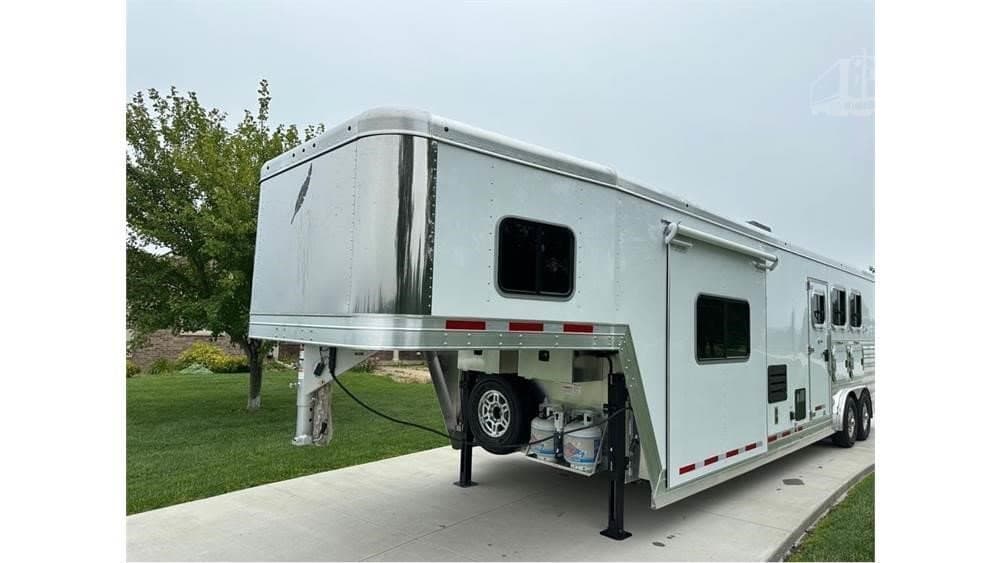
The 2023 Featherlite 3-horse LQ trailer is a model designed for equestrian transport with an integrated living space. It combines horse trailer features with an 11-foot living quarters (LQ) package, allowing horses to be housed and a functional living area to be available at competition or leisure locations. This product is aimed at riders, breeders, or professionals seeking a complete mobile solution. In this description, we detail the technical aspects, equipment, uses, maintenance, and points of caution, based on the information provided and general knowledge of the equestrian trailer industry.
To begin, the trailer structure is based on a steel chassis, generally galvanized or treated against corrosion, suited to the demands of animal transport. The 2023 Featherlite model is equipped with a gooseneck hitch, which offers better weight distribution and increased stability on the road compared to a conventional bumper hitch. The number of rear axles is tandem, meaning two axles, which improves load capacity and roadholding. The doors are swing type, facilitating access to the interior. Exact dimensions (length, width, height) and weight are not provided in the known specifications, but this type of trailer generally falls within a total length range of 7 to 9 meters for a model with an 11-foot LQ, with an overall width of about 2.30 m and an interior height of about 2.20 m. Empty weight can vary from 2,500 to 3,500 kg depending on equipment. It is advisable to verify these data with the manufacturer or seller before any purchase, as they determine the required towing vehicle.
The interior layout of the horse area includes a collapsible rear tack with pivoting blanket bars. The collapsible rear tack allows the space to be adjusted and gear to be stored, while the pivoting blanket bars are used to tie horses and keep them safe during transport. Mangers with large lockable storage underneath provide storage space for hay, buckets, or equipment, while allowing horses to feed. Storage pads are present to organize transport protection. The drop-down door with drop-down window and bars facilitates unloading horses and improves ventilation. Drop-down windows on the head and tail sides complete the airflow and allow animals to be monitored. The white ash interior color contributes to better brightness and a clearer atmosphere, which can reduce horse stress. The full-width rear ramp is an essential element for safe loading and unloading, with a non-slip surface. The easy-care flooring, often rubber or extruded aluminum, resists hooves and liquids and cleans easily.
The 11-foot LQ living quarters (S11B package) transform this trailer into a true mobile studio. It includes a slide-out sofa, which optimizes daytime space, and a diamond ash interior, a decorative veneer that provides a refined finish. Equipment includes electric hydraulic jacks to stabilize the trailer once parked, dual propane tanks to power appliances, a ducted furnace roof, and air conditioning for comfort in all weather. An electric retractable awning with LED light strip extends the living space outdoors and improves visibility. A sound system and premium lighting package are integrated, along with a rear load light to facilitate nighttime maneuvers. These features are representative of the typical equipment of high-end LQ trailers.
Regarding materials, the exterior body is generally aluminum, a common choice for horse trailers due to its lightness and corrosion resistance. Aluminum wheels reduce unsprung weight and improve aesthetics. A spare tire and wheel are provided, which is essential for long trips. Swing doors, often double doors, allow wide access. The gooseneck is integrated into the chassis and requires a suitable hitch ball, generally 2 5/16 inches (about 58 mm) in the United States, but the exact standard for Europe should be verified. In France, the gooseneck hitch is less common than the drawbar, but it is allowed if compliant with the highway code. It is important to respect maximum authorized weights (GVWR) and to have the appropriate license (B96 or BE) depending on the sum of the GVWR of the towing vehicle and trailer.
For use, this trailer is suitable for transporting three horses, making it ideal for stables, competitions, equestrian trail rides, or professional travel. The living space allows staying on site for several days without depending on outside accommodation. The slide-out sofa and collapsible rear tack offer modular configurations. Equipment such as air conditioning, furnace, and sound system make the stay comfortable, whether for a stopover or a base camp. The full-width rear ramp and drop-down door with drop-down window facilitate loading and unloading operations, even for horses not used to it. Drop-down windows on the head and tail sides provide cross ventilation, reducing heat and humidity.
Maintaining such a trailer requires regular attention. The interior must be cleaned after each transport to avoid accumulation of manure and urine, which can corrode the floor and walls. The easy-care flooring can be washed with plenty of water, but it is advisable to use non-aggressive products. Aluminum and steel parts should be inspected for corrosion, especially around welds and fasteners. Aluminum wheels require regular cleaning to preserve their appearance and prevent oxidation. Tires should be checked for pressure and wear, and the spare wheel should be kept in good condition. Electric hydraulic jacks should be checked for leaks and proper operation. The propane system should be tested periodically for leaks, and smoke or carbon monoxide detectors in the living space should be checked. Air conditioning and furnace require annual maintenance. The retractable awning should be cleaned and lubricated to prevent jamming. Finally, the chassis and axles should be greased according to the manufacturer's recommendations.
When purchasing a used or new trailer, several points of caution should be considered. Check the condition of the floor, especially if it is wood or plywood, as horse urine can deteriorate it. Inspect the chassis welds and the presence of rust. Check the operation of the brakes (electric or inertia) and the wear of the linings. Ensure that the signal lights, including the rear load light, work properly. Check the condition of the tires, including the spare wheel, and the manufacturing date. Test the living equipment: jacks, awning, air conditioning, furnace, sound system. Ask for maintenance invoices. Verify the conformity of weights and dimensions with your towing vehicle and license. In France, a trailer with a GVWR exceeding 750 kg must be registered and insured. If the GVWR is over 3,500 kg, a specific license may be required. Trailers over 500 kg must be equipped with a braking system. It is also important to respect speed limits specific to trailers (often 80 km/h on highways for trailers over 750 kg, but check the signs). Regulations on the transport of live animals impose conditions of ventilation, space, and watering for long journeys, notably Regulation (EC) No 1/2005. For horses, regular breaks are recommended.
To complete this presentation, let us examine sector use cases in more detail. Boarding stables and equestrian centers use this type of trailer to transport several horses to competitions or outings. The three-horse capacity allows one rider and their mounts, or several riders, to be taken. Equestrian trail riding clubs appreciate the living space for extended stages. Breeders can use it to present horses for sale or at breeding shows. Mobile equine veterinarians can find a work or rest space during travel. Finally, private owners who wish to travel with their horses and have self-contained accommodation see it as an economical solution compared to a hotel. In all these cases, the modularity of the tack and slide-out sofa allows the space to be adapted to needs.
Now let us compare this 3-horse trailer with other sizes and types. A 2-horse trailer is shorter and lighter, often towable by a more modest vehicle, but it offers less living space and does not allow a third horse to be taken. A 4-horse trailer, longer, requires a more powerful towing vehicle and a heavy vehicle license in some cases. The 3-horse LQ model represents a compromise between capacity and maneuverability. Regarding type, a trailer without LQ (simple transport) is less expensive and lighter, but does not allow staying on site. Trailers with 8- to 10-foot LQ are more compact, while those with 12 to 14 feet offer more comfort but increase weight and price. The choice depends on travel frequency and desired comfort level. The gooseneck, meanwhile, is often preferred for long trips because it improves stability and reduces sway. Drawbar trailers are more common in Europe, but gooseneck is gaining ground.
Let us address seasonal maintenance. Before winter, it is recommended to drain the water system (if present) to prevent freezing, clean gutters, and check roof sealing. The battery of electrical equipment should be charged and stored in a sheltered place. Tires should be inflated to the recommended pressure and the trailer raised to prevent deformation. In spring, inspect brakes, lights, and electrical connections. Grease door and ramp hinges. Check the operation of jacks and awning. Regular maintenance extends lifespan and maintains resale value.
Regarding regulations, in addition to the points already mentioned, it should be noted that the transport of live animals is governed by Regulation (EC) No 1/2005, which imposes welfare standards: sufficient space, ventilation, watering, breaks. For horses, good practice guides exist. In France, the trailer registration certificate must be up to date, and insurance must cover transport. The driver must check signage: a reflective panel at the rear, marker lights if width exceeds 2.10 m. The trailer must be equipped with an anti-underrun device. The towing vehicle's mirrors must provide sufficient vision. In case of overweight, penalties can be severe. It is therefore crucial to respect the GVWR and not overload.
Finally, let us talk about active and passive safety. The 2023 Featherlite trailer incorporates equipment such as the rear load light, useful for maneuvers. Pivoting blanket bars and drop-down windows contribute to horse comfort. Air conditioning and furnace regulate temperature. The sound system and premium lighting improve the experience. For road safety, it is advisable to distribute the load evenly, check the hitch before each departure, and drive cautiously by anticipating braking. The use of electric hydraulic jacks facilitates stabilization on flat ground. For prolonged parking, it is recommended to deploy the awning and secure the propane tanks. All these elements make this trailer a reliable tool for demanding professionals and individuals.