Description
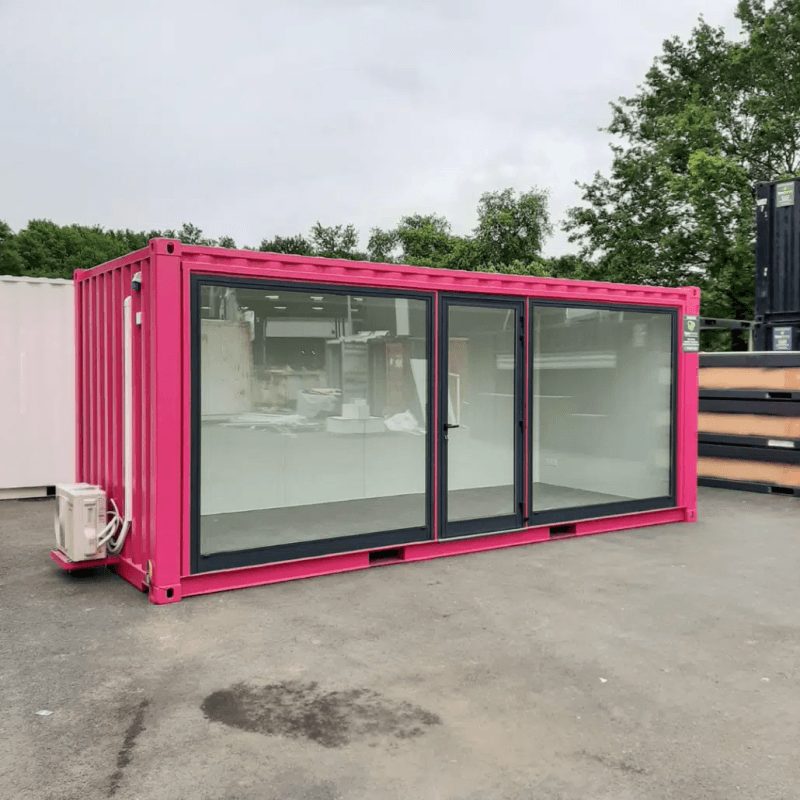
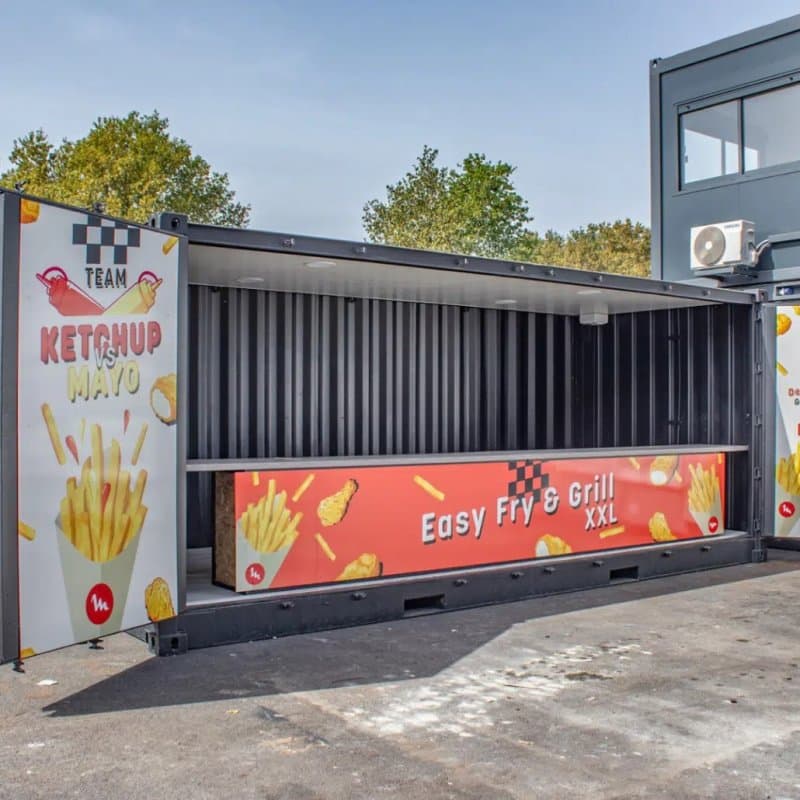
The sales container with panoramic glass front, also known as a sales bubble container, is a modular solution designed to create an attractive and functional point of sale within a standardised volume. It uses the external dimensions of a 20-foot shipping container, approximately 6.05 m long, 2.43 m wide and 2.59 m high, making it easy to fit on most sites and transport by conventional means. Its special feature is the large glazed area on one side, which turns a metal box into a bright shop window visible from afar.
This configuration is particularly suited to uses where visual appeal and interior brightness are decisive. A seasonal retail business, a pop-up shop in a city centre, a stand at a trade fair, an off-site showroom or a market sales point can thus have a closed, secure and immediately identifiable space. The glass front plays a dual role: it displays the products and activity to the outside while providing natural light that reduces the need for artificial lighting during the day.
The structure is made of Corten steel, a low-alloy steel containing copper, chromium and nickel. This material is widely used in shipping container construction for its resistance to atmospheric corrosion: when exposed to the weather, it develops a protective oxide layer on the surface that slows the progress of rust. This does not remove the need for periodic maintenance, particularly in marine or industrial environments, but it gives the assembly good durability over time. The floor is made of 28 mm marine plywood, a cross-layered panel bonded with phenolic resin, moisture-resistant and able to support moderate rolling loads. It provides a sound base for interior fitting, whether for a floor covering, light partitions or commercial furniture.
At the rear, the container retains double doors fitted with standard container locks. This configuration allows wide access for loading, unloading and installing furniture, while ensuring secure closure when the point of sale is inactive. ISO certification confirms that the structure meets the dimensional tolerances and strength requirements defined by the international standards applicable to shipping containers, in particular ISO 668 for dimensions and ISO 1496-1 for technical specifications. This compliance is a guarantee of compatibility with standard lifting and transport equipment.
Technically, a sales container with a glass front differs from a standard dry container in several ways. The wall cut-out for the glazing must be reinforced with a welded metal frame to preserve the rigidity of the assembly. The glazing itself can be simple tempered glass, double glazing or laminated safety glass, depending on the desired level of insulation and security. These choices affect interior thermal and acoustic comfort, as well as resistance to break-ins. It is therefore advisable to specify the intended use (food sales, jewellery, display of valuables) to adapt the glazing composition.
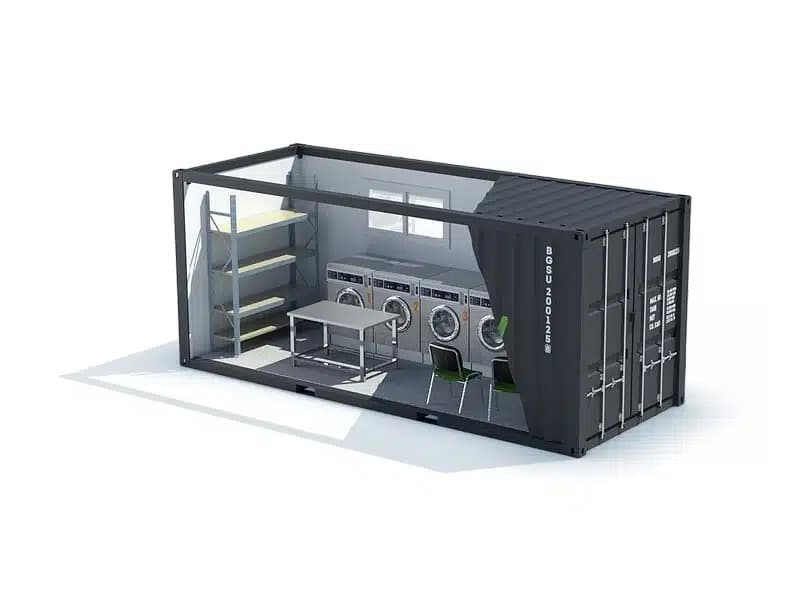
The interior fitting of a sales container can vary considerably. In its simplest version, the space remains open, with a bare or covered floor, lacquered or panelled walls, and added lighting. In more elaborate versions, a counter, wall displays, closed storage, air conditioning or heating, thermal insulation by lining the walls and ceiling, and an electrical system compliant with current standards can be included. The useful interior height, around 2.39 m for a standard 20-foot container, allows standing work without discomfort and the installation of suspended elements if required.
One of the major advantages of this type of container is its mobility. Once fitted out, it can be moved by container truck or crane without dismantling the structure. This makes it possible to test different locations, follow travelling events or adapt to seasonal activity periods. For professionals operating on several sites, it is a flexible alternative to traditional buildings, which involve heavy works and often more complex planning permissions.
Indeed, installing a sales container on private land or in public space raises regulatory questions. In France, setting up a structure of this type may be subject to planning permission depending on its duration, surface area and local regulations. A container placed temporarily may fall under the temporary installations regime, while a permanent installation may require a building permit or prior declaration. It is prudent to check with the planning department of the relevant municipality before any installation. Similarly, the electrical connection must comply with safety standards, and wastewater disposal must be provided for if the container hosts a catering or fresh produce sales activity.
The transport of the container itself is governed by abnormal load regulations when its dimensions or weight exceed the permitted thresholds. A standard 20-foot container, with an empty weight generally between 2.2 and 2.5 tonnes, remains within the usual limits for standard road transport. However, once fitted out, its weight may increase and require verification. Lifting must be carried out by professionals equipped with spreaders or suitable slings, respecting the lifting points provided for this purpose.
In terms of maintenance, a Corten steel container requires regular visual inspection, particularly of the welds, the lower parts of the walls and the areas around the glass front. Deep scratches that expose bare steel must be treated by applying a suitable anti-rust paint. The seals of the glass front and doors must be checked to prevent water ingress. The marine plywood floor can be cleaned with non-aggressive products and protected with a wood stain or coating if used intensively. Correct ventilation of the interior space is recommended to avoid condensation, especially if the container is lightly used or subject to large temperature variations.
When purchasing, several points deserve attention. The general condition of the structure should be checked: absence of major deformation, untreated holes, perforating corrosion. The glass front should be examined for any cracks, sealing defects or glazing not compliant with safety standards. The rear doors should open and close without forcing, with seals in good condition. The floor should not show soft or rotten areas. Finally, it is useful to request the available certificates, particularly ISO certification, and to ensure that any modifications have been carried out properly, without compromising the rigidity of the structure.
This container can be delivered new, ready to be fitted out according to your project. Its modularity allows many configurations: single point of sale, fast-food unit with counter and display window, reception space for an event, craft products shop, tasting stand, or sales office on a construction site. The glazed area provides transparency that reassures the customer and creates a direct link with the outside, while protecting from the weather.
For retail professionals, this type of container represents a credible alternative to lightweight buildings. It combines the robustness of industrial equipment with the flexibility of a customisable commercial space. Its price, positioned in an accessible range, makes it a viable solution for testing an activity or developing a network of demountable points of sale. Standardised dimensions facilitate the supply of accessories and spare parts, as well as integration into existing logistics chains.
In summary, the sales container with panoramic glass front is a versatile tool for retailers, event organisers, marketing professionals and any organisation wishing to have a mobile, visible and secure sales or presentation space. Its technical characteristics — Corten steel, 28 mm marine plywood floor, double rear doors, ISO certification, 20-foot dimensions — make it a reliable base for many projects. Particular attention to interior fitting, insulation and regulatory compliance will allow it to be used to best advantage over time.
To go further into the question of maintenance, it is useful to distinguish routine interventions from heavier operations. On a daily basis, a simple visual check after each windy or rainy episode allows a detached seal, a trace of incipient rust or an impact on the glazing to be spotted quickly. Once a year, a complete cleaning of the glazed facade with a non-abrasive product, followed by an examination of the hinges and door locks, extends the life of the equipment. Every two to three years, depending on exposure, it may be relevant to renew the paint on the most stressed areas, particularly the lower walls and the surround of the glass front. The floor, if covered with PVC or laminate, must be checked at intensive traffic points; without a covering, a periodically applied polyurethane wood stain limits moisture penetration. Finally, the screws and fixings of the glazed frame must be tightened if necessary, as transport vibrations and thermal cycles can gradually loosen them.
Regarding transport regulations in France, several frameworks apply depending on whether the container is moved empty, fitted out, or used as a sales vehicle. Road transport of a 20-foot container is generally carried out by a container truck equipped with a suitable chassis. The authorised gross vehicle weight must not exceed the limits of the Highway Code, and the driver must hold the required authorisations for abnormal loads if the dimensions or mass exceed the regulatory thresholds. For a fitted-out sales container, it is advisable to know precisely the empty mass plus equipment, as this may push the transport into a category subject to declaration. In addition, securing must comply with safety rules, with straps or twist-locks in good condition. When the container is used as a sales premises on the public highway, a temporary occupation permit for the public domain may be required by the town hall, in addition to any planning permissions. Finally, if the container is connected to the electrical network, the installation must be carried out by a qualified professional and comply with standard NF C 15-100 for low-voltage installations.
In terms of sector-specific uses, the sales container with glass front has varied applications. In the food sector, it can serve as a fresh produce sales point, creperie, drinks stand or local products shop, provided a washable floor covering, a water point and suitable ventilation are included. In the non-food sector, it is suitable for shops selling clothing, accessories, cosmetics, souvenirs, crafts or flowers. Tourism and event professionals use it as a reception desk, information point, ticket office or pop-up shop at festivals. Property developers see it as a demountable sales office on a construction site. Finally, local authorities can use it as a seasonal office, tourist information point or awareness space. This versatility explains the growing interest in this type of structure, which adapts to very varied budgets and operating periods.
Comparing this sales container with other formats helps choose the most suitable solution. A standard 20-foot dry container, without a glass front, is cheaper to buy and offers an identical surface area, but it does not have the commercial visibility of a glazed facade; it is better suited to storage or a technical room. A 40-foot container offers about twice the surface area, allowing several sales areas or an adjoining storage space to be fitted out, but it is heavier, bulkier and requires a larger site as well as specific transport. The high cube container, for its part, gains about 30 cm of interior height, an advantage for installing a light mezzanine or improving the feeling of space, but it remains subject to the same transport constraints as the standard 20-foot. Open top and flat rack containers, without a roof or side walls, are not suitable for enclosed sales use, unless heavily modified. Finally, reefer containers, insulated and equipped with a refrigeration unit, are reserved for transporting perishable goods and are not suitable for a point of sale, unless specifically converted. The choice therefore depends on the required surface area, budget, frequency of movement and desired level of finish.
It is also worth mentioning the accessory options frequently associated with this type of container: awning or cassetted blind to protect the entrance and customers from sun or rain, interior and exterior LED lighting, exterior power socket, signage panel, access steps or accessible ramp if accessibility is required, air conditioning or heating depending on the climate, and a reinforced locking system for periods of inactivity. These items are not necessarily included in the basic configuration and must be specified when ordering. Their early integration avoids costly corrective work after delivery.
Finally, it is important to remember that this container is offered at a price of 5,000 euros, which positions it in an accessible range for new ISO-certified professional equipment. This price corresponds to the basic structure; interior fittings, glazing options, insulation and technical equipment may vary the final cost. For a specific project, it is advisable to request a detailed quote including delivery, installation and any adaptations. This transparency allows offers to be compared on a consistent basis and avoids unpleasant surprises.
In conclusion, the sales container with panoramic glass front is a pragmatic response to the need for mobile, visible and secure commercial spaces. Its Corten steel design, 28 mm marine plywood floor, double rear doors and ISO certification make it a solid base for many projects. Particular attention to maintenance, local regulations and transport will ensure smooth and lasting operation. Whether for a pop-up shop, an event stand or a seasonal point of sale, this container offers a professional setting that enhances the activity and attracts customer attention.