Description
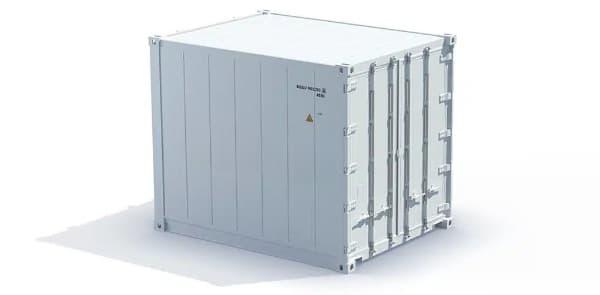
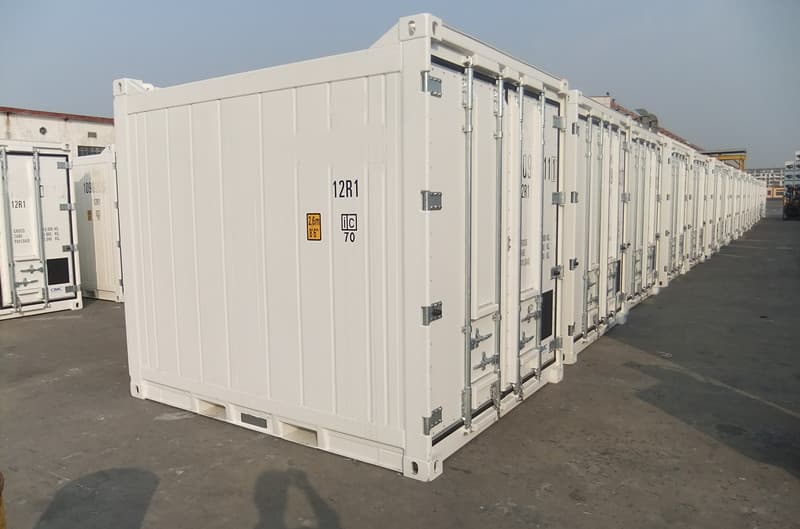
The 10ft High Cube insulated container is a compact, self-contained solution for protecting goods sensitive to temperature fluctuations. Its insulated walls slow heat exchange with the outside, maintaining a more stable environment than a standard dry container, without a refrigeration unit or power supply. This type of container is therefore aimed at professionals seeking simple, economical and mobile thermal protection for various uses, from temporary storage on site to preserving sensitive products in a small space.
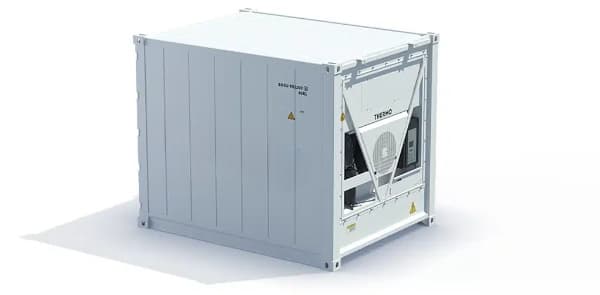
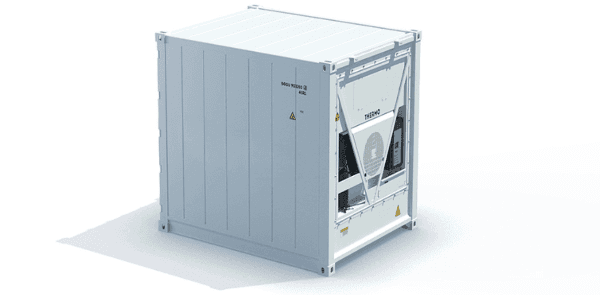
Technically, this 10ft High Cube insulated model has external dimensions of approximately 299 cm long, 244 cm wide and 259 cm high. These measurements place it in the 10ft container family, also called 3-metre containers, but with a height greater than a standard 10ft thanks to the High Cube configuration. This extra height improves usable volume and working comfort, especially when stacking pallets or setting up a workspace inside. The stated internal volume is 15.9 m³, offering interesting storage capacity for a container of this size. The tare weight is 2600 kg, a mass compatible with many lifting and transport means, but which must be taken into account during handling and delivery operations.
The structure is made of Corten steel, a low-alloy steel known for its resistance to atmospheric corrosion. This material is commonly used in shipping container manufacturing because it withstands outdoor environments and the mechanical stresses of transport. The floor is 28 mm marine plywood, a thick panel treated to resist moisture and repeated loads. This type of floor is suitable for manual pallet trucks, trolleys and heavy loads, provided load limits are respected and weights are properly distributed. The rear doors are double-leaf, equipped with container locks, allowing rear loading and unloading with full-width opening.
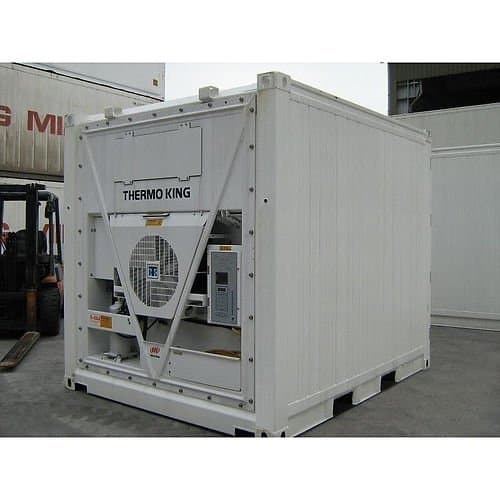
Insulation is the core element of this product. Unlike a refrigerated container with a cooling unit, an insulated container does not produce cold: it merely limits heat exchange between inside and outside. Walls, roof and floor are insulated, generally with rigid foam panels or sandwich materials, reducing heat loss in winter and heat gain in summer. This design protects goods against sudden temperature changes, sunlight or frost, without consuming energy. However, keep in mind that an insulated container is not a refrigerated container: it cannot actively cool contents or maintain a precise set temperature over long periods. Its effectiveness depends on the initial product temperature, storage duration, climatic conditions and door opening frequency.
Concrete uses are numerous. First, storing pharmaceutical or cosmetic products that fear heat but do not require a strict cold chain. The insulated container can also store non-perishable food, beverages, sensitive chemicals, paints, glues, resins or technical materials whose performance may be altered by extreme temperatures. On construction sites, it can serve as a storage room for electronic equipment, batteries, measuring instruments or consumables sensitive to humidity and temperature fluctuations. In events, it can be used as temporary storage for food or fragile products, with active refrigeration if needed.
Another common use is fit-out. Thanks to its insulated walls, this container can be converted into a site office, technical room, guard post or small work unit. Insulation improves thermal comfort and reduces noise compared to a non-insulated dry container. It is possible to install auxiliary heating, light air conditioning, lighting and power sockets, subject to safety rules and applicable standards. In this case, the insulated container becomes a compact living base, easy to move and reuse on different sites.
The compactness of the 10ft format is a major asset. It fits into spaces where a 20ft would not, whether in an urban yard, garden, densely occupied storage area or constrained industrial site. Its length of about 3 metres and width of 2.44 metres match the footprint of a standard 10ft container, facilitating integration into existing site plans. The High Cube height of 2.59 metres offers a more generous internal volume than a classic 10ft, with headroom allowing comfortable standing work after fit-out and stacking pallets on two levels depending on their height.
Transport and handling of this container require some anticipation. With a tare weight of 2600 kg, it can be lifted by a crane or suitable forklift using the four lifting corners provided. Road transport can be done on a container truck, flatbed or crane truck, depending on site accessibility. In France, container transport is subject to regulations on vehicle weights and dimensions: the 2.44-metre width is compatible with standard road gauges, but the total loaded height may exceed 4 metres depending on truck and container, potentially requiring an exceptional transport permit. It is therefore recommended to check the route gauge, bridges, overhead lines or restricted traffic zones before delivery. The container must also be properly chocked and secured during transport, in accordance with current safety rules.
When purchasing, several points deserve attention. First, distinguish an insulated container from a refrigerated container: the former insulates, the latter cools. If your need involves maintaining a precise temperature, a reefer container will be necessary. Then, check the insulation condition: no traces of moisture, mould, panel detachment or cracks in walls. Door seals must be flexible and tear-free, as they ensure air tightness and limit infiltration. A damaged seal greatly reduces thermal performance. The floor should be inspected for soft spots, holes or delamination; a 28 mm marine plywood floor remains robust but can wear over time and with poorly distributed loads. Finally, check the metal structure: perforating rust, deformation, cracked welds. Corten steel resists corrosion well, but regular maintenance, with cleaning and paint touch-ups on scratched areas, extends the container's lifespan.
Routine maintenance is simple. It involves cleaning inside and outside with clear water or mild detergent, checking door seals, greasing hinges and locks, and keeping paint in good condition. It is also advisable to ventilate the container when unused to avoid condensation and odours. If the container is used to store sensitive products, it may be useful to install a dehumidifier or absorbent sachets, as insulation does not regulate humidity. A hygrometer allows monitoring relative humidity and acting accordingly.
Applicable regulations depend on use. For private storage, constraints are generally limited but may fall under urban planning rules if the container is permanently installed on land. In some cases, prior declaration or building permit may be required, especially if the container is considered a construction. For professional use, hygiene and safety rules must be considered, particularly if food or chemicals are stored. Shipping containers are designed according to ISO 668 and ISO 1496 standards, which define dimensions, loads and tests. CSC marking (Container Safety Convention) certifies compliance for international transport, but it is not always present on containers intended for static use. It is therefore important to check the documentation provided and ensure the container matches the intended use.
This 10ft High Cube insulated container is offered new, with a Corten steel structure, 28 mm marine plywood floor, double-leaf rear doors with container locks and ISO certification. Its 15.9 m³ volume and High Cube height make it a compact yet comfortable storage space. It suits businesses, public authorities and individuals seeking a mobile, reusable and energy-free solution to protect goods sensitive to temperature variations. To choose the right model, it is advisable to precisely define the type of goods, storage duration, expected extreme temperatures and site access constraints. An insulated container does not replace a cold room, but it is an effective and economical thermal barrier when needs do not justify active refrigeration.
To go further, it is useful to compare this 10ft High Cube insulated format with other commonly offered solutions. A standard 20ft dry container offers about 33 m³ internal volume, more than double, but without insulation: it protects from rain, wind and intrusion, not temperature fluctuations. A 20ft High Cube increases usable height by about 30 cm compared to standard 20ft, improving fit-out comfort. A 40ft High Cube reaches about 76 m³ and suits large volumes, but becomes difficult to move and install in constrained urban space. The 10ft stands out for its manoeuvrability: it can be delivered by crane truck in alleys, courtyards or accessible underground car parks, subject to checking clearance height. The 10ft High Cube insulated therefore combines the compactness of the 10ft with thermal protection that neither dry nor non-insulated High Cube offers.
Compared to a reefer container, the comparison is different. A reefer includes a cooling unit that actively regulates temperature, often between -25 °C and +25 °C depending on models, but it requires continuous power, specific unit maintenance and higher purchase and operating costs. The insulated container has no cooling unit: it is lighter, cheaper to buy, with no power consumption and no compressor maintenance. It suits when goods tolerate a moderate temperature range and storage is short or medium term. However, for products requiring precise temperature, a reefer or cold room remains essential.
Compared to a permanent fit-out solution, the insulated container has several advantages. It is delivered ready to use, requires no major construction, can be moved if the site changes, and can be resold or reused. It does not generate property tax if not permanently fixed to the ground, subject to local regulations. On the other hand, it offers limited surface, less effective insulation than masonry construction with thick insulation, and an industrial aesthetic that may require fit-out if visible to the public.
In detail, sector use cases are varied. In agri-food, this container can serve as storage for dry products, canned goods, beverages or packaging, protected from high heat. In pharmaceuticals and cosmetics, it can hold raw materials or finished products that fear frost or heat, provided there is no regulated cold chain requirement. In industry, it can store lubricants, solvents, adhesives, resins or moisture-sensitive parts. In construction, it can house measuring instruments, batteries, electronic equipment or consumables. In events and sports, it can serve as temporary storage for sensitive equipment. In agriculture, it can protect seeds, inputs or fragile harvests. In retail, it can act as seasonal reserve or remote storage.
To get the most out of this container, some best practices are useful. Avoid opening doors longer than necessary, as each opening lets in outside air and changes internal temperature. Prefer grouping loading and unloading into short time slots. If the container is exposed to sun, artificial shade or light-coloured paint can reduce wall heating. If exposed to frost, slightly raising the floor or adding an insulating mat for the most sensitive products can help. Simple monitoring with a recording thermometer reveals the actual range of variations and allows adjusting use. Finally, keep the container documentation, note any interventions and plan a visual inspection at least once a year.
The new 10ft High Cube insulated container is therefore a pragmatic response to a need for light thermal protection. It does not replace a cold room, a reefer or a compliant insulated building, but it provides a useful, mobile and energy-free thermal barrier in a format that adapts to the most constrained sites. For a professional, it can become a versatile tool, used as reserve, technical room, site office or protected storage space, and evolve with needs through simple fit-outs. For an individual, it can serve as storage cellar, workshop or garden room, subject to local urban planning rules. In all cases, the choice should be based on the nature of products, storage duration, site extreme temperatures and access constraints, so that this insulated container fully fulfils its protective role without promising more than it can offer.