Description
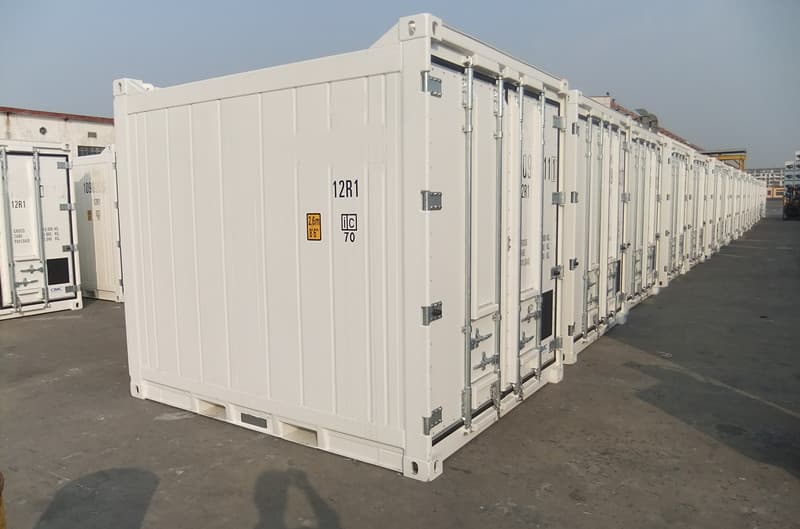
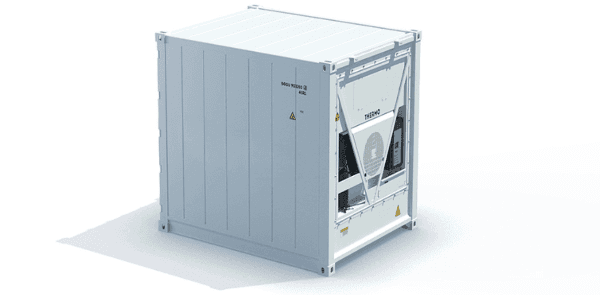
The used 10ft refrigerated container, also called a reefer container, is a compact and economical solution for storing and transporting goods that require controlled temperatures. This type of container is commonly used in the food, pharmaceutical, event logistics sectors, or for preserving flowers and sensitive chemicals. Its small size (about 3 meters long) makes it easy to integrate on a site with limited space, while benefiting from the performance of a professional refrigeration unit.
This used container has already been used, which explains its lower price compared to a new model. However, each unit is tested before delivery to verify the proper functioning of the refrigeration unit and the integrity of the insulation. It shows normal signs of wear for equipment that has been used, but remains fully operational for professional use. ISO compliance guarantees standardized dimensions and compatibility with common handling equipment (forklifts, cranes, container trucks).
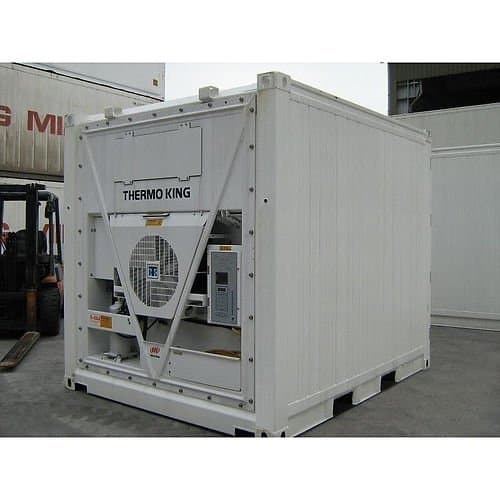
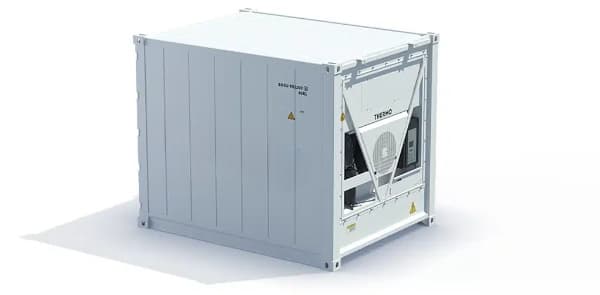
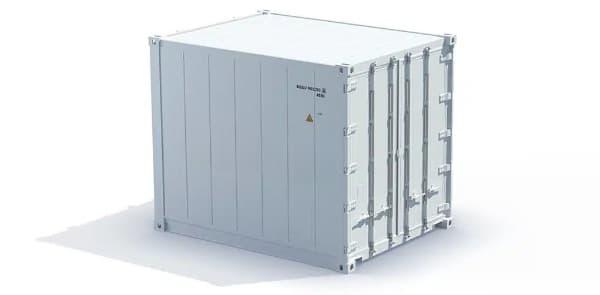
Technically, a 10ft reefer container is built with a Corten steel structure, known for its corrosion resistance, and incorporates reinforced thermal insulation (usually polyurethane foam) in the walls, roof and floor. The floor is made of 28 mm marine plywood, a material that withstands humidity and heavy loads. The rear doors are equipped with double leaves with standard container locks, ensuring secure closure. The refrigeration unit, mounted at the front, operates on electricity (usually three-phase 380-460 V / 50-60 Hz) and maintains a regulated temperature between -25°C and +25°C. Some models can be equipped with an automatic defrost system and a temperature recorder for traceability.
The standard external dimensions of a 10ft container are approximately 3.05 m long, 2.44 m wide and 2.59 m high. The usable internal dimensions are slightly smaller due to the thickness of the insulating walls: allow about 2.80 m long, 2.28 m wide and 2.25 m high, offering an internal volume of about 12 m³. The tare weight is about 2,600 kg, which allows it to be handled with suitable lifting equipment. The maximum payload depends on the exact model and manufacturer specifications, but is generally around 2,000 to 3,000 kg. It is important to respect these limits to avoid damaging the structure or the refrigeration system.
Using a used reefer container involves some points of vigilance. Before purchase, it is recommended to check the operation of the refrigeration unit (ability to reach minimum and maximum temperatures, absence of abnormal noise, cleanliness of filters and evaporator), the condition of the insulation (absence of cracks or detachment), the sealing of door gaskets, and the possible presence of perforating rust on the structure. Regular maintenance of the refrigeration unit (cleaning of heat exchangers, checking refrigerant levels, checking electrical connections) is essential to maintain performance and extend the equipment's lifespan. It is also advisable to call on a qualified refrigeration technician for work on the cooling circuit.
In France, the use of a refrigerated container is subject to some regulations. Transport of goods under controlled temperature must comply with cold chain rules, particularly for food products (Regulation EC No. 852/2004) and pharmaceutical products (good distribution practices). The electrical installation must comply with current standards (NF C 15-100) and the refrigeration unit must be maintained by an authorized professional, as refrigerants are regulated (F-Gas regulation). Finally, if the container is used as a fixed storage room, it may be necessary to check local urban planning rules, especially if it is permanently installed.
This used 10ft reefer container is aimed at professionals seeking a modular and affordable cooling solution: restaurants, caterers, laboratories, pharmacies, event organizers, farmers or logistics companies. It can be used for temporary storage of perishable goods, transport of temperature-sensitive products, or as a mobile cold room on a construction site. Its compactness allows it to be installed in small spaces, and its mobility offers flexibility of use. Compared to a new container, the used container represents an economical alternative, with a reduced acquisition cost, while retaining the essential features of a reefer.
For purchase, it is advisable to request a refrigeration unit test report, recent photos of the interior and exterior condition, and to verify ISO compliance (CSC marking). D.S. Globe Conteneur, based in Marseille, offers this model in its catalog. Do not hesitate to contact us for more information on availability, delivery options and possible accessories (power cables, industrial plugs, etc.).
Let us now examine the practical aspects of routine maintenance. A reefer container, even a used one, requires preventive maintenance to ensure its long-term reliability. The refrigeration unit, the key component of the equipment, must be inspected at least once a year by an authorized technician. This inspection includes cleaning the condensers and evaporators (accumulation of dust or plant debris reduces energy efficiency and can cause compressor overheating), checking the refrigerant charge, checking pressures and temperatures, and examining belts, fans and electrical connections. Door gaskets must be checked regularly: a worn or cracked gasket lets air through, forcing the refrigeration unit to run continuously and increasing electricity consumption. A simple test is to slide a sheet of paper between the gasket and the frame: if it slides easily, the gasket is no longer airtight and must be replaced. The interior of the container must be cleaned after each use, especially if it contained food, to avoid odors, mold and cross-contamination. Cleaning with hot soapy water, followed by rinsing and complete drying, is generally sufficient. For insulating walls, avoid abrasive products or high-pressure jets that could damage the surface. Finally, the external metal structure can be inspected once or twice a year to detect early corrosion; localized anti-corrosion treatment (brushing, application of suitable paint) extends the life of the container.
The regulations around transport under controlled temperature deserve clarification. In France, the transport of perishable goods is governed by the amended decree of 20 July 1998, which sets maximum storage temperatures according to product categories (for example, 0°C to +4°C for fresh meat, -18°C for frozen products, +6°C for dairy products). Professionals must be able to justify compliance with the cold chain, hence the value of a temperature recorder in the container. For pharmaceutical products, wholesale distribution is subject to good distribution practices (GDP) which require validation of transport means and continuous temperature monitoring. The F-Gas regulation (EU No. 517/2014) governs the use of refrigerants: maintenance operations on the refrigeration circuit must be carried out by persons holding a competence certificate, and leaks must be checked periodically according to the installation's CO2 equivalent charge. Furthermore, if the container is used as a fixed storage installation, it may be considered a building and require a planning permission depending on the surface area and duration of installation. It is therefore prudent to inquire with the town planning department before any permanent installation.
Let us now address concrete sector-specific use cases. In the restaurant and catering sector, a 10ft reefer container can serve as a mobile cold room to store perishable goods during peak periods (year-end holidays, seasonal events) or to compensate for a temporary lack of space. Caterers and event organizers see it as a solution to keep prepared dishes at the right temperature at the reception venue, provided they have a suitable power supply. In the pharmaceutical and medical field, this type of container can be used for storing vaccines, temperature-sensitive medicines or biological samples, subject to compliance with regulatory requirements and having a temperature recording system. Analytical laboratories find it a mobile refrigerated enclosure for field sampling campaigns. In the agri-food industry, producers of fruits and vegetables, dairy products or meat can use it for rapid cooling after harvest or slaughter, or for storage before shipping. Florists and horticulturists appreciate the ability to keep cut flowers at a temperature of +2°C to +8°C to prolong their freshness. Finally, the logistics and transport sector can use it as a buffer storage unit on a dock, or for transferring goods between two vehicles without breaking the cold chain.
Let us now compare this 10ft container with other sizes and types available on the market. The standard 20ft reefer container (about 6.06 m long) offers an internal volume of about 28 to 33 m³ depending on the model, more than double that of the 10ft. It is more common, which facilitates the supply of spare parts and refrigeration units, but it requires more floor space and a more powerful lifting device. The 40ft reefer container (about 12.19 m long) offers a volume of about 60 to 67 m³ and is often used for maritime transport of large volumes of perishable goods; it is less suitable for fixed installation on a cramped site. The 10ft container, meanwhile, is particularly rare on the market, as it is produced less than standard sizes; this can make its acquisition more complex, but it is an excellent solution when space is limited or cooling needs are moderate. In terms of price, a used 10ft is generally below a used 20ft, but above a 10ft dry (non-refrigerated) due to the complexity of the refrigeration unit. It should also be noted that the 10ft reefer is often built on a 10ft dry base, with an added refrigeration unit, which explains its slightly greater height than a standard dry container.
Let us also talk about alternatives to the reefer container for controlled temperature storage. A classic modular cold room often offers better insulation and more precise regulation, but it is fixed and requires construction work. A dry container equipped with an external refrigeration unit (sometimes called a "modified reefer") can be an economical option, but the original insulation is not designed for cold, resulting in higher energy consumption and premature wear of the unit. Refrigerated cabinets or refrigerated trucks are suitable for transport, but not for long-term stationary storage. The used reefer container therefore retains a clear advantage: it is designed for cold from the outset, it is stackable, transportable and can be moved as needed.
Finally, some advice for purchase and commissioning. Before finalizing the acquisition, ask to see the container in operation, or failing that, a recent test report mentioning the temperatures reached and the pull-down time. Check the manufacturer's plate (often located on the refrigeration unit) which indicates the model, year of manufacture, power and type of refrigerant. Ensure that the container has a valid CSC marking, mandatory for international maritime transport. Provide a suitable power supply: a 10ft reefer generally consumes between 3 and 6 kW in operation, depending on the outside temperature and the desired internal temperature. A power cable and a compliant industrial plug are necessary. If the container is to be placed on the ground, provide a flat and stable surface, possibly concrete pads to avoid direct contact with ground moisture. For outdoor use, it is recommended to install protection against direct sunlight (awning) to reduce thermal load and electricity consumption. Finally, consider safety: access to the interior of a closed container can be dangerous (risk of entrapment); it is advisable to install an inside opening system or never leave the doors locked unattended. With these precautions, a used 10ft reefer container can provide many services for several years.