Description
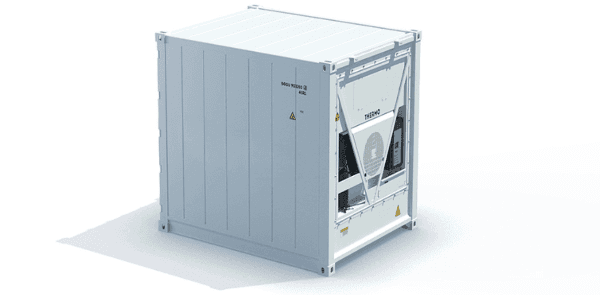
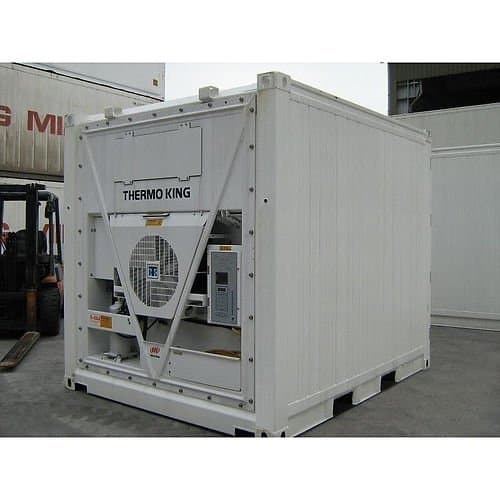
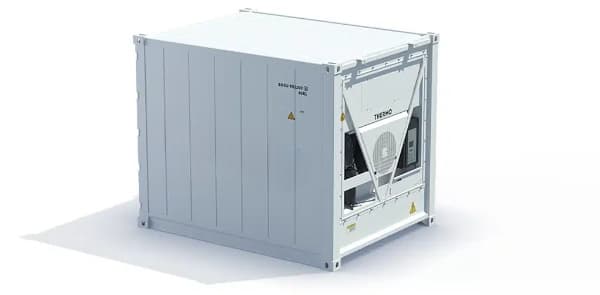
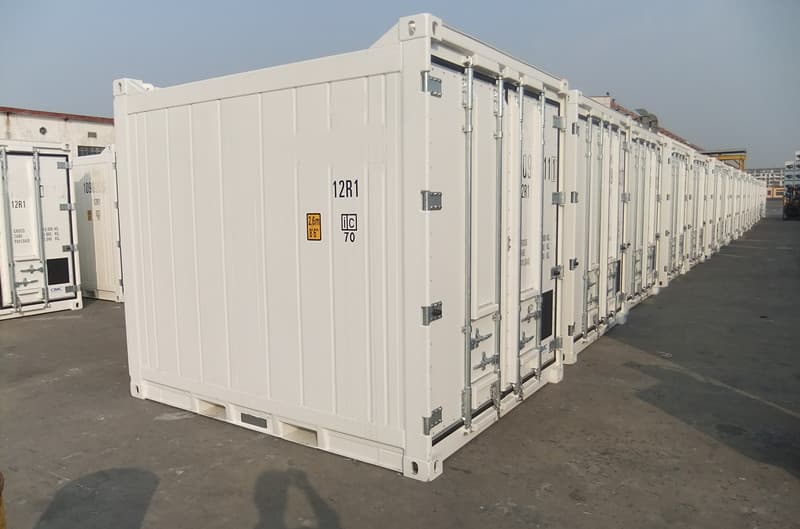
The used 10ft High Cube refrigerated container is a compact cold storage solution that stands out with a greater interior height than a standard reefer container. This configuration is particularly useful when floor space is limited but usable volume must remain substantial. Measuring about 2.99 m long and 2.44 m wide, it fits into spaces where a 20ft container would not, while offering an interior height of about 2.69 m. This combination makes it a sought-after piece of equipment for professionals who need to store food, pharmaceuticals or temperature-sensitive goods in urban environments, yards, construction sites or event venues.
The reefer container operates via an integrated refrigeration unit that produces cold and regulates the temperature inside the box. The stated range of -25 °C to +25 °C covers both freezing and positive-temperature preservation. This range allows storage of frozen products, fresh produce, biological samples or medicines requiring a controlled cold chain. The refrigeration unit is a mechanical component: on a used container, it must be tested and its operation checked before commissioning. That is why each unit offered is inspected before delivery, even if signs of wear (scratches, dents, marks of use) remain visible on the bodywork. These marks do not affect air and water tightness, nor cooling capacity, provided the inspection has been carried out.
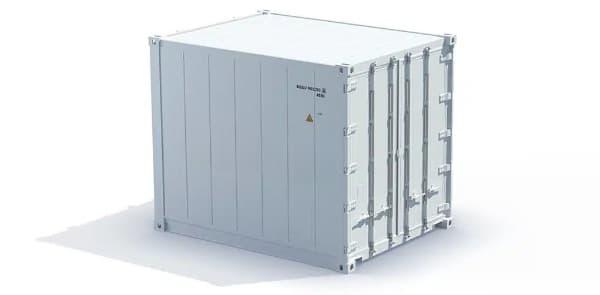
The structure of the refrigerated container is based on a Corten steel frame, a low-alloy steel that resists atmospheric corrosion. The interior and exterior walls are generally made of galvanised steel or aluminium, with polyurethane foam insulation injected between the walls. This reinforced insulation limits heat loss and reduces the load on the refrigeration unit. The floor is 28 mm marine plywood, a dense material treated to withstand moisture and rolling loads. It supports the passage of pallet trucks or small trolleys, provided the permissible load is respected. The rear doors are double doors fitted with container locks, with seals that must remain flexible and clean to guarantee thermal performance.
The stated interior volume is 15.9 m³. For a 10ft container, this value is consistent with the High Cube height and the thick wall insulation. This volume allows storage of a significant quantity of goods on pallets or in bulk, while keeping a small footprint. The payload depends on the tare weight, stated at 2,550 kg. The maximum gross weight (MGW) of a 10ft container is generally around 10,000 kg, but the CSC (Convention for Safe Containers) plate on the door should be consulted for the exact values of the unit. The actual payload is calculated by subtracting the tare weight from the MGW.
The container complies with the ISO standards applicable to maritime containers, in particular ISO 668 for dimensions and classifications, and ISO 1496 for specifications and testing. ISO compliance means the container meets standardised dimensions and structural requirements that facilitate its transport, lifting and stacking. The CSC marking certifies its compliance with international safety rules for sea and land transport. For static use on the ground, these certifications remain a guarantee of quality and robustness, even if they are not mandatory for simple storage.
Transporting a 10ft container requires suitable lifting equipment. A truck with an auxiliary crane or a forklift of sufficient capacity can be used. Forklift pockets and lifting corners are provided to allow handling without deforming the structure. It is recommended to check site access (street width, cable height, presence of branches) before delivery. Once positioned, the container must be chocked on stable, level ground. Concrete blocks, wooden beams or metal feet can serve as foundations to avoid direct contact with the ground and limit corrosion from moisture. A slight slope may be necessary for condensate drainage, but it must not compromise stability.
The power supply to the refrigeration unit is a crucial point. Reefer containers generally operate on three-phase 400 V / 50 Hz, with currents varying according to the model and the required temperature. It is essential to provide a compliant supply, protected by a residual current circuit breaker and an isolator. The power cable must be suitable for the power and distance. A qualified electrician must carry out the connection. In the absence of a fixed supply, a generator can be used, but its power must be sufficient for compressor start-up. The refrigeration unit must be kept clean: a fouled condenser reduces efficiency and can lead to excessive consumption or a safety shutdown. Regular cleaning with compressed air or fresh water (without excessive pressure) is recommended, along with checking door seals and condensate drains.
Routine maintenance of a used refrigerated container includes several check points. The operation of defrosting, the cleanliness of the evaporator, the compressor oil level (on models so equipped) and the absence of refrigerant leaks must be checked periodically. Refrigerants used in maritime containers are generally HFCs (R134a, R404A) or, more recently, low-GWP fluids (R513A, R449A). Handling these fluids is reserved for certified professionals, in accordance with French and European regulations on fluorinated greenhouse gases. Annual servicing by a refrigeration technician is advisable to guarantee the unit's performance and longevity.
The use of a reefer container is not limited to maritime transport. Many professionals use it as a mobile or fixed cold room. In catering, it can serve as a refrigerated reserve for deliveries, buffets or events. In the medical sector, it allows vaccines, blood bags or reagents to be kept at controlled temperature. In events, it offers a rapid storage solution for drinks and perishable goods. In industry, it can hold sensitive chemicals or samples. Its compactness also makes it useful on construction sites, for storing temperature-sensitive materials or food for teams.
When buying a used refrigerated container, several points require attention. It is essential to check the operation of the refrigeration unit over a sufficiently long period to observe temperature pull-down and stability. A no-load test is not always sufficient: the presence of cargo changes thermal behaviour. The condition of door seals, the presence of perforating corrosion on the walls, the condition of the floor (rot, delamination) and the validity of the CSC plate must be checked. The container identification number (BIC marking) must be legible and match the documents provided. A maintenance history, when available, is a plus. Finally, it must be ensured that the container has not been used to transport dangerous goods without appropriate cleaning, or that it has not undergone non-compliant structural repair.
French regulations govern the use of containers as premises or storage spaces. For professional use, the installation may be subject to planning rules (prior declaration or building permit depending on surface area and duration of installation). The electrical installation must comply with standard NF C 15-100. If the container is used to receive the public, fire safety and accessibility rules may apply. For road transport, a 10ft container can be carried on a container truck or a suitable trailer; the total weight (container + load) must not exceed the limits of the vehicle and of heavy goods vehicle regulations. Maritime transport of a 10ft container is possible, but not all shipping lines offer this format; it should be checked with the carrier.
The used 10ft High Cube refrigerated container is therefore an attractive alternative for professionals seeking cooling capacity in a minimal footprint. Its increased interior height offers more usable volume than a standard reefer of the same length. Its refrigeration unit, once tested and maintained, maintains a wide temperature range. Its Corten steel structure and reinforced insulation give it good durability, provided installation and maintenance rules are followed. Before purchase, a detailed inspection and an operational test are recommended to ensure the container meets the user's specific needs.
To go further in the analysis, it is useful to compare this 10ft High Cube reefer format with other solutions commonly offered on the market. A standard 20ft refrigerated container offers an interior volume of around 28 to 33 m³ depending on the model, nearly double, but it requires a floor area twice as long and more powerful lifting equipment. A 40ft High Cube reefer reaches volumes of around 67 to 76 m³, with a tare weight often between 4,500 and 5,500 kg, which reserves it for well-served sites and large storage needs. The 10ft High Cube therefore positions itself as a compromise: it retains a generous interior height but reduces the footprint and tare weight, making it easier to install in urban yards, dense industrial areas or company car parks.
Compared with a standard 10ft dry container, the High Cube reefer stands out for its insulation and refrigeration unit. A 10ft dry container is generally lighter and cheaper to buy, but it cannot regulate temperature. It is suitable for storing equipment that is not sensitive to cold or heat. The reefer adds thermal control, at the cost of higher weight, power consumption and mechanical maintenance. The choice therefore depends on the nature of the goods: for perishable food, pharmaceuticals or cut flowers, the reefer is essential; for tools, spare parts or furniture, a dry container is sufficient.
Compared with a built cold room, the reefer container offers several advantages. It is mobile, quickly deliverable and requires no major construction work. It can be moved if the business relocates. It is also easier to resell. On the other hand, its volume is fixed and limited, and its insulation, although efficient, remains inferior to that of a custom industrial cold room. For very large storage needs or extreme temperatures maintained permanently, a dedicated cold room is often more suitable. The reefer container is better suited to flexible, seasonal or mobile needs.
In the food sector, the container can serve as a reserve for a restaurant, caterer or local shop. It allows fresh or frozen products to be stored until use, or provides additional capacity during peak periods. In agriculture, it can be used to rapidly cool fruit and vegetables after harvest, or to store seeds and plants under controlled conditions. In the fishing sector, it offers a preservation solution at the quay or at a processing site. In the medical field, it can hold products requiring controlled temperature, subject to compliance with qualification and monitoring protocols. In events, it allows drinks and perishable goods to be stored on a temporary site without building a fixed installation.
Preventive maintenance of the refrigerated container must be planned. It is recommended to keep a maintenance log indicating inspection dates, work carried out and any parts replaced. Filters, seals, temperature sensors and contactors are wear items that can be replaced. Interior cleaning must be carried out with products compatible with food-contact surfaces if the container is used for food. High-pressure water jets on the refrigeration unit and electrical parts should be avoided. Condensate drains must be kept clear to prevent water accumulation on the floor, which could damage the floor or encourage mould growth.
In terms of safety, using a refrigerated container involves some precautions. The refrigeration unit may present moving parts and hot or cold surfaces. Access to the unit should be reserved for trained persons. The interior of the container, when closed, can become dangerous: never lock yourself inside, and it is advisable to install an emergency opening system or check that the doors can be opened from the inside. For foodstuffs, compliance with the cold chain and hygiene rules (cleaning, traceability, temperature control) is essential. A temperature recorder can be added to track variations and provide a history.
In energy terms, the consumption of a reefer container depends on the outside temperature, the required inside temperature, the fill rate and the condition of the unit. A well-maintained container, with seals in good condition and a clean condenser, consumes less than a neglected one. Consumption can be optimised by avoiding frequent openings, grouping goods together and maintaining a stable temperature rather than varying setpoints. For professional use, it may be worthwhile to provide a dedicated electricity meter to track actual consumption.
In conclusion, the used 10ft High Cube refrigerated container is a versatile piece of equipment suited to compact cooling needs. It combines useful interior height, a wide temperature range and a robust structure compliant with ISO standards. Its purchase should be accompanied by a technical check and consideration of the power supply, installation and maintenance. Used properly, it can provide many services in catering, healthcare, events, agriculture or industry, while remaining mobile and reversible.