Description
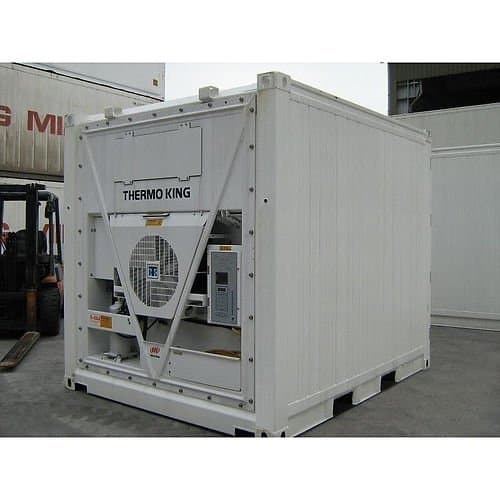
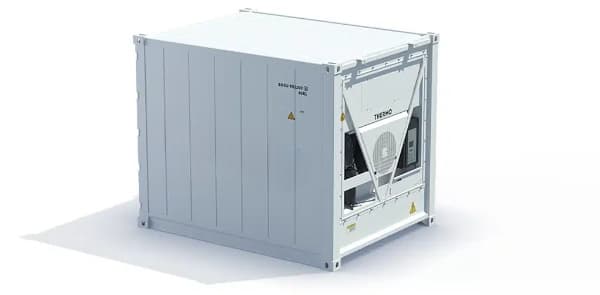
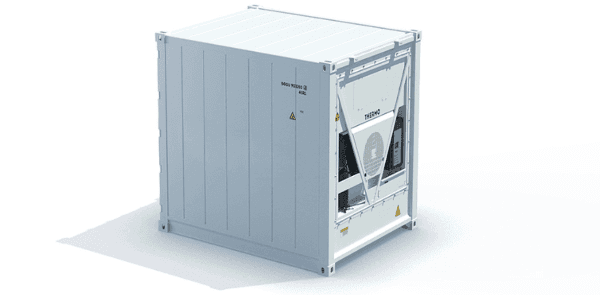
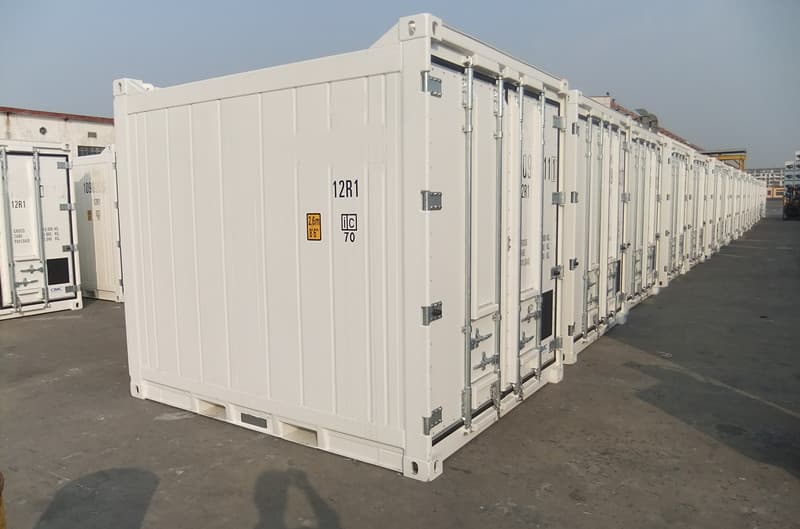
The 10ft insulated container is a compact and efficient solution for storing products requiring a stable temperature. Its insulated design, without an integrated refrigeration unit, helps maintain freshness inside while being very easy to use. This used model, reference BG3545, is offered by D.S. Globe Conteneur, a specialist in the sale and rental of shipping containers in Marseille.
This container stands out for its reduced dimensions, which make it easy to install on sites where space is limited. With an external length of 2,991 mm, a width of 2,438 mm and a height of 2,591 mm, it fits easily into yards, warehouses or construction sites. Inside, the available space is optimised: the internal length reaches 2,389 mm, the width 2,294 mm and the height 2,273 mm, offering a total internal volume of 12.45 m³. The floor area of 5.48 m² can store up to four EURO pallets, making it a relevant choice for small and medium quantities of goods.
The structure of this insulated container is built from Corten and stainless steel. Corten steel is known for its resistance to atmospheric corrosion, which extends the container's service life even when exposed to bad weather. Stainless steel reinforces the overall robustness and makes maintenance easier. The insulation, 70 mm thick, helps limit heat exchange between the inside and outside. This insulation is made with materials commonly used in this type of container, often polyurethane foam or rock wool, providing an effective thermal barrier.
The floor is flat aluminium. This choice has several advantages: aluminium is lightweight, corrosion-resistant and easy to clean. It supports a maximum load of 15,000 kg, allowing heavy products to be stored without deformation. The container's tare weight is 2,600 kg, and its maximum allowed weight (MGW) is 12,400 kg. These characteristics make it suitable for static storage use, but it can also be transported on a truck or flatbed, subject to compliance with current regulations.
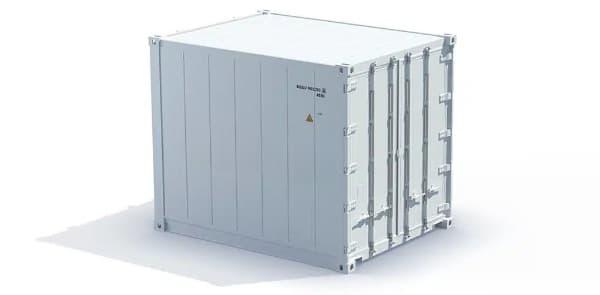
The container doors open to 270°, which greatly facilitates loading and unloading operations, even with handling equipment. The door dimensions are 2,292 mm wide and 2,264 mm high, allowing bulky objects to pass through. This wide opening is an asset for users who need frequent access to the interior.
The 10ft insulated container is particularly suitable for storing fresh products, but it can also be used for goods sensitive to temperature variations, such as fruit and vegetables, pharmaceuticals or flowers. Without a motor, it does not actively produce cold, but its insulation helps preserve the freshness provided by an initial cold source (for example, ice packs or an external refrigeration unit). It is also used as a mobile cold room or as temporary storage space in markets, fishing ports or farms.
Besides food storage, this container can be used as a site office, technical room or sales space. Its white colour (indicated in the specifications) reflects heat and blends into various environments. Its small footprint makes it suitable for installation on cramped sites.
When buying a used insulated container, several points require attention. It is advisable to check the condition of the insulation: look for traces of moisture, mould or damage on the internal walls. Airtightness is crucial for maintaining temperature; inspect the door seals and ensure they are supple and free of cracks. The aluminium floor should be examined for any dents or corrosion. Finally, check that the Corten steel structure does not show perforating rust, although this material is naturally resistant.
Routine maintenance consists of regularly cleaning the interior with non-abrasive products, checking the condition of the seals and ensuring that the closing systems work correctly. Periodic greasing of hinges and latches is recommended. If the container is used for food storage, suitable disinfectant cleaning is necessary between each use.
Regarding regulations, transporting this container by road in France is subject to size and weight rules. The external dimensions (2.99 m long, 2.44 m wide, 2.59 m high) comply with ISO 668 standards for 10ft containers. The gross weight (12,400 kg) must be taken into account during transport, and the vehicle must be suitable. For static use, no specific authorisation is generally required, unless the container is considered a construction (building permit for habitation). It is recommended to check with local authorities.
This container is delivered ready to use, with a checked refrigeration unit (according to the information provided). This means that the refrigeration system, if present, has been verified. However, as this is an insulated container, the refrigeration unit may be absent or optional. The term "checked refrigeration unit" in the existing description suggests that the container has been tested for airtightness and insulation. We invite you to contact us for more details on the exact condition and included equipment.
In summary, the used 10ft insulated container is an economical and functional solution for storing fresh or sensitive products. Its robust design, efficient insulation and ease of use make it a durable investment. D.S. Globe Conteneur, based in Marseille, supports you in your project, whether for purchase or rental. Do not hesitate to consult us for availability and delivery options.
To go further, let us examine in more detail the technical characteristics and uses of this insulated container. The 70 mm insulation is a key element: it slows heat exchange but cannot create cold. In practice, if you store already refrigerated products, the container will maintain their temperature for a certain time, varying according to the outside temperature, the fill rate and how often the doors are opened. For preservation over several days, it is often necessary to add an external cold source, such as a monobloc refrigeration unit or eutectic plates. This container should therefore be distinguished from a classic refrigerated container (reefer), which includes a refrigeration unit and can produce cold autonomously. Here, the term "insulated" means that the container is designed to insulate, not to actively cool.
The aluminium floor is an advantage for hygiene: it does not retain odours, resists cleaning products and supports high point loads. It is also non-slip in some versions, which limits the risk of falls. However, aluminium can be slippery when moisture or grease is present; any spill should therefore be cleaned immediately. For heavy loads, it is recommended to distribute the weight evenly and use pallets or skids to avoid scratching the surface.
The Corten and stainless steel structure provides good corrosion resistance, but it is not indestructible. By the sea, salt air can accelerate oxidation; periodic rinsing with fresh water and applying protective paint to exposed areas are advisable. Stainless steel, often used for door frames and reinforcements, resists chemicals and moisture better. These materials give the container a long service life, even in intensive outdoor use.
The 270° doors are an ergonomic asset: they open wide and fold against the side walls, freeing access completely. This facilitates the passage of a pallet truck or small forklift, provided the ground is level. Door seals are generally made of rubber or silicone; they must be checked regularly to prevent air and water infiltration. A worn seal can reduce insulation efficiency and promote condensation.
In terms of load, the container supports up to 15,000 kg, but the tare weight (2,600 kg) and maximum allowed weight (12,400 kg) must be taken into account. The actual payload is therefore 12,400 - 2,600 = 9,800 kg. This nuance is important: the maximum load of 15,000 kg corresponds to the floor's resistance, while the MGW limits the total weight (container + contents). For static use, the floor can support 15,000 kg, but the container must not be lifted or transported with a load greater than the MGW. It is essential to respect these limits for safety and compliance reasons.
The usable internal volume of 11.91 m³ is calculated up to the maximum ventilation line, which corresponds to the limit beyond which air circulation could be impeded. It is recommended not to stack goods above this line to ensure good temperature distribution. The total volume of 12.45 m³ includes the space up to the ceiling, but its use is not recommended for storing sensitive goods.
This container can be used in many sectors. In the food industry, it is used to store fruit and vegetables, dairy products, meat or fish, provided a cold source is available. Restaurants and caterers use it as an additional cold room. In the pharmaceutical sector, it can store medicines or samples requiring a controlled temperature. Florists store cut flowers in it. Laboratories can store samples in it. Outside food, it can serve as a storage room for materials sensitive to humidity (electronics, textiles, stationery) thanks to its insulation, which limits hygrometric variations.
On construction sites, this insulated container can serve as an office or break room, with better thermal comfort than a standard dry container. It can also serve as a storage room for products that fear freezing or heat. Local authorities can use it as a technical room or as a meal distribution space. Farmers find it a solution for preserving their crops or seeds.
Compared with other sizes, the 10ft is the smallest standard shipping container format. It is more manageable than a 20ft (6.06 m long) or a 40ft (12.19 m long). Its volume is about three times smaller than a 20ft and six times smaller than a 40ft. It is therefore suited to small spaces and limited needs. In return, its cost per cubic metre is often higher. The choice will depend on your storage needs and available space.
Compared with a dry (non-insulated) container, the insulated container offers better protection against temperature variations and humidity. It is heavier (2,600 kg versus about 1,200 kg for a 10ft dry) and more expensive, but it provides real comfort for sensitive products. Compared with a reefer container, it is less autonomous because it does not produce cold, but it is also simpler, less energy-intensive and less costly to buy and maintain.
When buying used, it is recommended to ask for detailed photos of the interior and exterior, as well as the usage history. An insulated container that has been used to transport chemicals or food may retain odours; thorough cleaning is then necessary. Check for rust on the uprights, crossbars and corners. Inspect the welds and fastenings. Make sure the doors close tightly and that the seals are not cracked. Test the 270° opening to check that the hinges are not seized. If a refrigeration unit is present, ask for it to be started to check its operation.
Regular maintenance extends the container's service life. It is advisable to clean the interior after each use, check the seals every six months, grease the hinges and latches once or twice a year, and check the condition of the exterior paint. In case of deep scratches, apply anti-rust paint to prevent corrosion. If the container is exposed to the sun, the white colour helps limit heating, but ventilation may be necessary to prevent condensation.
Regarding regulations, if you install this container permanently, it may be subject to urban planning rules. In France, a container is considered a construction if it is fixed to the ground and intended to remain in place. A prior declaration of works or a building permit may be required depending on the surface area and duration of installation. For temporary use (less than three months), authorisation may not be necessary, but it is prudent to check with the town hall. If the container is used as a workplace, it must comply with safety and sanitation standards (ventilation, lighting, emergency exits).
For transport, the 10ft container can be loaded onto a container truck or a suitable trailer. Its dimensions are compatible with ISO standards, which facilitates handling with spreaders or clamps. The tare weight of 2,600 kg is relatively high for a 10ft, which requires appropriate lifting equipment. During transport, it is important to check that the container is properly secured and that the doors are locked. The gross weight must not exceed 12,400 kg, and the weight of the whole (truck + container) must comply with road traffic limits.
In conclusion, the used 10ft insulated container is a versatile, robust and functional product. It suits professionals and individuals looking for a temperate storage solution without investing in a refrigeration unit. Its efficient insulation, aluminium floor and Corten and stainless steel structure make it a durable choice. D.S. Globe Conteneur, located in Marseille, offers this container for sale or rental. Contact us for a personalised quote and delivery options. We will advise you on the use best suited to your needs.