Description
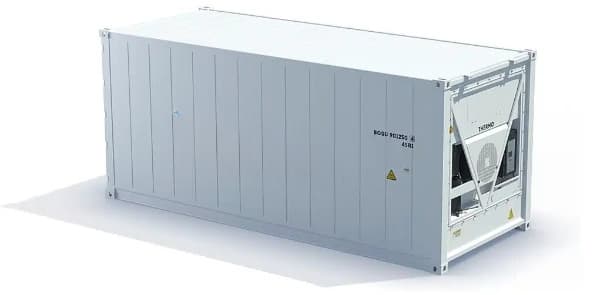
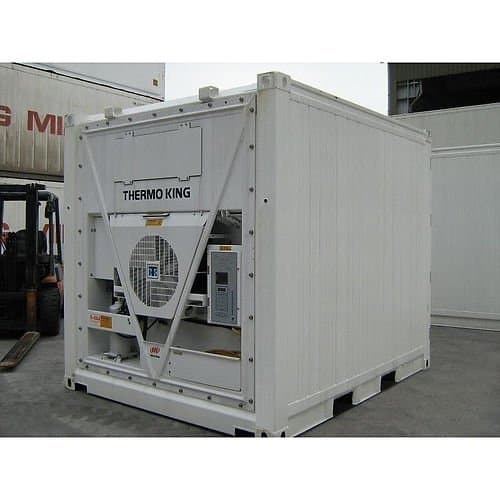
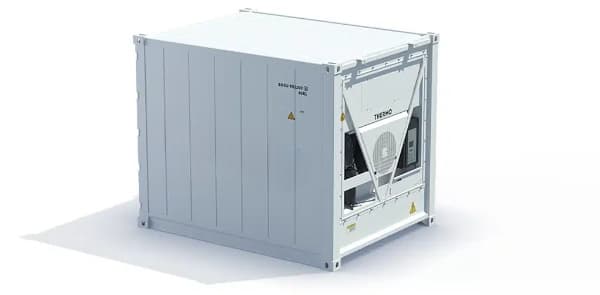
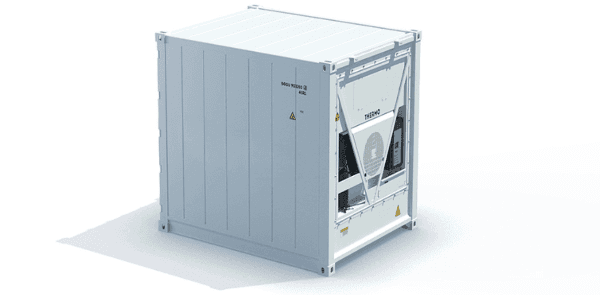
The 20ft refrigerated container, commonly called a reefer, is designed to maintain a controlled temperature ranging from about -25°C to +25°C. It is a proven solution for sea, rail or road transport, as well as temporary or permanent storage of goods sensitive to heat, cold or climate variations. This model features reinforced insulation and an integrated refrigeration unit, enabling precise regulation whatever the outside temperature.
Structure and materials
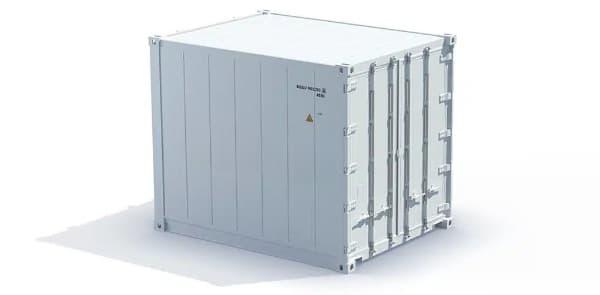
The reefer container structure is based on a Corten steel frame, a low-alloy steel that resists atmospheric corrosion through the formation of a protective surface layer. The walls, floor and roof consist of insulating sandwich panels made of high-density polyurethane foam, providing an effective thermal barrier. The floor is made of 28 mm marine plywood, often covered with aluminium or stainless steel sheet to facilitate cleaning and resist moisture. The rear doors are double-leaf, fitted with standard container locks and sealing gaskets ensuring insulation.
The refrigeration unit, generally installed at the front, is electrically powered. Depending on the model, it runs on 380 V three-phase or 220 V single-phase. Note that the refrigeration unit requires a continuous power supply to maintain temperature; in the event of a power cut, the internal temperature may change, although insulation considerably slows thermal drift.
Technical specifications
The standard external dimensions of a 20ft container are approximately 6.06 m long, 2.44 m wide and 2.59 m high. The usable internal volume is about 28.4 m³, with a floor area of approximately 13.8 m². The tare weight is about 2,900 kg, leaving a payload capacity generally between 20 and 25 tonnes depending on model and certifications. It is essential to respect the load limits shown on the CSC (Convention for Safe Containers) plate to ensure safety during transport.
The standard temperature range extends from -25°C to +25°C. Some models can go down to -30°C or up to +30°C, but the exact specifications of the refrigeration unit should be checked. Regulation is provided by an electronic thermostat, with accuracy of around ±0.5°C under normal operating conditions. Power consumption varies with outside temperature, setpoint temperature and air exchange rate; it can range from a few kilowatts to around fifteen kilowatts under intensive operation.
Certifications and compliance
Reefer containers are subject to several international standards and certifications. ISO 668 defines the dimensions and maximum masses of series 1 containers, while ISO 1496-2 specifies requirements for temperature-controlled containers. CSC certification attests to the structural safety of the container for sea and land transport. ATP certification (Agreement on the International Carriage of Perishable Foodstuffs) is required for transporting perishable foodstuffs under controlled temperature; it guarantees that the container can maintain the cold chain. Finally, refrigeration units may comply with applicable environmental standards, particularly regarding refrigerants.
Common uses
The 20ft refrigerated container is used in many sectors. In the food industry, it enables the transport of meat, fish, fruit and vegetables, dairy products and frozen goods. In the pharmaceutical field, it is used to transport medicines, vaccines and biological samples requiring controlled temperature. Florists and horticulturists use it to preserve cut flowers and plants. The events industry uses it for temporary storage of beverages and perishable goods at festivals, trade fairs or sporting events. Finally, it can serve as a storage unit on a construction site, remote site or farm, provided a suitable power supply is available.
Installation and operation
Installing a reefer container requires a power supply compliant with the refrigeration unit specifications. A dedicated circuit is recommended, protected by a residual current circuit breaker and an isolator, and the cable cross-sections recommended by the manufacturer must be respected. Connection to an industrial socket such as CEE 32 A or 63 A is often necessary. The container must be placed on a flat, stable surface strong enough to support its loaded weight. Clear space around the refrigeration unit is essential for good air circulation and to prevent overheating. Outdoors, a shelter or protection against extreme weather is advisable, without obstructing the ventilation grilles.
For transport use, the container must be secured in accordance with cargo securing rules. On a truck, it is fixed by twist-locks at the four corners. At sea, it is stacked and lashed according to the ship's loading plan. Failure to comply with these rules can cause property damage and personal injury.
Care and maintenance
Regular maintenance is essential to ensure the container's performance and longevity. The condition of the door gaskets should be checked periodically; they must remain flexible and free of cracks. A worn gasket lets warm air in and increases energy consumption. Cleaning the evaporator and condenser of the refrigeration unit should be carried out according to the manufacturer's recommendations, generally every 500 to 1,000 operating hours. Checking oil and refrigerant levels should be entrusted to a qualified technician. CSC and ATP certifications must be kept valid; they require periodic inspections (every 30 months for CSC, and according to regulations for ATP).
Finally, a visual inspection of the structure (rust, impacts, deformation) is recommended before each loading. Small scratches can be treated with anti-rust paint suitable for Corten steel.
Points to watch when buying
When buying a reefer container, several points deserve particular attention. First, the condition of the refrigeration unit: an old or poorly maintained unit can be a source of costly breakdowns. It is advisable to request a maintenance report or have a technician carry out a diagnosis. Second, the condition of the insulation: delaminated panels or water ingress can reduce thermal efficiency. Check for any signs of moisture inside. The presence of ISO, CSC and ATP certifications is a guarantee of compliance, but make sure they are up to date. Finally, the price of a new or recent reefer container is higher than that of a dry container; the total cost of ownership, including electricity and maintenance, must therefore be assessed.
Transport regulations in France
In France, the transport of perishable foodstuffs under controlled temperature is governed by the amended decree of 20 July 1998, which imposes maximum temperatures for certain categories of products. The ATP is the international agreement governing the technical conditions of vehicles and containers used for this type of transport. Reefer containers must have a valid ATP certificate for transporting perishable foodstuffs. In addition, road freight transport is subject to the rules of the Highway Code and European regulations on weights and dimensions. A 20ft container generally complies with size limits, but the vehicle's authorised gross train weight (GTW) and payload should be checked.
For sea transport, containers must comply with the CSC convention and IMO (International Maritime Organization) safety rules. The transport of dangerous goods is governed by the IMDG Code.
Comparison with other container sizes and types
The choice of a 20ft reefer container should be based on the volume to be handled, the nature of the goods and logistical constraints. Compared with a 40ft reefer container, the 20ft offers half the capacity, but has the advantage of being more manoeuvrable, lighter and less bulky. It can be transported by medium-tonnage trucks and installed on sites where space is limited. The 40ft is often preferred for large volumes and long sea journeys, as it reduces the cost per cubic metre transported. However, its height and length require suitable lifting equipment and larger manoeuvring areas.
Compared with a dry (non-refrigerated) container, the 20ft reefer is heavier, more expensive to buy and operate, but offers the possibility of temperature control. The dry container is suitable for goods insensitive to climate variations and does not require a power supply. The reefer is essential for perishable or heat-sensitive products. There are also high cube (HC) containers offering about 30 cm more internal height; some reefer high cubes exist, but they are less common. Open top and flat rack containers are designed for out-of-gauge loads; they are not suitable for temperature regulation. Finally, tank containers are intended for liquids and do not serve the same uses.
Within the reefer category, there are new models, recent used models and older models. A new reefer offers a manufacturer's warranty and optimal performance, but its price is higher. A used reefer can be an economical alternative, provided the condition of the refrigeration unit and insulation is checked. Reefer containers are also classified by their ability to maintain negative (freezing) or positive (chilling) temperatures. Some refrigeration units are designed to operate in cooling mode only, while others are reversible (heat/cool). It is therefore important to define the need precisely before purchase.
Detailed sector use cases
In the food industry, the 20ft reefer container is used to transport fresh or frozen meat, fish, seafood, dairy products, fruit and vegetables, as well as prepared meals. It helps maintain the cold chain from the production site to the point of sale or processing. For frozen products, the temperature is generally maintained at -18°C or lower. For fresh products, it is between 0°C and +4°C. For fruit and vegetables, a temperature between +4°C and +12°C is often recommended, with controlled humidity. The container can be used for international transport, but also for temporary storage at a wholesale market, port or logistics platform.
In the pharmaceutical sector, the 20ft reefer container allows the transport of medicines, vaccines, biological samples and blood products. Requirements are strict: temperature must be maintained within a precise range, often between +2°C and +8°C, with continuous recording. Some containers are equipped with remote monitoring and alarm systems. Validation of the temperature system is essential to comply with Good Distribution Practice (GDP). The container must be cleaned and disinfected before each loading.
In the floral sector, the 20ft reefer container is used to transport cut flowers, potted plants and bulbs. The temperature is generally maintained between +2°C and +8°C, with high relative humidity to prevent drying out. Transport can be by sea or road. Cut flowers are often packed in perforated cartons to allow air circulation.
In the events sector, the 20ft reefer container serves as a mobile cold room for festivals, trade fairs, sporting events and film shoots. It allows storage of beverages, perishable goods and samples. It can be installed on a site without refrigeration infrastructure, provided a power supply is available. Its mobility and robustness make it a popular solution for organisers.
In the chemical and cosmetics industry, some products require temperature-controlled storage. The reefer container can be used to transport resins, adhesives, paints or heat-sensitive cosmetic products. Material compatibility should be checked and dangerous goods transport rules respected.
Finally, in scientific research, the 20ft reefer container can serve as a mobile climatic chamber for experiments requiring a stable temperature. It can be equipped with additional sensors and a data recording system.
Energy optimisation and best practices
The power consumption of a reefer container can represent a significant cost item. To reduce it, several best practices can be applied. First, ensure the container is properly insulated and the gaskets are in good condition. Then, avoid opening the doors unnecessarily and letting warm air in. It is also recommended not to overload the container, as insufficient air circulation impairs cooling efficiency. Pre-cooling the goods before loading is a key factor: loading already cold products reduces the thermal load. Finally, regular maintenance of the refrigeration unit and cleaning of the heat exchangers help maintain optimal performance.
For fixed installations, consumption can be optimised by using a variable speed drive on the compressor, programming periods of reduced operation, or coupling the container to a renewable energy source (photovoltaic panels) where relevant. However, these solutions require a prior technical study.
Safety and risk prevention
Using a reefer container involves specific risks. The electrical risk is present due to the power supply to the refrigeration unit; electrical safety rules must be respected and a qualified installer called in. The risk of cold burns is real when handling frozen products; wearing suitable gloves is recommended. The chemical risk concerns refrigerants, which must be handled by certified professionals. Finally, the risk of falling when accessing the roof or the interior of the container must be controlled by using ladders and harnesses if necessary.
In the event of a refrigeration unit breakdown, it is essential to react quickly to avoid losing the goods. A contingency plan may include renting a mobile refrigeration unit, transferring products to a fixed cold room, or emergency repair. Taking out insurance covering perishable goods during transport and storage is advisable.
Conclusion
The 20ft refrigerated container is a versatile and robust tool for preserving sensitive products. Its Corten steel design, PU foam insulation and high-performance refrigeration unit make it a reliable solution for many uses, from international transport to on-site storage. Before purchase, an in-depth technical assessment and verification of certifications are essential to guarantee a lasting investment. D.S. Globe Conteneur, based in Marseille, offers this model and can assist you in choosing and installing your reefer container.