Description
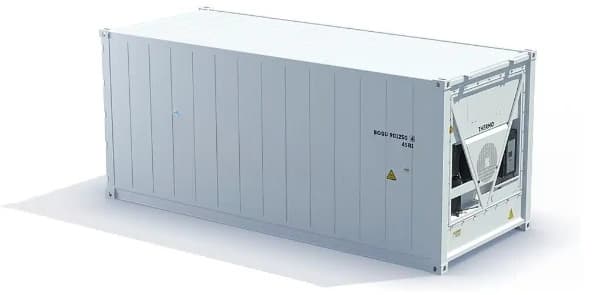
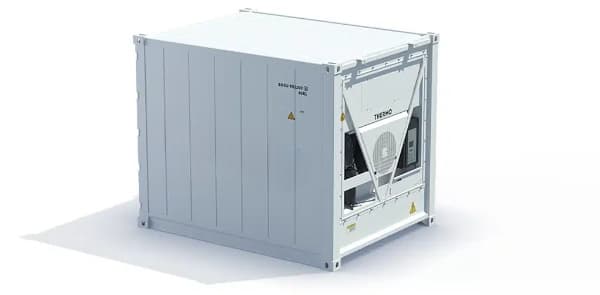
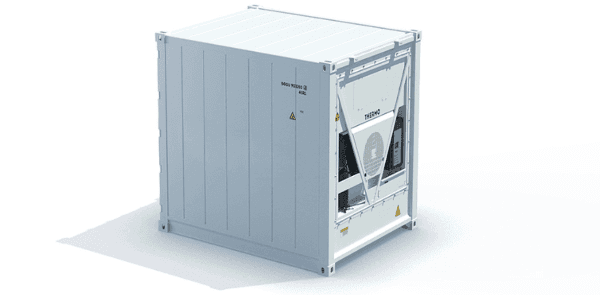
The 20ft High Cube insulated container is a storage solution designed for goods that are sensitive to temperature fluctuations, without using an active refrigeration system. It combines two advantages: reinforced insulation in the walls, roof and doors, and greater internal height than a standard 20ft container. This configuration keeps the internal temperature stable for longer while providing extra vertical space for bulky loads. Unlike a standard refrigerated container, it does not produce cold: it slows heat exchange with the outside. It is therefore a thermal buffer, useful for short- or medium-term storage, transit, or as a base shell for later fit-out.
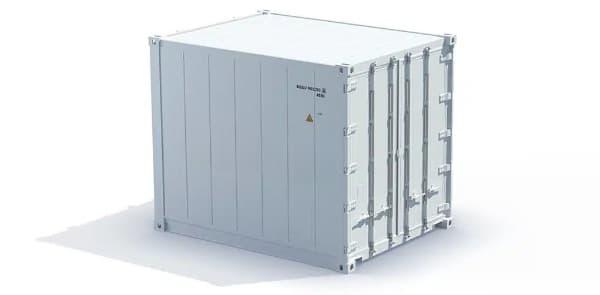
In terms of dimensions, this model measures 606 cm long, 244 cm wide and 259 cm high externally. These match the size of a 20ft High Cube container, whose external height is about 30 cm greater than a standard 20ft. The stated internal volume is 33.9 m³, a significant gain over the roughly 33.2 m³ of a standard 20ft, and above all a more comfortable ceiling height for stacking, vertical storage or installing equipment. The tare weight is 3,000 kg, consistent with an insulated container, whose insulation and interior finish materials add mass compared with a standard dry container. The structure is Corten steel, a low-alloy steel that resists atmospheric corrosion better than ordinary steel, extending the shell's service life outdoors. The floor is 28 mm marine plywood, a dense, treated panel suitable for rolling loads and damp environments. The rear doors are double-leaf, fitted with container locks, and the unit is ISO certified, ensuring compliance with the dimensional and structural standards for maritime containers (ISO 668 for dimensions and ISO 1496 for technical specifications).
Insulation is the core of this product. The walls, roof and doors are lined with an insulating material, usually rigid foam or a sandwich panel, which greatly reduces thermal conduction. The aim is not to reach a negative temperature, but to limit heat gain in summer and heat loss in winter. In practice, a well-sealed insulated container can maintain thermal inertia for several hours, or longer depending on the load, sunlight and outside temperature. This inertia is enhanced by the mass of the stored goods: the fuller the volume, the more slowly the internal temperature changes. That is why this type of container is often used for dry or packaged food products, non-thermosensitive pharmaceuticals below a critical threshold, technical materials, electronic equipment, textiles, cosmetics or goods that tolerate a moderate temperature range but not heat spikes. It is also used as a passive cold room for fresh products over short periods, provided a positive, unregulated temperature is acceptable.
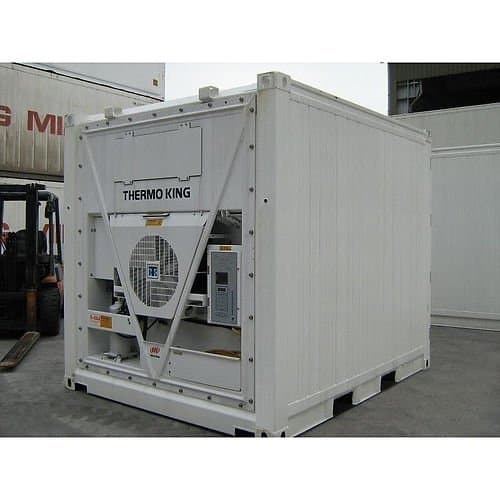
A clear distinction must be made between insulated and refrigerated. A refrigerated container, or reefer, carries a refrigeration unit that actively produces cold and can reach negative temperatures with precise regulation. An insulated container has no refrigeration unit: it insulates. It does not cool, it slows exchange. This difference has direct consequences for use, operating cost and maintenance. An insulated container uses no electricity, needs no refrigerant and cannot suffer a compressor failure. On the other hand, it cannot guarantee a target temperature: the internal temperature will follow the outside temperature with a delay and reduced amplitude. For long-term storage in high summer, ventilation, artificial shade or light air conditioning may therefore be needed if the product requires it. For transit, site or seasonal storage, the insulated container offers an excellent compromise between thermal protection and simplicity.
The 20ft High Cube insulated format also offers logistical advantages. The 20ft remains the most manageable format: it can be handled with common forklifts and reach stackers, fits on a standard container truck, and can be placed in tighter spaces than a 40ft. The High Cube height adds volume without increasing the footprint, which is useful when land is limited. In France, transporting a 20ft container by road is generally done on a semi-trailer or rigid truck, with a width of 244 cm that remains within the permitted dimensions for this type of load, subject to compliance with traffic rules and any authorisations depending on gross train weight and route. The 3,000 kg tare weight leaves a comfortable payload margin, even though the authorised gross weight depends on the chassis and vehicle. For delivery, it is prudent to check access, the availability of lifting equipment and ground bearing capacity.
When buying, several points deserve attention. First, the condition of the insulation: check that the interior panels are not detached, swollen or damp, as waterlogged insulation loses performance and can promote corrosion. Next, watertightness: inspect the door seals, gutters, welds and any cable penetrations. A water test or visual check after rain can reveal leaks. Also check the floor: 28 mm marine plywood is durable, but it can be marked by heavy loads or spills. A sound floor is essential for stability and to prevent moisture rise. Finally, check the structure: the rails, corner castings, locks and hinges. An insulated container has often been used statically, but it may have been moved several times; impact damage to the corners is common.
Routine maintenance consists of keeping it clean and dry. Clean the interior regularly with non-aggressive products, avoid high-pressure water jets on the insulating panels, and let it dry with the doors open after cleaning. Check the door seals and replace them if cracked. Check for rust spots and treat them with suitable paint to prevent spread. If the container is used for foodstuffs, follow the applicable hygiene rules and avoid any contact between products and walls if these are not washable. For outdoor use, light ventilation can reduce condensation, especially if the container is exposed to sun and large day-night temperature swings.
This container can also serve as a base for fit-out: site office, technical room, changing room, workshop or insulated storage space. Its generous internal height and already insulated walls reduce secondary work compared with a standard dry container. However, electricity, ventilation and sometimes heating or air conditioning must be provided if the use requires it. The Corten steel structure and ISO certification provide a reliable base for such conversions, provided local construction and planning rules are followed.
In summary, the 20ft High Cube insulated container is a passive, robust and scalable storage tool. It suits professionals looking to protect sensitive goods without the constraints of a refrigeration unit, and those who want a 20ft volume with greater usable height. Its value depends on the use: for precise temperature control, a reefer remains necessary; to smooth variations and gain storage comfort, the High Cube insulated container is a relevant solution.
Let us now look deeper at long-term care and maintenance, because this is what distinguishes a durable insulated container from one that loses performance within a few seasons. The insulation of an insulated container relies on panels that must stay dry and bonded to their support. The first cause of degradation is moisture: if water seeps through a roof joint, hinge or corner, it migrates into the insulation and remains trapped there. From then on, two phenomena follow: thermal performance drops, and corrosion progresses from the inside out, often invisible until the sheet metal is perforated. It is therefore advisable to inspect the roof after every episode of strong wind or hail, check the door seals at each change of season, and visually check the interior for damp spots, detachment or musty odours. An insulated container stored in the shade on drained ground ages much better than one placed in full sun on clay soil that retains water.
Interior cleaning must suit the use. For storing dry products, sweeping and wiping are enough. For foodstuffs, use products compatible with contact surfaces and rinse thoroughly, then dry. Insulating panels do not tolerate aggressive solvents or metal scrapers: prefer soft cloths and neutral detergents. The 28 mm marine plywood floor can be treated with a suitable paint or resin if you want to improve its abrasion resistance and make cleaning easier, but avoid products that would trap moisture under a waterproof film. If the container is used for odorous products, allow an aeration period before storing a cargo sensitive to smells, as the insulation can retain certain odours.
Transport regulations in France deserve a mention for a worry-free purchase. A 20ft maritime container is a transport unit that, on the road, is treated as a load. Its width of 244 cm corresponds to the maximum permitted width for category 1 abnormal load vehicles and convoys, but it remains within the usual dimensions of road container carriers. The 3,000 kg tare weight plus the weight of the chassis and tractor determines the gross train weight, which must remain within the driver's licence limits and traffic rules. For a loaded container, the authorised gross weight depends on the vehicle and heavy goods vehicle regulations. In practice, the buyer should above all plan the delivery logistics: truck access, road width, presence of trees or cables, and unloading method. A truck with an auxiliary crane or a telehandler is often needed to place the container where required. If the container is to remain in place, it is advisable to set it on concrete blocks or beams to avoid direct contact with the ground and promote water drainage.
For professional use, the insulated container can be integrated into a logistics chain as a buffer zone between a dock and a refrigerated vehicle, as a dry goods reserve in a temperate area, or as a storage room on a production site. In the agri-food sector, it protects non-refrigerated goods from heat spikes, provided precise regulation is not expected. In the pharmaceutical sector, it can serve as a secondary storage area for products tolerating a moderate temperature range, but any critical use must be validated by temperature mapping and monitoring. In industry, it houses components sensitive to moisture and heat, spare parts and consumables. On construction sites, it acts as a storage room for tools and sensitive materials, while offering better thermal inertia than a dry container. In events, it can serve as a reserve for technical equipment or catering.
Let us now compare this model with other options, as the choice often depends on size and type. Against a standard 20ft dry container, the High Cube insulated container provides better thermal protection and greater internal height, at the cost of a higher tare weight and generally higher purchase price. Against a 20ft reefer, the insulated container is simpler, lighter, with no refrigeration unit or power supply, but it does not actively cool: it is therefore unsuitable for products requiring a controlled temperature below ambient. Against a 40ft High Cube insulated container, the 20ft offers better manoeuvrability and a smaller footprint, but roughly half the volume. Against an open top or flat rack container, the insulated container is closed and insulated, making it suited to storage rather than out-of-gauge cargo. Finally, against a standard container converted into an insulated room by adding panels, the original insulated container retains the advantage of insulation integrated into the structure and ISO certification, which simplifies procedures and resale.
The choice between buying and renting depends on duration and frequency of use. For a one-off need of a few weeks or months, renting avoids tying up capital, round-trip transport costs and resale constraints. For a recurring or permanent need, buying becomes more economical in the medium term, especially as a well-maintained insulated container retains resale value. In both cases, check the actual condition of the container, the conformity of the insulation, watertightness and the presence of certificates. A new insulated container, like the one described here, offers a sound base for intensive use, while a used container may suit less demanding storage, provided lower thermal performance is acceptable.
Finally, a few good operating practices significantly improve results. Avoid keeping the doors open too long in periods of intense heat or cold, as each opening renews the internal air and breaks the inertia. Group handling operations. If possible, orient the container to limit direct sun exposure on the largest face, or install light sun protection. Do not store damp products against the insulating walls without protection, and leave a circulation space for air. For food uses, follow the hygiene and traceability rules in force. For industrial uses, keep a simple temperature log if the goods are sensitive, even though the insulated container is not a regulation device. These simple actions extend the container's service life and improve product preservation.
In conclusion, the 20ft High Cube insulated container is an interesting technical compromise between the dry container and the refrigerated container. It provides useful insulation, greater internal height and a robust Corten steel structure, without the constraints of a refrigeration unit. It suits professionals looking to protect goods from moderate thermal variations, to fit out an insulated room or to have a buffer reserve. For active cooling or precise regulation needs, a reefer remains essential. The choice should therefore be based on the product stored, the duration, the local climate and the operating budget.