Description
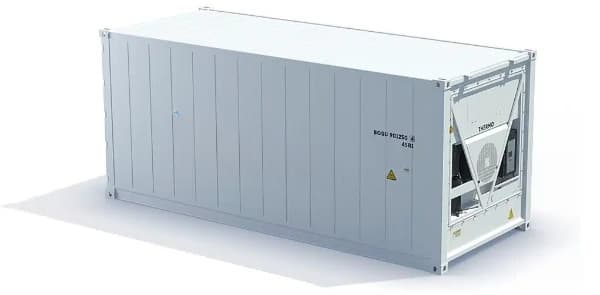
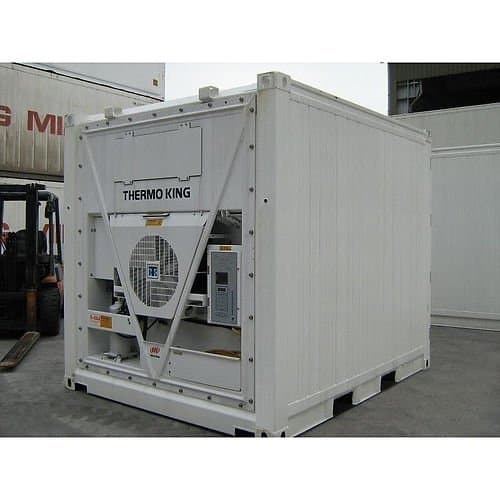
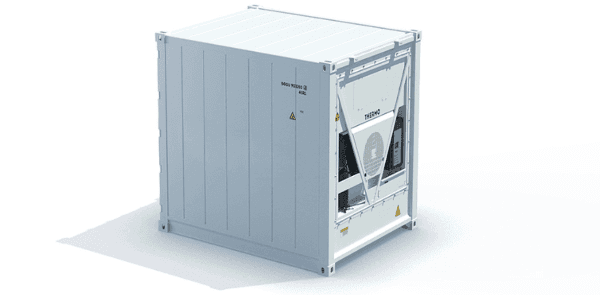
The 20ft insulated container is a storage and transport solution designed to maintain a stable internal temperature without an active refrigeration system. Unlike a standard refrigerated container, it does not produce cold: its reinforced insulation slows thermal exchange with the outside and thus protects goods from sudden temperature variations. This type of container is commonly used in food, pharmaceuticals, passive cold chain logistics or temporary storage of sensitive materials. It is an economical alternative when active regulation is not essential, while offering better thermal protection than a standard dry container.
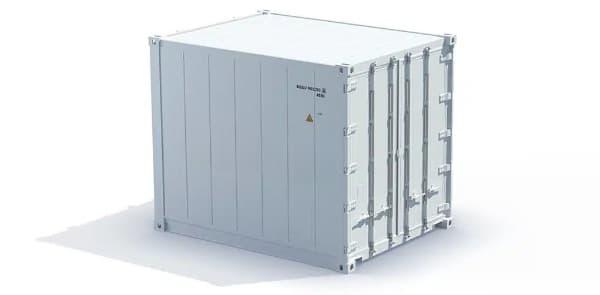
Technically, this 20ft insulated container complies with the nominal dimensions defined by ISO 668 and ISO 1496. Its external dimensions are approximately 6.06 m long, 2.44 m wide and 2.59 m high. These dimensions correspond to the standard 20ft format, which facilitates its integration on logistics platforms, trucks, trains and ships. The tare weight is approximately 2,900 kg. The useful internal volume is 29.9 m³, which allows storing a wide variety of goods, palletised or not. The structure is made of Corten steel, a self-weathering steel that resists atmospheric corrosion and extends the container's lifespan outdoors. The floor is 28 mm marine plywood, a common thickness for maritime containers, offering good resistance to humidity and rolling loads. The walls, roof and doors are insulated with materials that reduce thermal transfer. Insulation is generally made with polyurethane foam or mineral wool, without incorporating a refrigeration unit. The rear doors are double-leaf, equipped with standard container locks and seals that limit air and water infiltration. This container is new and ISO certified, guaranteeing its compliance with international transport and handling standards.
The use of an insulated container is particularly relevant for storing non-frozen food, pharmaceuticals, cosmetics, sensitive chemicals or electronic equipment. In the food sector, it can keep fruits and vegetables, dairy products, beverages or canned goods safe from heat spikes. In pharmacy, it can serve as a buffer zone for medicines requiring a stable temperature, without exposure to freezing or excessive heat. For logistics, it offers a temporary transport solution for goods that must remain within a moderate temperature range. It is also suitable for on-site storage of materials sensitive to humidity or thermal variations, such as certain glues, resins or paints. Finally, it can be fitted out as a technical room, an insulated site office or a storage space for sensitive equipment.
Maintaining an insulated container is relatively simple, but a few points of vigilance help preserve its performance. It is recommended to regularly inspect the door seals: a worn or poorly fitted seal lets air and humidity in, reducing the insulating effect and potentially causing condensation. Interior walls should be kept clean and dry; cleaning with clear water and a mild detergent is usually sufficient. Avoid violent impacts on the insulating panels, as a perforation of the wall can create a thermal bridge and reduce insulation efficiency. The marine plywood floor should be protected from overly concentrated loads and liquid spills; using pallets or load-spreading plates is advised. Outdoors, periodic checking of paint and welds helps prevent corrosion. If the container is stored on unstabilised ground, it is best to place it on crossbeams or blocks to avoid direct contact with the ground and limit rising damp.
When purchasing, several criteria should be examined. First, the condition of the insulation: a new insulated container offers optimal performance, but a used one may have suffered invisible damage. It is advisable to check for absence of moisture inside, mould or panel detachment. Then, door sealing: seals must be flexible and free of cracks. The presence of ISO certification is a guarantee of conformity, but it does not prejudge the actual condition of the container. Also check the flatness of the floor and the solidity of the anchor points. Finally, it is important to precisely define the use: an insulated container does not replace a refrigerated container when controlled temperature is required. It only slows thermal variations. For long-term storage, it may be wise to provide ventilation or a passive regulation system (such as moisture absorbers) to avoid condensation.
Regarding transport and regulations in France, a 20ft insulated container is subject to the same rules as a standard maritime container for handling and securing. On the road, it must be secured in accordance with the Highway Code requirements and the recommendations of standard NF EN 12195-1 for load securing. Transport on a container trailer is common, but requires a suitable chassis and twist-locks in good condition. For use as a storage room on a site, it may be subject to urban planning rules: generally, a container placed on the ground and not habitable does not require a building permit if it is not fixed to the ground and does not modify the exterior appearance, but it is prudent to check with the town hall. If fitted out as an office or technical room, fire safety and accessibility rules may apply. Finally, for maritime transport, the container must have a valid CSC (Convention for Safe Containers) plate, certifying its safety compliance.
In summary, the 20ft insulated container is a versatile tool for storing and transporting temperature-sensitive goods, without the constraints and cost of a refrigeration unit. It combines the robustness of a Corten steel maritime container with reinforced insulation, while retaining standard dimensions that facilitate handling and integration into logistics chains. Its 29.9 m³ volume and 28 mm marine plywood floor make it a solution suitable for many professional uses. As with any container, regular maintenance and careful verification at purchase are key to ensuring its durability and efficiency.
To delve deeper into routine maintenance, it is useful to distinguish preventive from corrective actions. Preventively, a complete visual inspection should be carried out at least twice a year, and more frequently if the container is exposed to sea spray or industrial pollution. This inspection covers the condition of the exterior paint, the presence of rust on the uprights, crossbeams and lifting corners, the condition of the door seals, the flatness of the floor and the absence of moisture traces on the interior walls. Correctively, any deep scratch should be treated quickly with an anti-rust paint suitable for Corten steel, to prevent corrosion from progressing under the protective layer. Door seals, wearing parts, can be replaced when they harden or deform; this operation is simple and inexpensive, but essential to maintain air and water tightness. The door locking system should be lubricated periodically with a suitable grease to avoid stiff points and facilitate operation. If the container is used to store food products, more rigorous cleaning is necessary between loads, with products approved for food contact, followed by complete drying. Also avoid storing damp or unpackaged products directly on the floor; using raised pallets allows better air circulation and limits the risk of condensation on the floor. In case of prolonged storage when stopped, it is recommended to leave slight ventilation, for example by leaving a door ajar or installing ventilation grilles, to avoid moisture accumulation and musty odours. Finally, the roof should be inspected: an accumulation of leaves or debris can retain moisture and promote corrosion. Regular cleaning of the roof and perimeter gutters, where they exist, extends the container's lifespan.
In the field of transport regulations, it is worth specifying the rules applicable depending on the mode of carriage. For road transport in France, a 20ft insulated container must be loaded on a suitable vehicle, generally a rigid truck or a semi-trailer equipped with twist-locks. The gross combined weight rating (GCWR) and the vehicle's payload must be respected, taking into account the container's tare weight (approximately 2,900 kg) and the weight of the goods. Securing must comply with the Highway Code and standard NF EN 12195-1, which defines methods for calculating securing forces. The straps and chains used must be in good condition and suitable for the load. The driver must be able to present, in case of inspection, the container's accompanying documents, including its CSC plate and, where applicable, the ISO conformity certificate. For rail transport, the container is handled by gantry cranes or reach stackers and must meet the gauge and mass requirements of rail networks. For maritime transport, the CSC plate is mandatory: it certifies that the container has been inspected and deemed fit for navigation. This plate must be updated according to the deadlines set by the convention, generally every thirty months for new containers, then according to a defined cycle. Finally, for air transport, the maritime container is not suitable; there are specific ULDs (Unit Load Devices), but that is not the subject of this product.
Regarding installation on a site, several cases should be distinguished. If the container is simply placed on private land, without foundations and without being made habitable, it is generally considered movable property and does not require a building permit. However, some municipalities may require prior declaration if the container is visible from the public road or if it is installed for more than three months. It is therefore recommended to consult the town hall's urban planning department before any installation. If the container is fixed to the ground, connected to networks (water, electricity) or fitted out to be habitable, it may be assimilated to a construction and require a building permit. In the case of professional use, such as a storage room on an industrial or commercial site, it may be subject to fire safety rules, particularly regarding safety distances from neighbouring buildings and emergency resources. It is also advisable to check local urban planning, co-ownership or lease rules, which may restrict the installation of containers. Finally, for use as a site office, the container must comply with obligations relating to sanitary facilities and worker safety, including access to drinking water and electricity.
To better position the 20ft insulated container in the available offering, a comparison with other sizes and types is enlightening. The standard 20ft dry container is the most common: it offers an internal volume of approximately 33 m³, but without insulation. It is cheaper to buy, but unsuitable for storing temperature-sensitive products. The 20ft high cube (HC) container has an internal height about 30 cm greater, increasing the useful volume to approximately 37 m³; it is interesting for bulky loads, but it is not insulated either. The 40ft dry container offers a volume of approximately 67 m³, double that of the 20ft, but it is heavier and requires a suitable chassis; its transport cost is higher. The 40ft high cube insulated or refrigerated container also exists, but it is rarer and more expensive. The refrigerated container (reefer) is equipped with a refrigeration unit that maintains a controlled temperature, positive or negative, with precise regulation. It is essential for frozen or heat-sensitive products, but it consumes energy and costs more to purchase and operate. The insulated container therefore sits between the dry and the reefer: it offers better thermal inertia than the dry, without the complexity and cost of the reefer. The open top container is designed to load out-of-gauge goods through the roof; it is not insulated. The flat rack container is a platform without walls or roof, for heavy or bulky loads; it offers no thermal protection. Finally, the folding or modular container can be an alternative for temporary storage, but it is generally less robust and less insulating. The choice therefore depends on the nature of the goods, storage duration, temperature constraints and budget.
In sector-specific use cases, the 20ft insulated container finds its place in many activities. In the food industry, it can serve as a passive cold room for fresh products that do not require negative temperatures, such as fruits and vegetables, eggs, dairy products or beverages. It helps smooth temperature peaks during deliveries or cold chain breaks. In the catering sector, it can be used as a temporary reserve for non-perishable goods or heat-sensitive products. In the pharmaceutical and cosmetics industry, it can store raw materials or finished products that must be protected from heat and humidity, without active cold requirements. In the medical field, it can serve as a storage room for medical devices or reagents, provided the recommended temperature ranges are respected. In the chemical industry, it can hold products that fear freezing or heat, such as certain resins, glues or solvents, provided material compatibility and safety rules are checked. In construction, it can be used as an insulated site room, to store sensitive materials or as a temporary office. In events, it can serve as a technical room or storage for audio-visual equipment, often sensitive to humidity and thermal variations. In agriculture, it can store seeds, fertilisers or treatment products, sheltered from the weather. Finally, in the logistics sector, it can be used as a buffer zone in a warehouse, to regulate flows of sensitive goods.
To optimise the use of an insulated container, a few good practices should be remembered. It is advisable not to open the doors too frequently or for too long, as each opening lets outside air in and changes the internal temperature. It is better to group loading and unloading operations. Using pallets and reasonable stacking maximises useful volume without damaging the walls. It is also recommended to install a thermometer inside to monitor temperature changes and detect any anomalies. When storing food products, hygiene and traceability rules must be respected, including regular cleaning and disinfection of the interior. Finally, it is important not to overload the container beyond its maximum payload, which is generally around 20 to 25 tonnes for a 20ft, depending on the design. This limit must be checked on the container's plate.
In conclusion, the 20ft insulated container is a relevant intermediate solution between the dry container and the refrigerated container. It offers passive thermal protection, good robustness and great versatility of use. Its purchase should be guided by a precise analysis of needs, a condition check and anticipation of regulatory and logistical constraints. Well maintained, it can provide many services for many years, whether for storage, transport or fit-out.