Description
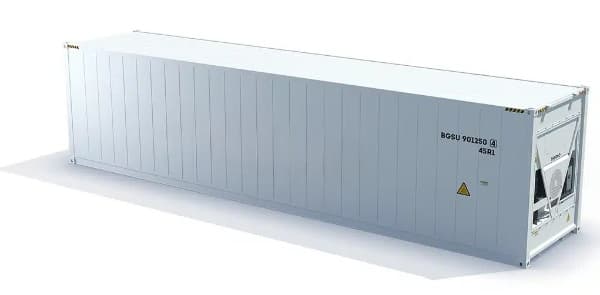
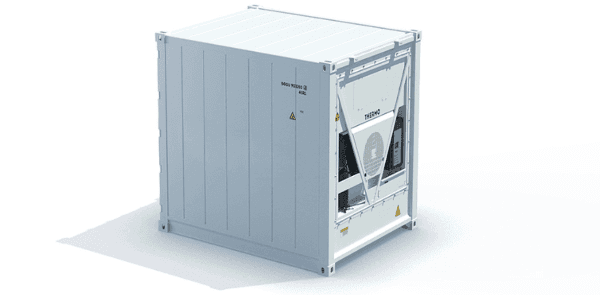
The 40ft High Cube insulated container is a storage and transport solution designed for goods that must be protected from temperature fluctuations without using an active cooling system. Its insulating wall slows heat exchange with the outside, helping to keep the internal environment more stable, whether to avoid summer heat or winter cold. This type of container is aimed at professionals seeking simple thermal protection, without a refrigeration unit, and who have a large volume to handle.
The 40ft High Cube format stands out for its greater internal height compared with a standard dry container. This extra height provides a larger usable volume and makes it easier to load bulky or stacked goods. With a length of 12.19 metres, a width of 2.44 metres and a height of 2.59 metres, this insulated container follows the standard external dimensions of the 40ft High Cube range, making it compatible with usual handling and transport equipment: gantry spreaders, forklifts, container trucks and railcars. Its tare weight of 4,650 kg and maximum payload of 29,350 kg allow heavy loads to be transported or stored while benefiting from insulation.
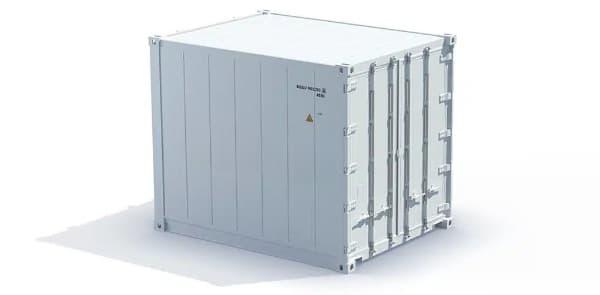
The structure of the insulated container is based on a Corten steel frame, a material known for its resistance to atmospheric corrosion. The walls, roof and doors incorporate insulation that limits heat transfer. The floor is made of 28 mm marine plywood, a dense panel treated to resist moisture and rolling loads. The double rear doors are fitted with standard container locks, ensuring robust closing and easy access across the full width. The container is ISO certified, confirming its compliance with international dimensional and safety standards for intermodal exchange and transport.
The internal volume of 59.5 m³ offers generous capacity for storing pallets, boxes, equipment or raw materials. As a guide, a standard 40ft High Cube container offers a volume of around 76 m³; insulation reduces this usable volume to 59.5 m³, but this reduction is the price of better thermal inertia. Passive insulation does not produce cold: it simply slows heat exchange. Thus, if the goods are loaded at a certain temperature, they will remain close to that temperature for longer than they would in a standard dry container. This characteristic is particularly valued for agri-food products (canned goods, beverages, dry ingredients), pharmaceutical or cosmetic products that fear heat spikes, non-hazardous chemicals, and electronic or industrial equipment sensitive to thermal shocks.
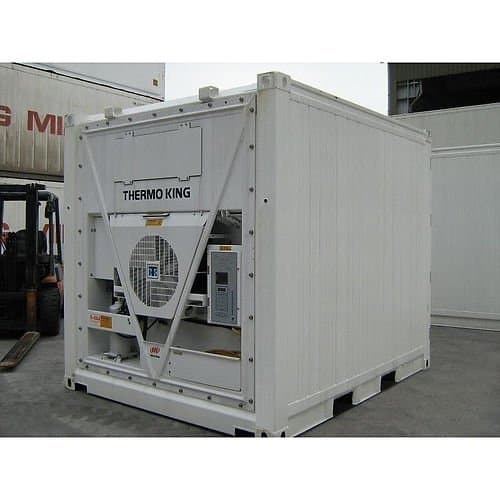
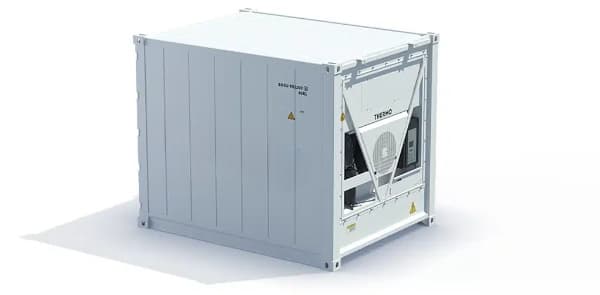
A distinction should be made between the insulated container and the reefer container (active refrigerated). A reefer is equipped with a refrigeration unit that actively produces cold and can reach negative temperatures or maintain a precise setpoint. The insulated container, however, has no refrigeration unit: it is passive. It is therefore suitable when the aim is to avoid extremes without needing fine temperature control, or when there is no electrical supply at the storage site. For long-distance transport of perishable goods with cold chain requirements, a reefer remains essential. For temporary storage, waiting in a port area, a construction site or seasonal protection, the insulated container is highly relevant.
The use of the 40ft High Cube insulated container covers several areas. In agri-food, it allows pallets of dry products or canned goods to be stored away from high heat. In the pharmaceutical sector, it can serve as a buffer zone for products that cannot withstand sudden variations, provided good storage practices are followed. In industry, it protects mechanical parts, lubricants or electronic components from condensation and temperature differences. Finally, it can be used as a technical room or insulated site office, when a workspace less exposed to cold or heat than a dry container is desired.
Maintaining an insulated container is relatively simple, but a few points deserve regular attention. The condition of the door seals should be checked: worn or crushed seals let air through and reduce insulation efficiency. Periodic cleaning of the internal walls and floor helps prevent the accumulation of dust or residues that could impair indoor air quality. Hinges and locks should be lubricated to remain operable. Finally, it is advisable to inspect the Corten steel structure for impacts or areas of incipient rust, and to treat these quickly with suitable paint to preserve the durability of the whole.
When buying an insulated container, several points require attention. First, the condition of the insulation: a used container may have suffered impacts or water ingress that degrade the insulating panels. It is useful to check for any signs of moisture, mould or detachment inside. Next, airtightness: close the doors and check that light does not pass through the seals. The floor must be sound, with no soft areas or delamination. The locks and locking bars must operate without forcing. Finally, ISO compliance and the presence of the CSC plate (Convention for Safe Containers) are important markers for transport use; for static storage use, these elements remain indicators of manufacturing quality.
Regarding transport in France, a 40ft High Cube container complies with the maximum dimensions authorised for road transport, subject to compliance with gauge and signage rules. The external height of 2.59 metres remains within the limits of the highway code for road combinations, but it may require particular attention when passing under certain structures or in height-restricted areas. The authorised gross train weight (GTW) and axle load must be checked according to the towing vehicle and the regulations in force. For sea transport, the 40ft High Cube container is accepted on most container ships, its greater height being offset by suitable securing.
The purchase of this new 40ft High Cube insulated container, offered at the price of EUR 3,060.00, is part of an approach of passive protection of goods. It does not replace a reefer when an active cold chain is required, but it constitutes an economical, energy-free alternative for many storage and transport needs. Its volume of 59.5 m³, its payload of 29,350 kg and its Corten steel construction with marine plywood floor make it durable equipment, suitable for professionals and informed individuals alike. For any questions about condition, delivery options or accessories, it is recommended to contact the seller directly, D.S. Globe Conteneur, in Marseille.
To choose an insulated container well, it is useful to compare it with the other available formats. The 20ft insulated container offers a smaller volume, generally around 28 to 33 m³, which suits small stocks or occasional shipments. The standard 40ft insulated container, without High Cube height, offers a slightly lower volume than the High Cube, with a lower internal height. The 40ft High Cube insulated container, the subject of this sheet, positions itself as the best compromise between volume and passive insulation for bulky loads. The 45ft High Cube insulated container also exists, but it is less common and its handling may be limited on certain networks. Finally, the 40ft High Cube reefer container combines insulation and active cold production, for higher cost and operating complexity.
The choice between a dry, an insulated and a reefer container therefore depends on three main criteria: the sensitivity of the goods to temperature variations, the duration of storage or transport, and the availability of an electrical supply. A dry container is suitable for products insensitive to moderate heat or cold. An insulated container protects without energy, but does not regulate. A reefer actively regulates, but requires a power source and specific maintenance. The 40ft High Cube insulated container therefore sits in an intermediate category, often underestimated, which meets many real needs without extra energy cost.
In terms of fit-out, the 40ft High Cube insulated container can be equipped with shelves, racking or partitions to organise storage. The existing insulation limits condensation on the walls, which protects cardboard or paper packaging. It is possible to add interior lighting, controlled mechanical ventilation or a dehumidifier to further improve conservation conditions. Any modification must, however, respect the integrity of the insulating envelope: drilling through the walls without care can create thermal bridges and reduce insulation efficiency. It is therefore recommended to call on a professional for any technical installation.
The regulations applicable to insulated containers in France depend on their use. For static use (storage on private land), local planning rules may apply, particularly if the container is considered a construction. It is advisable to check with the town hall before installation. For transport use, the container must comply with the CSC convention and undergo periodic inspections. The CSC plate, affixed to the container, indicates inspection dates and the maximum authorised load. Finally, the transport of dangerous goods is subject to ADR regulations for road, IMDG for sea and RID for rail; the insulated container can be used for such goods if it complies with the requirements applicable to their class.
In terms of security, the 40ft High Cube insulated container offers protection against break-ins thanks to its robust doors and locks. However, it is recommended to add a security padlock or an additional locking system if the container is used to store valuable goods. Insulation can also attenuate external noise, which is an advantage for use as a site office or technical room. On the other hand, insulation does not protect against excessive humidity: in very humid environments, it may be necessary to use moisture absorbers or suitable ventilation.
The 40ft High Cube insulated container can also be integrated into an existing logistics fleet. Its ISO compatibility allows it to be stacked on other containers, within load and stability limits. It can be handled with the same equipment as dry containers, which simplifies operations. Its tare weight of 4,650 kg remains within the usual ranges for a 40ft High Cube, which does not entail any particular lifting constraint. The payload of 29,350 kg allows heavy pallets or machines to be loaded, provided the load is correctly distributed on the floor.
For companies wishing to test the use of an insulated container before investing in a fleet, rental can be an option. D.S. Globe Conteneur, based in Marseille, can provide information on availability and conditions. Rental makes it possible to assess the container's suitability for the specific needs of the activity, particularly in terms of volume, storage duration and logistical constraints. It can also help out during a seasonal peak in activity, without tying up capital.
Finally, it is important to remember that the 40ft High Cube insulated container should not be confused with a refrigerated container. If the goods require a precise controlled temperature, temperature recording or a validated cold chain, a reefer or an active cooling solution is essential. The insulated container is a passive protection tool, whose effectiveness depends on the initial temperature of the goods, the storage duration, the outside temperature and the airtightness of the container. By understanding these limits, the user can make the most of it at controlled cost and without energy consumption.