Description
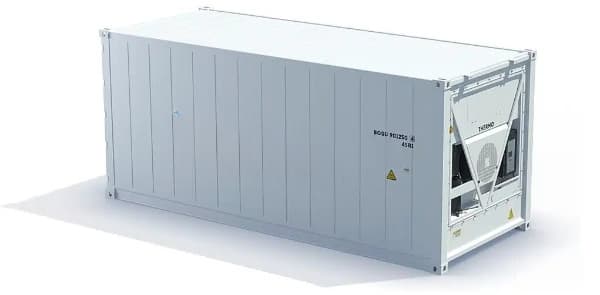
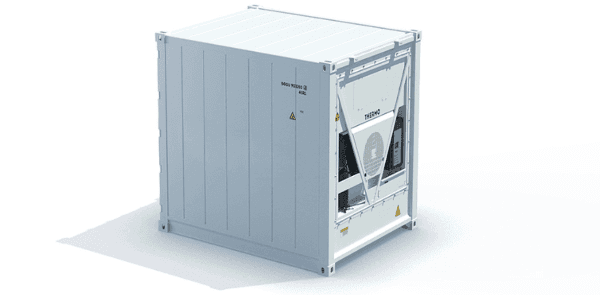
The used 20ft refrigerated container we offer is a proven controlled-temperature solution, designed to store or transport temperature-sensitive goods. With an internal volume of approximately 28.4 m³ and external dimensions of 6.06 m long, 2.44 m wide and 2.59 m high, it complies with the standard dimensions of 20ft ISO containers, making it compatible with most handling equipment and transport vehicles. Its tare weight of around 2,900 kg remains within acceptable limits for a reefer container of this category. This type of container is commonly used in cold supply chains, whether for temporary on-site storage or for shipping palletised loads.
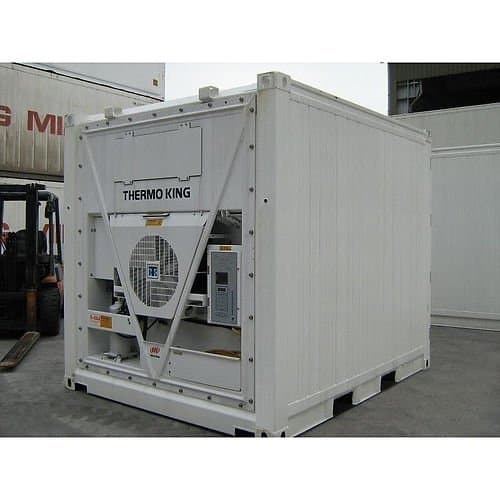
Unlike a standard dry container, a refrigerated container is fitted with an integrated refrigeration unit that maintains a precise temperature range. On this used model, the refrigeration unit runs on a three-phase 380 V or single-phase 220 V power supply depending on the configuration. The regulation covers a range from -25°C to +25°C, allowing both the freezing of frozen products and the preservation of perishable goods at positive temperatures, or the storage of pharmaceutical products requiring controlled temperature. Insulation is provided by polyurethane foam injected into the walls, ceiling and floor, offering an effective thermal barrier and limiting energy losses.
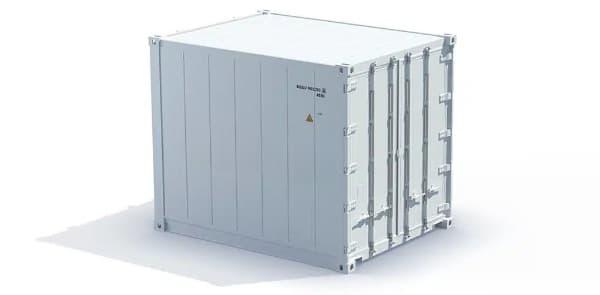
The construction of the refrigerated container uses robust materials. The external walls are made of corten steel, a low-alloy steel that resists atmospheric corrosion well, while the internal walls are generally made of stainless steel or food-grade aluminium, easy to clean and compatible with hygiene requirements. The floor is a key element: on this type of container, it can be T-profile aluminium or marine plywood covered with a non-slip resin. The T-floor allows air circulation under the pallets, improving temperature uniformity and preventing cold spots. The rear doors are double sealed doors, fitted with gaskets ensuring insulation and standard container locks. These doors must be kept in good condition to guarantee cooling efficiency.
Using a used refrigerated container is relevant in many contexts. In food logistics, it allows the storage of fruit and vegetables, dairy products, meat or frozen goods in a fixed location or on the move. In the pharmaceutical sector, it provides a thermal enclosure for medicines or biological samples, subject to compliance with the regulatory requirements specific to this field. Temporary events, festivals, construction sites or living bases can also use it as a temporary cold room. Finally, it can serve as a cold reserve for laboratories or central kitchens. Its mobility is an asset: once placed on stabilised ground and connected to a suitable power supply, it is operational.
Before buying a used refrigerated container, several points should be examined. The first concerns the condition of the refrigeration unit: it is recommended to check its operation, the absence of refrigerant leaks, and the good condition of the compressor and fans. A real-condition test, with temperature readings over several hours, ensures that the regulation holds the setpoint. The second point concerns sealing and insulation: door gaskets, walls and floor must be inspected to detect any air or water infiltration, which would harm energy performance. The third point is the structure: the presence of perforating rust on the corten steel, significant impacts or deformations on the corner posts can compromise the container's integrity and its suitability for transport. Finally, it is advisable to check the CSC plate (Convention for Safe Containers) and, where applicable, the ATP certification (Agreement on the International Carriage of Perishable Foodstuffs) if the container is intended for the transport of perishable foodstuffs under controlled temperature. All these checks are carried out on our units before sale.
Routine maintenance of a used refrigerated container extends its lifespan and maintains its performance. The interior should be cleaned regularly with food-safe products, avoiding high-pressure water jets on the refrigeration unit. The filters and heat exchangers of the refrigeration unit must be dusted periodically to prevent fouling from reducing efficiency. Door gaskets should be cleaned and checked to prevent air leaks. An annual inspection by a refrigeration technician is recommended to check the sealing of the refrigerant circuit, the pressure and the proper operation of the control components. Finally, when the container is not in use, it is best to leave it closed but slightly ventilated to prevent mould, and to protect it from direct sunlight if possible.
From a regulatory standpoint, a refrigerated container used for international transport must comply with ISO 668 and ISO 1496-1 standards and carry a valid CSC plate. For the transport of perishable foodstuffs, ATP certification is often required; it certifies that the container is able to maintain a given temperature. In France, using a refrigerated container as a fixed cold room may require a declaration to the veterinary services if animal foodstuffs are stored. For a permanent installation, it is also necessary to check local planning rules, as a container placed on the ground may be considered a construction. Finally, the electrical connection must be carried out in accordance with current standards (NF C 15-100) and by a qualified professional.
The used 20ft refrigerated container we offer is tested, serviced and delivered with a sealing certificate. It is ready to use and can be commissioned quickly after installation. We can arrange delivery throughout Europe or welcome you for on-site collection. For any technical questions or to obtain detailed photos of the available unit, do not hesitate to contact us. Our team based in Marseille supports you in choosing the container suited to your cooling needs.
Beyond these general points, it is useful to examine sector-specific use cases in order to choose the most suitable refrigerated container. In the agri-food sector, a 20ft container can store around 10 Euro pallets (80 x 120 cm) on a single level, or more using shelving or suitable stacking. For fresh products such as fruit and vegetables, the temperature must be maintained around 0 to 8°C depending on the variety, with controlled relative humidity. For meat and seafood, temperatures close to 0°C or below are required. Frozen goods require -18°C or lower, which the refrigeration unit can easily achieve. In the catering or food service sector, this container can serve as a mobile cold reserve for deliveries or events. For florists and horticulturists, it preserves cut flowers at a temperature of 2 to 5°C, with good humidity. Finally, in the chemical or cosmetics industry, it can store heat-sensitive products, provided the compatibility of the internal materials is checked.
The transport of goods under controlled temperature in France is governed by the ATP agreement, which sets the insulation and performance standards for refrigerated equipment. A refrigerated container with a valid ATP certificate can be used for the road transport of perishable foodstuffs. This certificate must be renewed periodically (generally every 6 years for new equipment, then according to the procedures specific to the certifying body). For sea transport, reefer containers are subject to IMO rules and must carry a CSC plate certifying their suitability for handling and stacking. In France, road transport of containers is also subject to regulations on vehicle weights and dimensions: a 20ft container can be transported on a container truck without exceeding regulatory limits, but the maximum authorised gross train weight must be respected. For exceptional transport, prior authorisation is required.
Installing a refrigerated container as a fixed unit requires some precautions. The ground must be level and stabilised, for example a concrete slab or a bed of compacted gravel, to avoid deformation of the structure. It is recommended to allow space around the refrigeration unit for access and ventilation. The power supply must be protected by a residual current circuit breaker suited to the unit's power (generally between 3 and 6 kW depending on the model). A cable of sufficient cross-section must be run from the electrical panel. Outdoors, it is advisable to install a canopy to protect the refrigeration unit from bad weather and sunlight, improving its efficiency and longevity. Finally, access to the container must be secured if valuable goods are stored: a padlock on the door locks is a minimum.
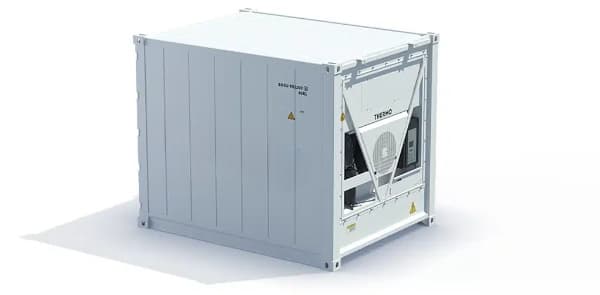
Let us now compare the 20ft refrigerated container with other options. The 40ft refrigerated container offers double the volume (around 67 m³) and can hold up to 20 to 22 pallets. It is more suited to large volumes, but its higher tare weight and bulk make it less manoeuvrable on a cramped site. The 10ft refrigerated container, rarer, is useful for small spaces or one-off needs. The 20ft dry container, without a refrigeration unit, is much cheaper but cannot regulate temperature; it can be used for dry storage, but not for perishable goods. The high cube reefer container (9'6" high) offers greater internal volume, practical for bulky loads, but it is less common second-hand. Finally, a fixed cold room made of sandwich panels offers better insulation and modularity, but it is immobile and requires construction work. The used refrigerated container represents an interesting compromise between cost, mobility and performance.
Regarding energy consumption, a 20ft refrigerated container consumes on average between 3 and 8 kWh depending on the outside temperature, the setpoint temperature and the condition of the insulation. In summer, consumption may increase. It is therefore important to check the condition of the gaskets and insulation to limit costs. Regular maintenance keeps consumption at the lower end. Using a programmable thermostat or a monitoring system can help optimise cycles. For sensitive installations, a temperature recorder can be added to log readings, which is often required in the pharmaceutical or food sector.
Finally, it should be remembered that buying a used refrigerated container must include a check of the documents provided: invoice, transfer certificate, CSC plate and, where applicable, ATP certificate. We provide these documents for every unit sold. Our team is available to advise you on the model best suited to your business and to support you in the transport and installation procedures.
Let us now look in more detail at preventive maintenance and wearing parts. On a refrigerated container, the most heavily used components are the compressor, the evaporator and condenser fans, the door gaskets, the contactors and the temperature sensors. The compressor is the heart of the system: it must be checked regularly to detect any abnormal noise, vibration or consumption. Door gaskets, made of rubber or elastomer, lose their elasticity over time and must be replaced as soon as they no longer provide a seal. Filter driers, which trap moisture in the refrigeration circuit, must be changed according to the manufacturer's recommendations. Temperature sensors must be calibrated to guarantee accurate regulation. A maintenance log kept up to date helps track the history of interventions and plan replacements. For users storing high-value products, it is recommended to take out a maintenance contract with a qualified refrigeration technician, in order to benefit from rapid call-outs in the event of a breakdown.
Another important point concerns preparing the container before loading. It is advisable to pre-cool the container to the setpoint temperature before placing goods inside, especially if they are already cold. This avoids overloading the refrigeration unit and limits temperature variations. Products should be palletised and spaced to allow cold air circulation. Evaporators and ventilation grilles must not be obstructed. Loading should be done quickly to avoid breaking the cold chain. Once the doors are closed, check that the gaskets are clean and the locks are properly engaged. For long journeys, it is prudent to use a standalone temperature recorder, which will allow verification of cold chain compliance on arrival.
In the rental sector, the used 20ft refrigerated container can be offered for variable periods, from a few days for an event to several months for a construction site. Renting has the advantage of not tying up cash and allows you to test the equipment before buying. It generally includes maintenance and repairs. For businesses with seasonal needs, rental is often more cost-effective than buying. We can work with you to determine the most suitable arrangement, based on duration, installation location and electrical constraints.
In conclusion, the used 20ft refrigerated container is a versatile, robust and cost-effective piece of equipment that meets many controlled-temperature needs. It combines the standardisation of sea transport with the performance of a mobile cold room. However, its purchase must be accompanied by a rigorous technical inspection and regular maintenance to guarantee its long-term reliability. We remain at your disposal to provide additional information, photos or an on-site visit.