Description
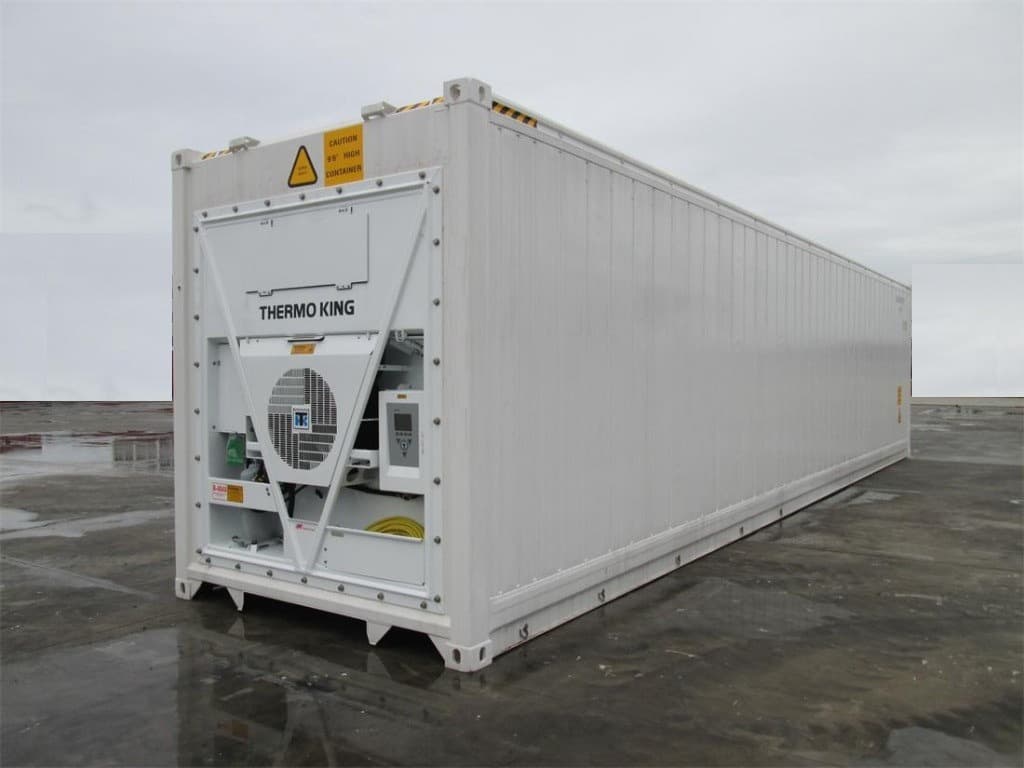
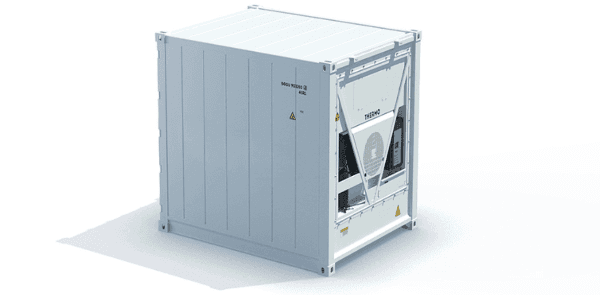
The used 40ft High Cube refrigerated container we offer is a temperature-controlled storage and transport solution designed for professionals seeking substantial capacity without a high acquisition budget. This type of container, often called a "reefer" in the maritime industry, is built to maintain a temperature range from -30°C to +30°C depending on the setting on the refrigeration unit. It is therefore suitable for frozen products as well as perishable goods, pharmaceuticals or certain chemicals requiring controlled-temperature storage.
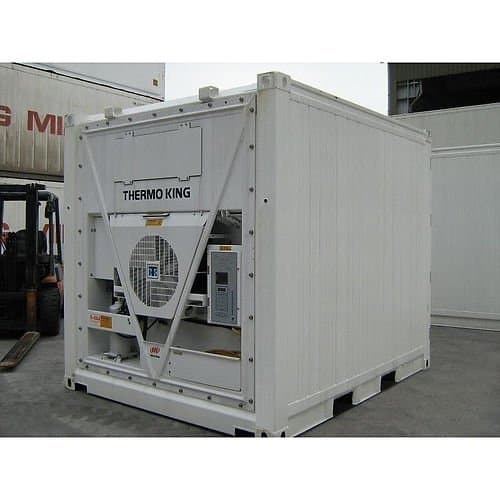
Before going into detail, it is useful to recall what distinguishes a refrigerated container from a standard dry container. A reefer is equipped with an integrated refrigeration machine, usually housed in a front-mounted unit, which produces cold and circulates air inside the box via ducts and a specific floor grille. The interior wall is not exposed steel as on a dry container: it consists of insulating panels, often rigid foam sandwiched between two metal sheets, and the floor is a T-bar or grooved floor, in aluminium or marine plywood, designed to let cold air pass under the pallets. This architecture allows a uniform temperature throughout the volume, provided loading rules are followed.
The 40ft High Cube model we offer has the standard external dimensions of ISO 668: approximately 12.19 metres long, 2.44 metres wide and 2.59 metres high. The term "High Cube" means the internal height is greater than that of a standard 40ft container, resulting in an internal volume of about 68.2 m³, compared with about 67.3 m³ for a standard 40ft dry and about 59 m³ for a non-High Cube 40ft reefer. This extra volume is valuable when storing medium-height pallets or goods packed in light cartons: you can sometimes add a row of packages on top without changing the floor footprint. The tare weight of this container is about 4,650 kg, which remains within the usual range for 40ft High Cube reefers (generally between 4,400 and 5,000 kg depending on equipment and manufacturer).
The construction uses Corten steel for the structure and external walls. This steel, also known as weathering steel, is valued in the maritime world for its resistance to atmospheric corrosion: it develops a stable oxide layer on the surface that slows the progression of rust. This does not remove the need for regular maintenance, particularly in salty or humid environments, but it explains the longevity of these boxes when properly monitored. The floor is 28 mm marine plywood, a dense material treated to resist moisture, rolling loads and temperature variations. The rear doors are double doors fitted with container locks, with seals that must be checked at purchase and during use. The ISO certification mentioned in the specifications refers to the international standards governing the dimensions, structural strength and handling devices of maritime containers; it determines their acceptance in intermodal transport chains.
The refrigeration unit is the heart of the system. It generally operates with a compressor, a condenser, an evaporator and a refrigerant, and is powered by electricity. On a maritime reefer, the power supply is typically three-phase 380-460 V / 50-60 Hz, with variations depending on the model. For use at a dock, in a depot or on an industrial site, it is essential to have a suitable power supply and a connection compliant with current electrical regulations. Temperature control is carried out via a thermostat or digital controller that drives the compressor and sometimes a defrost system. The stated range of -30°C to +30°C covers most needs: frozen goods (often -18°C or lower), fresh products (0°C to +4°C), pharmaceuticals (often +2°C to +8°C), cut flowers (+2°C to +8°C), or certain chemicals requiring a stable temperature. Note that the accuracy and stability of the temperature depend on the condition of the unit, the quality of the insulation and external conditions; a used reefer must therefore be tested under real conditions before being put into service.
In terms of uses, the used 40ft High Cube refrigerated container is suitable for several scenarios. The first is temporary or permanent storage of food: restaurants, caterers, wholesalers, agricultural cooperatives or fishermen can store pallets of fresh or frozen products when their usual cold rooms are full or under renovation. The second is transport: although maritime use remains the most common, a reefer can be used on a truck or railcar for land links, provided there is a power supply during the journey or a standalone refrigeration unit. The third is event or seasonal use: festivals, markets, sports competitions or film shoots sometimes need a large-capacity mobile cold room, and the reefer container offers a robust and quickly operational solution. Finally, some pharmaceutical or chemical professionals use these containers as thermal enclosures for products requiring temperature traceability, subject to installing a data logger and appropriate procedures.
When buying a used refrigerated container, several points require attention. The first concerns the condition of the refrigeration unit: check that it starts, reaches the setpoint, has no refrigerant leak and that the heat exchangers are not clogged. An empty test, then with a load simulating real use, is recommended. The second point is the sealing of the box: door seals, cable passages and welds must be checked, as an infiltration of hot or humid air increases power consumption and destabilises the temperature. The third point is the condition of the floor: a swollen, delaminated or broken floor can compromise air circulation and load resistance. The fourth point is corrosion: on a used container, rust may appear on the bottom rails, handling corners or door posts; surface corrosion can be treated, perforating corrosion should be a warning. Finally, it is advisable to check the container's history, particularly its previous use (transport of food or other products) and its maintenance, as a reefer that has carried chemicals may require thorough cleaning before food use.
Routine maintenance of a used refrigerated container relies on a few simple but regular actions. Clean condensers and filters to maintain unit performance, check the level and condition of the refrigerant, check door seals and replace if necessary, and ensure defrost water drains are not blocked. Periodic inspection by a qualified refrigeration technician is strongly recommended, especially if the container is used for sensitive products. Electrically, check cable cross-section, residual current protection and earthing, in compliance with current standards. In France, installing a refrigerated container on a site must comply with local planning rules (prior declaration or permit depending on duration and footprint) and electrical safety requirements; for professional use, it is prudent to consult a inspection body or a qualified electrician.
Transporting a 40ft High Cube container requires a suitable container truck, with a compatible chassis and twist-lock system. The tare weight of 4,650 kg adds to the payload, and the gross combined weight must be respected. In France, road transport of containers is governed by weight and dimension regulations, and abnormal load convoys may be necessary in some cases. For handling, a forklift of sufficient capacity or a crane is required; standardised handling corners allow lifting by spreader. It is also important to provide stable, level ground for placement, as well as access for power supply if the container is to operate on site.
Regulatory-wise, a used refrigerated container intended for maritime transport must retain its valid CSC (Convention for Safe Containers) plate. This plate certifies that the container has been inspected and found fit for handling and transport. For land use only, the CSC plate is not systematically required, but it remains a guarantee of structural compliance. Furthermore, the use of refrigerants is governed by European regulations (F-Gas regulation): technicians working on the unit must hold appropriate certifications, and leaks must be checked periodically. If the container is used for food, it must be cleaned and disinfected according to good hygiene practices, and temperatures must be recorded if required by regulations.
Let us now look deeper into sector-specific use cases, as the choice of a used 40ft High Cube reefer depends closely on the business. In the agri-food sector, fruit and vegetable wholesalers use this type of container to store pallets of fresh produce before shipping, with a setpoint often between +2°C and +8°C depending on the varieties. Tropical products, more sensitive to cold, may require a higher temperature, around +10°C to +13°C, which shows the value of a precise controller. Meat and fish professionals, on the other hand, look for temperatures close to 0°C to +2°C for fresh meat, and -18°C to -20°C for frozen products. The reefer container can cover both extremes with the same equipment, which explains its versatility.
In the pharmaceutical sector, storing vaccines, heat-sensitive medicines or biological samples requires much finer temperature stability than in food. A used reefer can be suitable provided it is equipped with an independent temperature recorder, is tested regularly and complies with good distribution practices (GDP). It does not replace a qualified cold room for the most critical products, but it is a useful backup or temporary storage solution. In chemicals, some products must be kept frost-free or, conversely, at low temperature to avoid reactions; again, the reefer provides a closed, regulated enclosure, provided material compatibility is checked and suitable ventilation is provided.
The events sector and mobile catering represent another outlet. A 40ft High Cube refrigerated container can serve as a temporary cold room for a festival, trade show, sports competition or film shoot. Its robustness and secure closure allow food to be stored safely, and its large capacity avoids multiplying small units. For caterers and food trucks, it can also serve as central storage between events. In horticulture and floriculture, cut flowers and sensitive plants often travel between +2°C and +8°C; a well-maintained used reefer can maintain this range, provided ethylene-producing products are not mixed with products sensitive to this gas.
Let us now compare this model with other sizes and types of refrigerated containers. The 20ft reefer is shorter (about 6.06 m long) and offers a volume of about 28 to 33 m³ depending on whether it is standard or High Cube. It is lighter (about 3,000 to 3,500 kg tare) and easier to move, making it a relevant choice for small volumes or difficult-access sites. However, its cost per cubic metre stored is often higher, and it requires the same refrigeration unit as a 40ft, with power consumption not necessarily proportional to volume. The standard 40ft reefer, without High Cube, offers a slightly smaller volume (about 59 m³) and a lower internal height; it may be sufficient if you do not need to stack tall pallets. The 40ft High Cube, the subject of this sheet, adds about 9 m³ of usable volume compared with the standard 40ft reefer, which is a tangible advantage for bulky but light loads.
Compared with a dry container, the High Cube reefer has significant differences. The dry is lighter, cheaper to buy and maintain, and does not consume electricity. But it does not regulate temperature: it only protects from rain, wind and, to some extent, thermal variations thanks to its mass. For sensitive products, the reefer is therefore essential. Compared with a built cold room, the reefer container offers the advantage of mobility, speed of installation and often lower investment cost. In return, its volume is fixed, its insulation is less efficient than a professional cold room and its power consumption can be significant, especially in high heat. It is therefore necessary to size the power supply and plan an operating budget.
Let us now talk about seasonal preventive maintenance. In summer, when outside temperatures exceed 30°C, the refrigeration unit works harder: it is advisable to clean the condenser more frequently, check circuit pressure and ensure the container is not exposed to full sun without ventilation. If possible, artificial shade or a light shelter reduces the thermal load. In winter, conversely, some settings may require a "heating" mode to maintain a positive temperature; not all reefers have this function, and this point must be checked before purchase if you need to store products at +10°C in cold weather. Defrosting is also a critical point: ice accumulation on the evaporator reduces heat exchange and can cause the temperature to rise. A poorly set defrost cycle or a faulty heater must be corrected quickly.
Regarding transport regulations in France, several texts govern the use of containers. Road freight transport is subject to the Highway Code and weight and dimension limits. A road train carrying a 40ft High Cube container can reach a significant total length and must comply with authorised dimensions. For abnormal loads, prior authorisation is required. Rail and inland waterway transport follow other rules, but the ISO container remains compatible with these modes thanks to its standardised dimensions. Regarding the cold chain, European Regulation 852/2004 on food hygiene requires that products be kept at appropriate temperatures and that the cold chain is not broken. Using a reefer for storage or transport of food therefore implies being able to justify temperature monitoring, which often involves a data logger. For products of animal origin, specific rules may apply. Finally, the electrical installation must comply with NF C 15-100 for low-voltage installations, and work on the refrigeration circuit must be carried out by persons holding the aptitude certificate required by the F-Gas regulation.
Another practical aspect concerns preparing the container before loading. It is recommended to pre-cool the box to the setpoint temperature before introducing goods, so that the unit does not have to compensate for too much heat input. Pallets must be spaced from walls and ceiling to allow air circulation, and floor grilles must not be blocked. Too dense or poorly organised loading creates hot spots and can compromise preservation. Similarly, frequent door openings cause the temperature to drop and increase consumption; it is better to group loading and unloading operations. For storage use, a double door or airlock could be considered, but this is outside the scope of the standard container.
Finally, it should be emphasised that buying a used refrigerated container must be accompanied by a reflection on return on investment. A new reefer costs significantly more than a used reefer, but it offers a warranty and a longer remaining service life. A well-maintained used model can provide many years of service, provided you accept more frequent maintenance and budget for possible repairs. At D.S. Globe Conteneur, in Marseille, we offer this used 40ft High Cube refrigerated container in good condition, with the technical characteristics described above. We remain at your disposal to help you choose the container suited to your activity, whether for storage, transport or a specific fit-out. Do not hesitate to contact us for availability and delivery arrangements.