Description
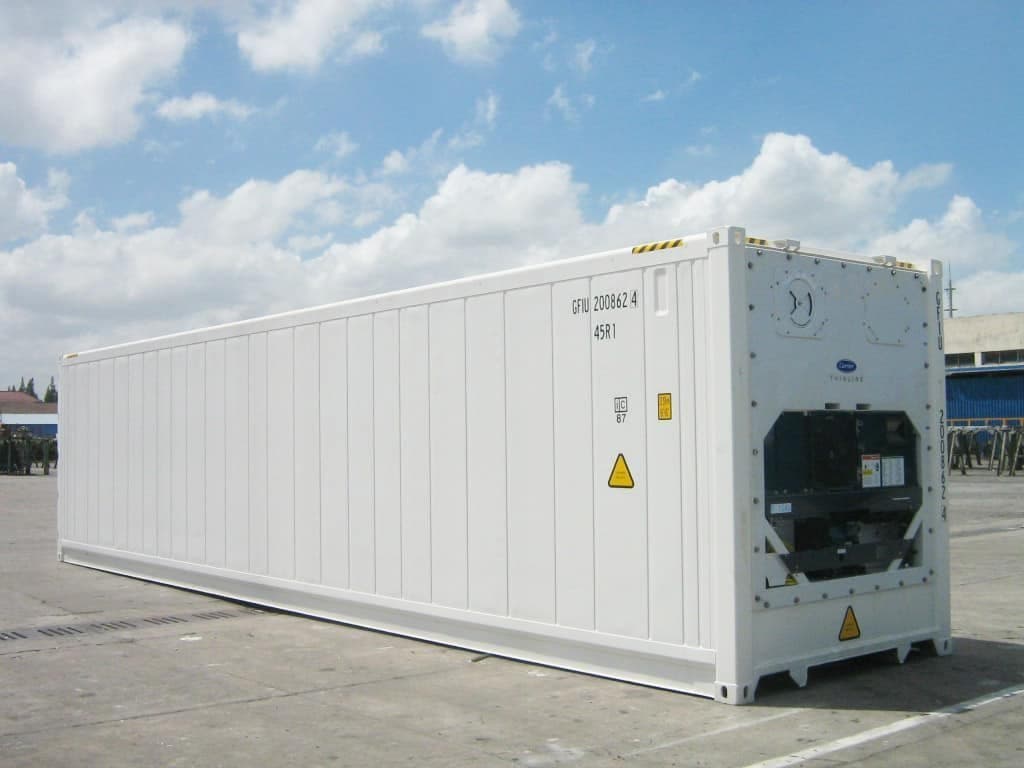
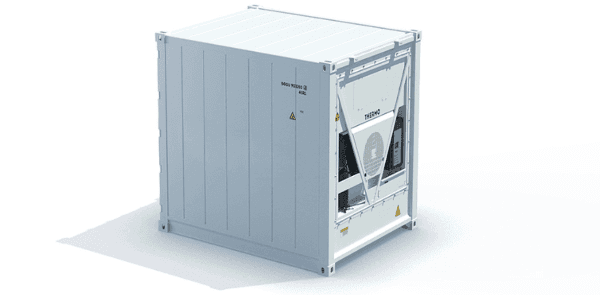
The new 40-foot refrigerated container is an intermodal transport unit designed to keep goods at controlled temperatures. It meets ISO 668 and ISO 1496-1 standards, ensuring standardized dimensions and compatibility with global handling and transport infrastructure. This model features reinforced insulation and an integrated refrigeration unit, allowing precise temperature regulation from -25 °C to +25 °C. Whether for transporting perishable food, pharmaceuticals, or for stationary use, this container offers a reliable and durable solution.
Dimensional and structural characteristics. External dimensions are 12,192 mm long, 2,438 mm wide, and 2,896 mm high, corresponding to a 40-foot high cube format. Internal dimensions offer a length of 11,583 mm, width of 2,294 mm, and height of 2,569 mm, with a usable ceiling height of 2,469 mm. The floor area is 26.57 m². Total internal volume is 68.26 m³, with a usable volume of 65.6 m³. The door, 2,292 mm wide and 2,562 mm high, opens to 270 degrees for easy loading and unloading. The structure is made of Corten steel for the frame and stainless steel for interior walls and some parts exposed to moisture, ensuring corrosion resistance and long service life. The floor consists of T-shaped aluminum gutters, a profile that allows optimal air circulation under goods and facilitates cleaning. This container has no forklift pockets, meaning it must be handled with a spreader or suitable forklift, not with standard forks.
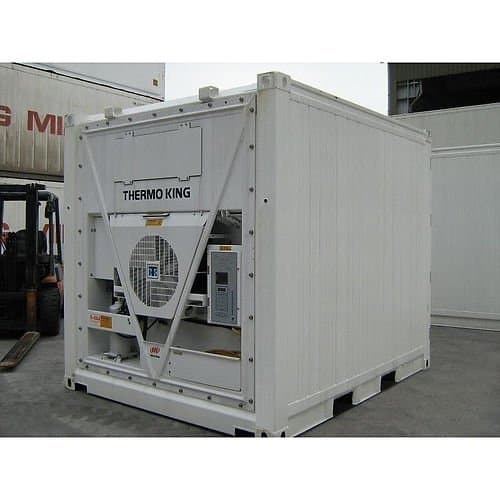
Refrigeration system and thermal performance. The refrigeration unit operates with R134A, R404, or R442 refrigerants, depending on configuration. It is powered by 12 kW electrical power, generally three-phase 380-460 V. The temperature range extends from -25 °C to +25 °C, covering both freezing and chilled storage. Insulation is provided by high-density polyurethane foam injected between walls, ceiling, and floor, offering excellent energy efficiency. The automatic defrost system and internal fans ensure temperature uniformity throughout the volume. For stationary use, the container can be connected to a fixed power source; during transport, it can be powered by the ship or a generator. Note that thermal performance depends on ambient temperature and load factor; it is recommended not to exceed 90% of usable volume to allow good air circulation.
Common uses. This refrigerated container finds applications in many sectors. In food processing, it allows transport of meat, fish, fruits and vegetables, dairy products, and frozen goods. In pharmaceuticals, it is used for transporting medicines, vaccines, and biological samples requiring a strict cold chain. It can also serve as temporary refrigerated storage at a production or distribution site, or as a mobile cold room for events. For storing non-food products, it protects goods sensitive to heat or moisture, such as certain chemicals, cosmetics, or cut flowers. Finally, it can be fitted out as a mobile laboratory or conservation unit for research.
Points to check when purchasing. Buying a new refrigerated container involves checking several aspects. First, ensure the refrigeration unit is suited to the desired temperature range and compatible with the voltage available at the use site. Next, check the condition of seals and absence of corrosion, even on a new unit, as prolonged outdoor storage can affect components. It is also advisable to request the ISO conformity certificate and, if applicable, food conformity certificates (HACCP) for interior walls. The required electrical power (12 kW) must be considered when sizing the electrical installation. Finally, allow sufficient space for 270° door opening and access to the refrigeration unit during maintenance.
Maintenance and upkeep. Regular maintenance is essential to ensure performance and longevity. It is recommended to regularly clean the evaporator and condenser to prevent dust and dirt buildup, which could reduce energy efficiency. Periodically check oil level and compressor belt condition. Check the refrigerant circuit for leaks. Clean the interior with products suitable for food-contact surfaces, avoiding abrasives. Inspect door seals and hinges, and lubricate if necessary. If not used for extended periods, leave doors ajar to prevent mold and odors. A maintenance contract with a certified refrigeration technician is highly recommended.
Regulations and transport. In France, transporting refrigerated containers is subject to dangerous goods transport regulations (ADR) when containing classified products. For perishable goods, Regulation (EC) No 852/2004 on food hygiene applies, requiring compliance with the cold chain. Road transport must respect weight and dimension limits: a loaded 40-foot container can reach a maximum weight of 34,000 kg, requiring a suitable vehicle and compliance with traffic laws. Securing on the vehicle must comply with current standards. In addition, the use of refrigerants is regulated by Regulation (EU) No 517/2014 on fluorinated greenhouse gases, which imposes leak checks and operator certification. It is important to comply with these requirements to avoid fines and ensure safety.
Comparison with other container types. Unlike dry containers, refrigerated containers have insulation and a cooling system, making them heavier and more expensive, but essential for temperature-sensitive goods. Compared to a used reefer container, a new one offers better energy efficiency, longer lifespan, and a manufacturer's warranty. It also differs from open top or flat rack containers, which are designed for oversized loads and do not regulate temperature. Choosing a 40-foot high cube allows greater internal volume than a standard 40-foot, optimizing transport of bulky goods.
Conclusion. The new 40-foot refrigerated container is a durable investment for professionals needing to transport or store products under controlled temperature. Its technical characteristics make it a versatile tool, suitable for sea, road, and rail transport, as well as stationary use. By following maintenance guidelines and regulations, it offers a reliable and high-performance solution for many years.
In-depth sector use cases. In food distribution, this container helps manage just-in-time flows between logistics platforms and retail outlets. Its usable capacity of 65.6 m³ allows transport of several European pallets (1200 x 800 mm) on two levels, approximately 40 to 44 pallets depending on loading. For frozen products, temperature can be maintained at -18 °C or lower, while for fresh products, a setpoint of +2 °C to +4 °C is common. Fruits and vegetables sensitive to ethylene may require increased ventilation; the container's ventilation system can be adjusted to renew air and remove gases. In floristry, maintaining a temperature of +2 °C to +8 °C and controlled humidity extends the life of cut flowers. For pharmaceuticals, cold chain validation is paramount: independent temperature recorders are often used to track conditions during transport. The container can also be used as temporary storage on a construction site for heat-sensitive materials, such as certain adhesives or resins. Finally, in events, it serves as a mobile cold room for caterers and festivals.
In-depth maintenance and best practices. Beyond routine maintenance, some specific operations extend container life. Cleaning the T-shaped floor gutters should be done with a suitable brush to prevent residue buildup that could obstruct air circulation. Stainless steel interior walls can be disinfected with products approved for food contact. It is advisable to regularly check the tightness of refrigeration unit fasteners and the condition of electrical cables. Exterior paint, although factory-treated, may need touch-ups after impact; use anti-rust paint suitable for Corten steel. If stored unused for extended periods, run the refrigeration unit a few hours per month to maintain compressor lubrication. A maintenance log should be kept up to date, noting interventions and temperature readings. These practices are even more important as the container may be exposed to harsh marine environments.
Transport regulations and compliance in France. Road transport of 40-foot containers is governed by the Highway Code and Decree No. 2003-418 on vehicle weights and dimensions. The maximum length of a road train is 16.50 m, allowing transport of a 40-foot container on a container chassis. The maximum authorized gross combination weight (GCW) must not exceed 44 tonnes for an articulated vehicle, limiting payload depending on vehicle tare weight. The container itself, with a maximum weight of 34,000 kg, must be loaded respecting axle weight distribution. For sea transport, the SOLAS convention requires verification of the declared gross mass (VGM) before loading. Regarding the cold chain, Regulation (EC) No 852/2004 sets hygiene obligations, and Regulation (EC) No 853/2004 specifies rules for products of animal origin. Carriers must be approved for transporting perishable goods under controlled temperature according to the decree of 21 December 2009. The use of refrigerants is subject to Regulation (EU) No 517/2014 and standard EN 378, which require periodic leak checks and operator certification (competence certificate). Finally, the container's electrical installation must comply with NF C 15-100 for fixed connections.
Comparison with other sizes and types of refrigerated containers. The 40-foot refrigerated container differs from the 20-foot by its almost double volume capacity (68.26 m³ vs. about 33 m³), reducing transport cost per unit load. The 20-foot is more suited to heavy and compact loads, as its maximum weight is often similar but with less volume. The 40-foot high cube offers about 30 cm more internal height than the standard 40-foot, allowing taller pallets. Reefer containers can be "porthole" type (with centralized cooling system) or "integral" type (with self-contained refrigeration unit). The latter is more flexible as it can operate autonomously. Compared to dry containers, the reefer is heavier (4650 kg empty vs. about 3750 kg for a dry 40-foot) and more expensive, but essential for temperature-sensitive goods. Open top and flat rack containers are used for oversized loads and do not regulate temperature. Finally, tank containers are intended for liquids and are not suitable for palletized products.
Conclusion. The new 40-foot refrigerated container is a durable investment for professionals needing to transport or store products under controlled temperature. Its technical characteristics make it a versatile tool, suitable for sea, road, and rail transport, as well as stationary use. By following maintenance guidelines and regulations, it offers a reliable and high-performance solution for many years.