Description
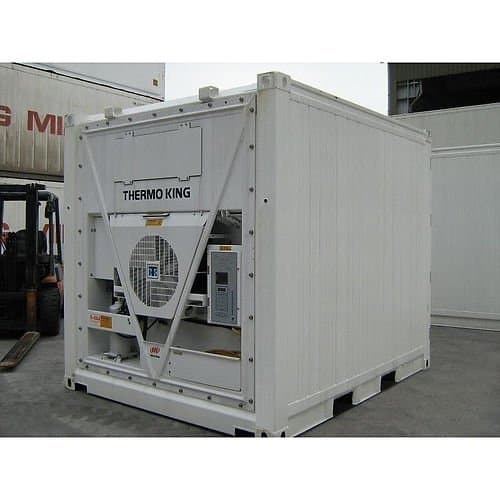
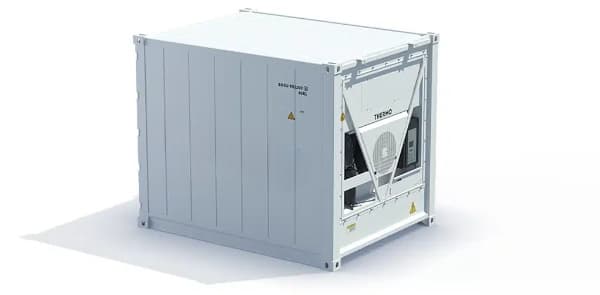
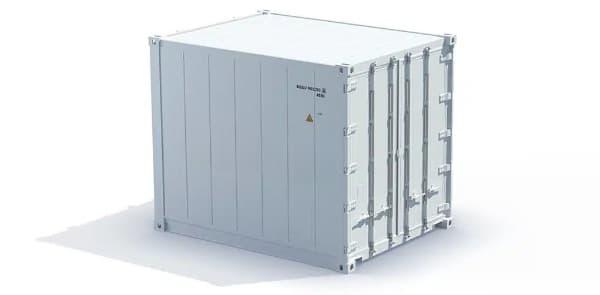
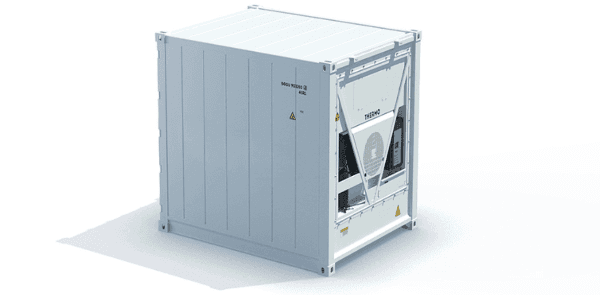
The BW TRAILERS single-axle refrigerated trailer is a road trailer designed for transporting goods that must be kept at positive cold temperatures. It differs from refrigerated shipping containers by its mobility and lightweight design, while offering a solution suited to professionals in the food trades, agriculture, catering or cold logistics. This product is offered at the price of €9,500. It is important to note that this is a trailer, not an ISO container, which implies specific rules of use, maintenance and regulations.
Let us begin with the dimensional and structural characteristics. The insulated box offers useful dimensions of 2.50 m in length, 1.25 m in width and 1.80 m in height, giving an internal volume of approximately 5.6 m³. These dimensions allow the loading of modest-sized pallets, crates, bins or bulky parcels. The floor is made of aluminium. This material is valued in the food sector for its resistance to moisture, ease of cleaning and hygiene. It supports rolling loads and resists corrosion. The walls and roof are made of insulating panels, generally polyurethane foam injected between two skins, but the exact characteristics of the insulation are not provided. The thickness of the walls determines the thermal performance; it is often 40 to 60 mm for this type of trailer. The rear door has double leaves, which facilitates loading and unloading, including with a manual pallet truck or trolley. The door seals are essential to limit cold loss; they must be checked regularly.
The chassis rests on a single braked axle. This design choice reduces dead weight and simplifies maintenance, while offering braking capacity suited to the 1300 kg GVW. The kerb weight is 628 kg, leaving a payload of approximately 672 kg. This payload must be strictly observed, as it determines the safety and legality of transport. It includes not only the weight of the goods, but also that of optional equipment, interior fittings and accessories. The GVW (Gross Vehicle Weight) of 1300 kg is stated on the manufacturer's plate; it must never be exceeded. Load distribution must be balanced, with a drawbar load generally between 5% and 10% of the total rolling weight, i.e. approximately 65 to 130 kg for this trailer. A V-shaped drawbar contributes to the stability of the assembly and good distribution of forces. The jockey wheel allows the trailer to be moved at low speed on flat ground, particularly for hitching or parking. Two pairs of stabiliser legs stabilise the trailer when stationary, which is useful during loading or unloading phases, or when the trailer is used as an extension of refrigerated storage.
The tyres are size 165R13C. These are reinforced tyres, suitable for commercial use. The recommended pressure is generally around 3.5 to 4 bar for this type of tyre, but the manufacturer's recommendations should be consulted. Incorrect pressure leads to uneven wear, poor roadholding and excessive fuel consumption. The single braked axle is equipped with drum or disc brakes depending on the model; maintenance must be carried out by a professional. The braking system may be mechanically operated (cables) or hydraulic; in both cases, periodic adjustment is necessary. The trailer is also equipped with interior lighting, practical for handling in dim light or at night. Two interior shelves allow storage to be organised and foodstuffs to be separated. These shelves are generally removable or height-adjustable, but this depends on the exact model.
The refrigeration unit operates on positive cold. This means it maintains a positive temperature, generally between 0 °C and +8 °C, suitable for preserving perishable non-frozen foodstuffs. It does not allow the temperature to drop below zero, so the transport of frozen goods is not possible with this type of equipment. The refrigeration unit can be powered by the towing vehicle (12 V) or by an external supply (220 V) when the trailer is stationary. It is essential to pre-cool the cold chamber before loading, in order to avoid a rise in temperature of the foodstuffs. Loading must be carried out quickly, and the doors must not remain open unnecessarily. An independent thermometer or the regulation system allows the internal temperature to be checked. The setpoint temperature is not given in the supplied specifications, but this type of equipment is generally regulated to maintain between 0 °C and +8 °C. It is recommended to check the ATP classification (Agreement on the International Carriage of Perishable Foodstuffs) with the manufacturer or seller. This classification certifies the thermal performance of the box and the refrigeration unit. For professional transport of perishable foodstuffs, ATP is often required by customers and authorities. As the classification is not provided, it should be checked before purchase, especially for commercial use.
Maintenance of this refrigerated trailer is divided into two parts: the running gear and the refrigeration part. For the running gear, a check before each departure is essential: visual inspection of tyres (wear, pressure, presence of foreign bodies), testing of position lights, brake lights, indicators and number plate, checking of the hitch and safety (hitch correctly locked, safety cable if necessary), checking of the jockey wheel. Every 3,000 to 5,000 km, it is advisable to check wheel tightening to the prescribed torque, bearing play, brake lining wear and service brake adjustment. Once a year, a complete service including greasing of the axles, checking of the braking system, possible replacement of brake fluid (if hydraulic brakes) or adjustment of cables (if mechanical brakes) is recommended. For the refrigeration part, annual preventive maintenance by an approved technician is strongly advised: cleaning of heat exchangers, checking of pressures, verification of circuit tightness, testing of temperature probes, replacement of air filters if present. In case of intensive use, this maintenance may be half-yearly. The condition of the door seals should also be checked regularly and replaced as soon as they are worn or torn, as poor sealing leads to cold loss and excessive energy consumption.
Storage and wintering of the trailer deserve particular attention. If the trailer is not used for a long period, it is recommended to park it in a dry, sheltered place, wash and dry the interior, leave the doors ajar to avoid mould and odours, disconnect the auxiliary battery and charge it periodically, slightly raise the wheels or remove them to avoid deformation, and protect the refrigeration unit from the weather. Checking the humidity level in the insulated box can be useful to detect possible infiltration.
From a regulatory point of view, in France, any trailer whose GVW exceeds 750 kg must be registered and have a registration document. With a GVW of 1300 kg, this refrigerated trailer is concerned. A category B licence authorises driving a combination of towing vehicle + trailer if the GVW of the trailer does not exceed 750 kg, or if the total GVW of the combination does not exceed 3,500 kg and the GVW of the trailer does not exceed the kerb weight of the towing vehicle. With a GVW of 1300 kg, this trailer can be towed with a category B licence if the towing vehicle has a sufficient GVW and if the above conditions are met. Otherwise, a category BE licence (or B96 depending on the case) may be required. It is essential to check compatibility with your vehicle and licence before purchase. The trailer must be insured, at least for third-party liability, and it is prudent to extend cover to damage and theft. The transport of foodstuffs is subject to Regulation (EC) No 852/2004 and French decrees relating to food hygiene, which require in particular compliance with the cold chain and traceability. The use of a refrigerated trailer should make it possible to meet these requirements, subject to maintenance and use in accordance with the rules. For professionals, the transport of goods for hire or reward is subject to specific rules (transport licence, professional competence, driver attestation). The transport of animal products or products of animal origin is subject to strict hygiene rules (health approval, traceability, compliance with the cold chain). The use of a refrigerated trailer can facilitate compliance, but it does not exempt from complying with all regulations. It is also important to respect the speed limits specific to trailers: on motorways, the speed is limited to 130 km/h for light vehicles, but it is reduced to 110 km/h for combinations over 3.5 tonnes or towing a trailer over 750 kg. The texts in force should be checked. In general, it is prudent to adopt smooth, anticipatory driving, taking into account the weight and behaviour of the trailer.
When purchasing a refrigerated trailer, several points of vigilance should be examined. The condition of the insulated box must be checked: presence of impacts, cracks, infiltration, condition of the interior and exterior walls, door sealing (seals), operation of the closures. The refrigeration unit must be tested under real conditions: start-up, temperature pull-down, maintaining the setpoint, absence of abnormal noise. It is advisable to ask for maintenance invoices and any certificates of conformity. The chassis part must be inspected: corrosion, welds, condition of axles, suspensions, brakes. The tyres must be in good condition and of uniform dimensions. Check the presence of the registration certificate and the manufacturer's plate. Ensure that the GVW and payload correspond to the intended use. Finally, for regular professional use, it may be advisable to arrange a maintenance contract with a refrigeration specialist.
This refrigerated trailer can be used in many contexts. Food trades (butchers, pork butchers, caterers, fishmongers) will find it a delivery tool compliant with health requirements. Farmers and farm producers will be able to transport their fresh products to markets or points of sale. Restaurateurs and caterers will be able to use it for events outside their premises. Laboratories and pharmacies can transport temperature-sensitive products. Florists and horticulturists can also use it for plants sensitive to frost or heat. Finally, individuals may consider it for occasional use, for example for transporting food during large family gatherings, provided they have the appropriate vehicle and licence.
Compared to a refrigerated maritime container, this trailer has the advantage of being mobile and towable, not requiring a container truck. It is lighter and more compact, which facilitates its use on small sites. On the other hand, its capacity is smaller and it is not stackable. It does not meet ISO 668/1496 standards, as it is not intended for intermodal maritime transport. For fixed storage use, a refrigerated maritime container may be more suitable, but it will require a three-phase electrical supply and a dedicated location. The refrigerated trailer, on the other hand, moves with the towing vehicle and can be parked in a car park or yard, provided there is an electrical supply for the refrigeration unit when stationary (or sufficient autonomy if the unit is equipped with a combustion engine).
Compared to other sizes of refrigerated trailers, this single-axle model 2.50 m long falls into the category of small trailers. It is more manoeuvrable than a double-axle model, easier to park, and can be towed by passenger vehicles fitted with a towbar. On the other hand, its payload is limited to approximately 672 kg, which may be insufficient for bulky or heavy deliveries. For larger needs, a double-axle refrigerated trailer should be considered, with a higher GVW (often 2,000 kg or more) and a larger internal volume. Similarly, if the transport of frozen goods is necessary, a negative refrigerated trailer (or a refrigerated maritime container) will be required, as positive cold does not go below 0 °C. The choice between a refrigerated trailer and a refrigerated maritime container will depend on the use: mobility and simplicity for the former, capacity and stacking for the latter.
In terms of thermal performance, this type of insulated trailer is generally classified according to the ATP standard. The ATP classification is not provided in the specifications, but it is possible to enquire with the manufacturer or seller to find out the exact class (for example, class A, B or C for positive cold). This classification certifies the insulation capacity and the performance of the refrigeration unit. For professional transport of perishable foodstuffs, ATP is often required by customers and authorities. It is therefore recommended to check this point before purchase, especially for commercial use.
The electrical installation of the refrigerated trailer must be checked: presence of an auxiliary battery to power the refrigeration unit, a circuit breaker, a fuse. The refrigeration unit can be powered by the towing vehicle (12 V) or by an external supply (220 V) when the trailer is stationary. It is important to comply with the manufacturer's recommendations for connection and not to overload the electrical circuit of the towing vehicle. An automotive electrician can validate the installation.
Finally, the purchase of this BW TRAILERS single-axle refrigerated trailer represents an investment for professionals wishing to internalise their fresh product deliveries. The price of €9,500 (including or excluding VAT, to be checked) positions it in the small-capacity refrigerated trailer segment. It should be compared with competing solutions, but also take into account operating costs (maintenance, fuel, insurance) and resale value. Followed maintenance and careful use will preserve the value of the asset and ensure the food safety of the goods transported.